
Waking up to find your healthy patio crops covered in tiny green bugs ruins your morning instantly. You spend weeks nurturing fragile seedlings in old yogurt containers only to watch them get sucked dry. Figuring out how to get rid of aphids on vegetable plants naturally becomes your top priority before the infestation spreads.
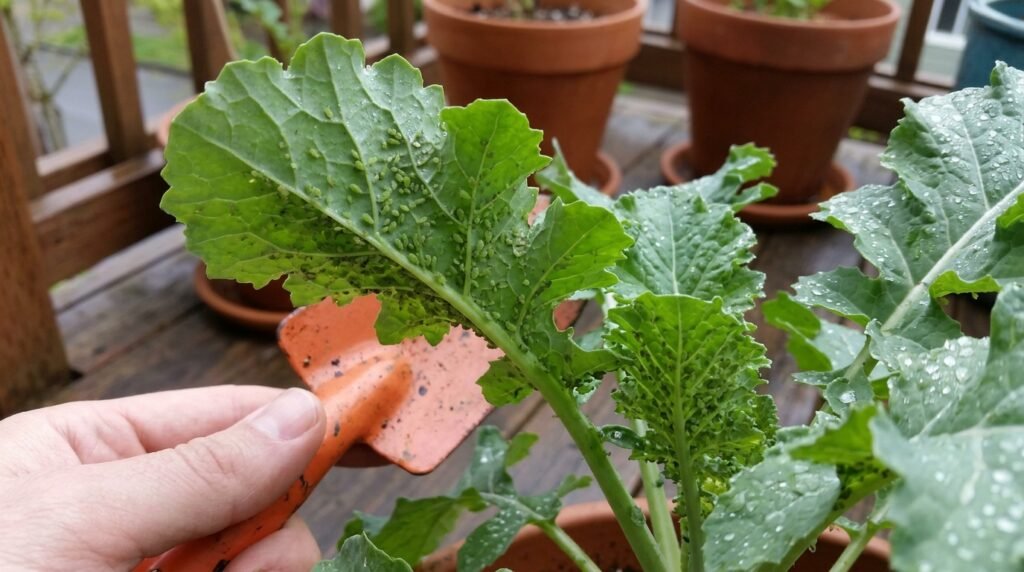
I faced this exact nightmare during a damp Portland spring a few years ago. I walked out to my balcony with my cheap eight dollar trowel and found my prize kale completely covered in pests. I panicked and almost threw the entire pot into the garbage bin out of sheer frustration. You do not have to destroy your hard work to solve this common pest issue.
Why you must get rid of aphids on vegetable plants immediately
Spraying harsh chemical pesticides on your balcony destroys the entire local ecosystem you worked hard to build. Those toxic sprays kill the good bugs right alongside the destructive ones. You also risk covering your future dinner in synthetic poisons that you cannot easily wash off in the sink.
These specific pests multiply at an absolutely terrifying rate when left alone on a healthy leaf. A single pregnant female can produce dozens of clones in just a few short days. You have to break their life cycle immediately before they completely cover the main stems of your crops.
Using organic methods keeps your patio safe for pets and protects your actual harvest from chemical residue. You just need to rely on physical removal and safe household ingredients to win this battle. Deciding to get rid of aphids on vegetable plants naturally takes a little more observation but pays off massively in the end.
Spotting the early warning signs of an infestation
These tiny pests rarely announce their arrival on the top of the leaves where you can easily see them. They prefer to hide underneath the foliage where the harsh sun and strong wind cannot reach them easily. You must physically flip the leaves over to inspect the veins closely during your morning watering routine.
You might also notice a sticky and shiny substance coating the lower leaves of your patio crops. The bugs excrete this sugary liquid called honeydew as they feed heavily on the internal plant sap. If you see ants marching up your plant stems, they are usually farming the pests to collect that sweet honeydew.
The absolute easiest physical removal method
You do not need to buy expensive organic sprays to fix a minor bug problem on a single patio pot. The most effective weapon against these soft bodied insects is sitting right in your kitchen sink right now. A simple blast of cold water knocks them completely off the foliage and onto the concrete floor.
Fill a clean plastic spray bottle with plain tap water and adjust the nozzle to a sharp and direct stream. Support the infested leaf with one hand and spray the bugs directly with your other hand. The water pressure breaks their fragile mouthparts and they cannot climb back up the tall stem.
Reviewing how to protect your vegetable garden from pests without chemicals reminds you that consistency is everything. You must repeat this water blast method every single morning for about a full week. This daily repetition allows you to catch the newly hatched bugs before they start reproducing again.
Using the right water pressure safely
You want enough physical force to dislodge the pests without snapping the main green branch in half. Test the spray on a lower leaf before hitting the delicate new growth at the very top. Small pepper plants and young tomatoes have fragile stems that will snap under heavy water pressure.
Always spray your plants early in the morning so the leaves dry completely before nighttime temperatures drop. Leaving foliage wet overnight encourages dangerous fungal diseases to take hold in the damp container soil. A dry plant going into the evening survives the summer much better than a soaking wet one.
A non-obvious trick to get rid of aphids on vegetable plants
Sometimes a water blast simply will not work because the infested seedling is far too small and fragile. A strong jet of water will rip a tiny lettuce sprout right out of the potting soil. You need a gentler physical removal method for your most delicate patio crops.
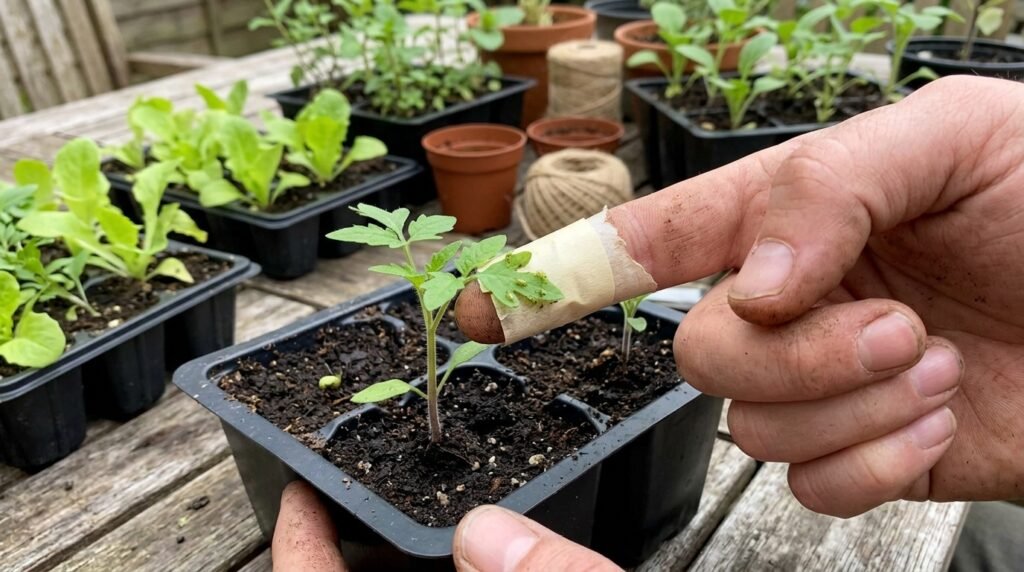
Here is a highly practical trick that removes the bugs without damaging a single plant cell. Take a piece of standard masking tape and wrap it around your index finger with the sticky side facing outward. You can also use a sheet from a sticky lint roller for this exact same process.
Gently roll your sticky finger along the underside of the infested leaves. The soft bugs stick instantly to the tape and come right off the green tissue. You can clear an entire tomato seedling in about thirty seconds using this simple office supply.
Managing the sticky tape process
Do not press the tape too hard against the leaf or you will rip the green tissue completely off the stem. You only need the lightest touch to pull the bugs away from their feeding spots. Change the tape frequently once it becomes covered in green pests.
This method works incredibly well for indoor plants sitting on your kitchen windowsill. You can safely get rid of aphids on vegetable plants without spraying water all over your clean apartment walls. It requires zero chemicals and costs absolutely nothing to execute.
Making a soap spray for serious infestations
A simple water blast or a piece of tape fails to control a massive population explosion on your balcony. You need to escalate your tactics using safe items you already keep in your bathroom cabinet. Pure liquid castile soap destroys the protective outer coating on the insect body completely.
Mix exactly one tablespoon of pure liquid soap into a quart of warm tap water. Never use heavy chemical dish detergents because those harsh degreasers will severely burn the plant leaves. The experts at Gardening Know How confirm that true soap works safely by suffocating the bugs on contact.
Shake the plastic bottle well and coat the undersides of the leaves until the soapy liquid drips off. The soap only works when it directly touches the physical insect hiding on the plant. You can quickly get rid of aphids on vegetable plants using this cheap homemade recipe.
Applying the soap spray correctly
Never spray soapy water on your patio plants during the middle of a hot summer afternoon. The intense sunlight bakes the soapy residue and causes severe chemical burns on the fragile green tissue. You will end up killing the leaves faster than the actual bugs ever could.
Apply your homemade treatment just as the sun sets behind the trees in the late evening. This specific timing gives the liquid plenty of time to work while the balcony stays cool and heavily shaded. Always rinse the dead bugs and dried soap off the plant with fresh water the next morning.
Using beneficial insects for natural control
Nature provides its own aggressive pest control team if you know exactly how to recruit them. Ladybugs consider these tiny green pests to be an absolute delicacy and will consume hundreds of them daily. Releasing a small box of live ladybugs onto your balcony changes the odds entirely in your favor.
You can buy live ladybugs at most local garden centers during the busy spring planting season. Release them at dusk so they settle into the plants instead of flying straight toward the bright sun. They will march up and down the stems hunting for food until the infestation disappears.
Relying on hungry predators remains a highly effective way to get rid of aphids on vegetable plants naturally. This method creates a balanced ecosystem right on your concrete apartment patio. You simply let nature do the hard work for you while you sit back and watch.
A trick to keep ladybugs around
Most beginners release a box of expensive ladybugs only to watch them fly away the very next morning. The bugs leave because they need a reliable source of drinking water to survive the hot afternoon heat. If they cannot find water on your balcony, they will fly to a neighbor’s yard immediately.
Fill a shallow jar lid with a few small pebbles and add a tiny bit of fresh tap water. Place this simple bug bath right next to the infested plant on your patio table. The pebbles give the ladybugs a safe place to stand and drink without drowning.
Pruning away heavy insect damage
Sometimes a single branch becomes so heavily infested that it looks entirely yellow and badly twisted. Trying to save that specific branch usually wastes your time and puts the rest of the plant at severe risk. You must practice ruthless pruning to save the main crop and stop the bugs from spreading further.
Take a sharp pair of bypass pruners and snip off the worst sections of the plant immediately. A healthy vegetable plant will quickly recover from losing a few lower branches during the summer. Removing the damaged foliage redirects the plant energy back into producing healthy new green growth.
Understanding how to deal with yellow leaves on vegetable plants requires you to remove diseased tissue rapidly. This aggressive approach helps you get rid of aphids on vegetable plants before they reach the top leaves. A quick snip with the pruners solves the problem faster than any spray bottle ever could.
Disposing of infested material safely
Never throw those bug covered leaves into your patio compost bin or worm bucket. The pests will survive the decomposition process and multiply rapidly in the warm environment. You will just reintroduce the exact same problem back into your garden next spring.
Seal the pruned branches tightly inside a plastic grocery bag before throwing them in the normal trash. This traps the bugs completely and prevents them from crawling back onto your patio floor. Clean your pruners with rubbing alcohol after you finish cutting the infested branches.
Companion planting for preventative defense
You can use specific plants to naturally repel pests away from your most valuable patio crops. Strong smelling herbs confuse the insects and hide the sweet scent of your fragile tomato leaves. Tucking a few garlic bulbs or chive plants into the corners of your raised beds creates a natural odor barrier.
The pests simply fly past your balcony looking for an easier meal in a different apartment. According to the growing guides at The Old Farmer’s Almanac, planting sweet alyssum nearby attracts tiny parasitic wasps. These friendly wasps naturally hunt down garden pests and protect your food all summer long.
Adding simple flowers to your vegetable pots serves a highly practical purpose beyond just looking pretty. This strategy helps you get rid of aphids on vegetable plants before they ever land. A diverse balcony garden naturally defends itself against massive population explosions.
Setting up a decoy trap crop
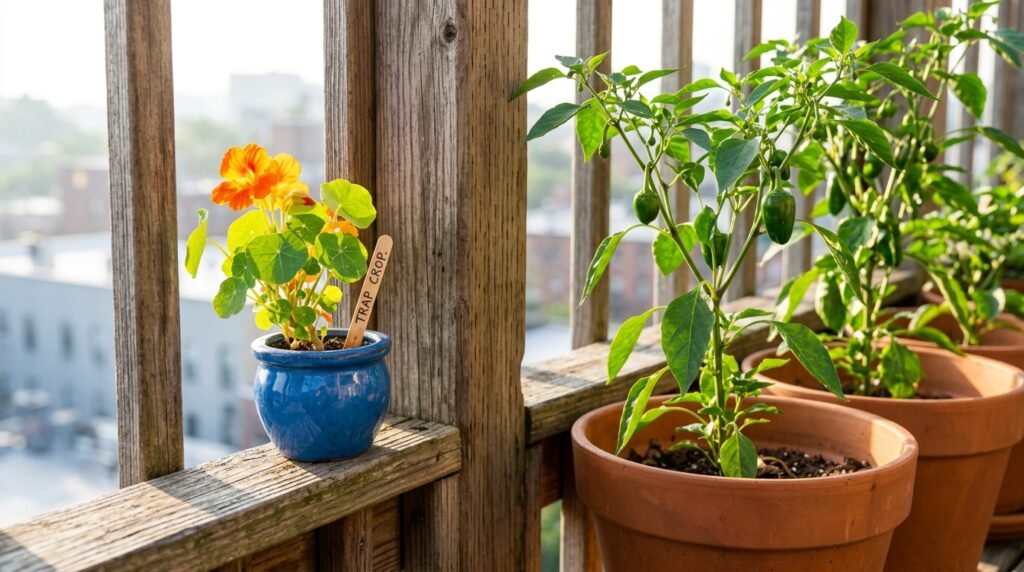
You can actually plant certain crops specifically to attract bugs away from your future dinner. Nasturtiums act as a perfect trap crop because pests prefer their taste over almost anything else. They will swarm the bright flowers and completely ignore your prize peppers sitting right next door.
Place a small pot of nasturtiums a few feet away from your main vegetable containers on the balcony. The bugs will completely cover the decoy plant and leave your food crops entirely alone. You can simply pull the trap plant up and throw it in the trash once it gets completely overwhelmed.
Avoiding the nitrogen fertilization trap
Feeding your container plants too much synthetic nitrogen actually creates a massive bug magnet on your patio. High nitrogen levels force the plant to push out loads of soft, bright green foliage very rapidly. This tender new growth acts like an all you can eat buffet for hungry sap sucking insects.
You should always use a balanced organic fertilizer instead of harsh chemical plant foods. Slow release organic options feed the plant steadily over several weeks rather than flooding the roots all at once. Steady feeding produces tough leaves that insects struggle to pierce with their tiny mouths.
Reading about the 10 beginner gardening mistakes and how to fix them always highlights the dangers of overfeeding. You want steady growth rather than massive weekly explosions of weak green tissue. A tough plant defends itself naturally against casual pest attacks.
Finding bugs on your food feels defeating, but it happens to every single gardener eventually. You just have to stay observant and act quickly before the population explodes completely out of control. Checking under the leaves every morning takes two seconds and saves your entire hard earned harvest. You can successfully get rid of aphids on vegetable plants naturally using water, soap, and a little bit of patio strategy.
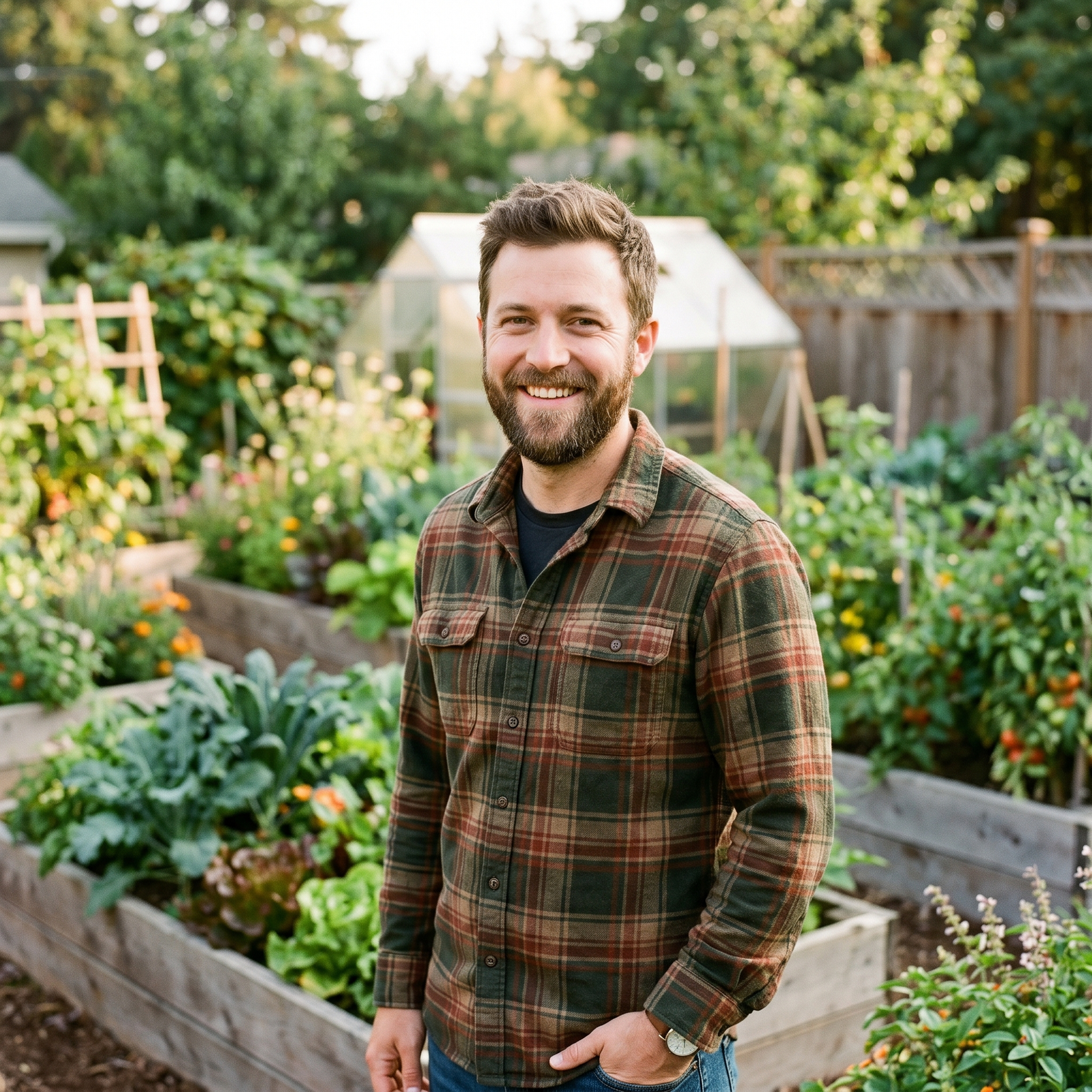
Felipe Macedo is a home gardener and food grower based in Portland, Oregon. After killing his first three tomato plants, he became obsessed with figuring out how to grow real food in small spaces — on balconies, in containers, and in raised beds he built himself. At Chatinovax, he shares everything he learned the hard way so you don’t have to.