
Buying canned vegetables makes absolutely no sense when you have an empty patio. You can easily grow green beans in a raised bed and harvest crisp, sweet pods all summer long. They require almost zero maintenance and produce food incredibly fast.
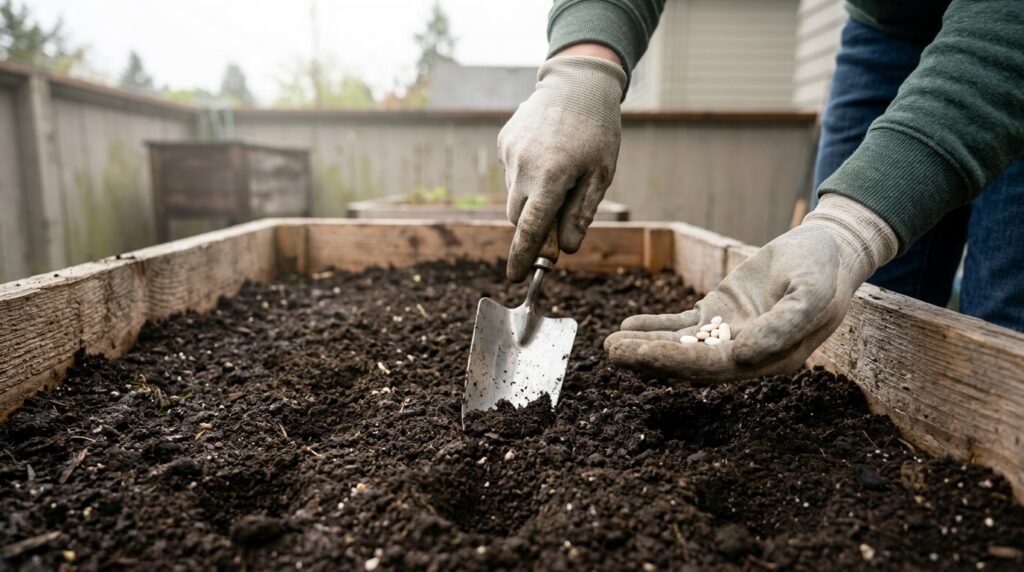
During my first year gardening here in Portland, I wanted quick results before the gloomy rain returned. I used my cheap eight dollar trowel to plant a handful of seeds in a DIY wooden box. Those seeds exploded into massive bushes that fed my roommates for weeks.
Why you should grow green beans in a raised bed this season
These tough plants forgive almost every single mistake a beginner makes. They practically thrive on neglect and hate being fussed over. You just give them some dirt and watch them climb toward the sun.
Many vegetables require heavy doses of expensive fertilizer to survive a patio environment. Legumes actually pull nitrogen directly out of the air and feed themselves naturally. Deciding to grow green beans in a raised bed saves you money on expensive chemical plant food.
The cost difference between a packet of seeds and fresh grocery store produce is staggering. You spend three dollars once and pick fresh food every day in August.
Choosing between bush beans and pole beans
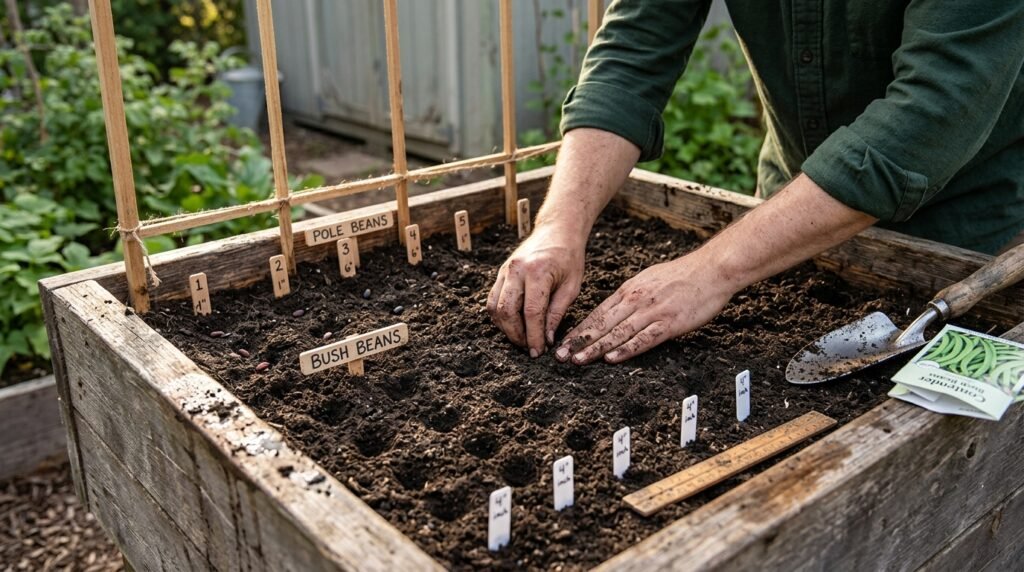
Seed catalogs always separate this specific crop into two distinct categories. Bush varieties stay short and form compact mounds that support their own weight perfectly. They produce their entire harvest over a quick three week window.
Pole varieties grow into massive vines that require tall wooden supports to survive. They produce fewer pods at once but keep flowering until the autumn frost arrives. Reading the easiest vegetables to grow for beginners helps you match the exact plant type to your available space.
Bush types work best for growers who want to freeze large batches for winter. Pole types work perfectly for apartment renters who just want a fresh handful for dinner every night.
Finding the perfect location for your containers
Sunlight dictates exactly how much food your patio farm will eventually produce. These plants demand massive amounts of direct solar energy to create heavy pods. A dark, shaded balcony corner will leave you with weak stems and zero flowers.
You must place your wooden boxes in a spot that receives eight hours of direct sun daily. Track the light moving across your concrete floor before you fill the heavy containers with dirt.
A south-facing orientation provides the absolute best exposure during the summer months. The intense afternoon sun dries the morning dew off the leaves rapidly, which prevents destructive fungal diseases.
Preparing the right dirt to grow green beans in a raised bed
A healthy root system requires loose dirt that drains excess water instantly. Dense mud suffocates the roots and causes the hard seeds to rot before they even sprout. You must use a premium potting mix rather than heavy ground dirt.
Check out the best soil mix for a raised bed vegetable garden to build a proper foundation. Add a small scoop of organic compost to provide a gentle baseline of early nutrition.
Always ensure your wooden box has plenty of drainage holes drilled into the bottom planks. Standing water will kill your entire crop in a matter of days.
The danger of excess nitrogen fertilizer
Beginners often panic and dump heavy synthetic fertilizers into their patio containers. Too much nitrogen forces the plant to grow massive green leaves but absolutely zero flowers. You end up with a beautiful green bush that produces no actual food.
Skip the heavy plant food entirely. Your plants will find the exact nutrients they need if you start with quality compost. You only need to apply a light phosphorus feed once the first white blossoms appear.
Planting seeds to grow green beans in a raised bed
Never buy established seedlings in plastic pots from a local garden center. Their fragile roots hate being disturbed and often die the second you transplant them. You must push the dry seeds directly into your final patio containers.
Wait until the soil feels completely warm to the touch. Cold, wet dirt causes the hard seeds to split open and rot. Here in Oregon, I always wait until the first week of June to plant anything directly outside.
If you plant too early, the freezing spring rain will destroy your hard work. Patience guarantees a much higher germination rate.
A non-obvious trick for a massive harvest
You can multiply your harvest dramatically using a cheap natural powder called legume inoculant. This black powder contains specific beneficial bacteria that latch onto the plant roots underground. These microscopic helpers supercharge the natural nitrogen fixing process.
Roll your damp seeds in this black powder right before you drop them into the dirt hole. The bacteria wake up and form tiny white nodules on the roots within a few weeks. This simple step doubles your overall yield for about five dollars.
You can find small packets of this organic inoculant at almost any local hardware store.
Proper spacing to grow green beans in a raised bed
Cramming too many seeds into a tight space guarantees a terrible harvest. The adult plants will fight aggressively for limited sunlight and water. You must respect the physical limits of your wooden box.
Push the seeds exactly one inch deep into the warm soil. Space bush varieties exactly four inches apart in every direction. The experts at Bonnie Plants recommend giving pole varieties a full six inches of space along the trellis line.
Cover the seeds lightly with dirt and press down gently with your bare hands. Good physical contact between the seed and the damp soil triggers rapid germination.
Managing watering routines during the summer
These seeds need consistent moisture to break through their hard outer shells. Keep the top layer of dirt damp but never completely flooded. Once the green sprouts appear, you must adjust your watering habits immediately.
Let the top two inches of dirt dry out completely before you grab your watering can. Wet leaves invite aggressive fungal diseases that destroy the entire crop overnight. Always water the soil directly at the base of the main stem.
Water your pots early in the morning before the brutal afternoon heat arrives. This gives the plant plenty of hydration to survive the hottest part of the day.
Building supports to grow green beans in a raised bed
If you chose climbing pole varieties, you must build a strong physical structure on day one. Waiting until the vines grow tall usually results in broken stems and damaged roots. You need a trellis that can handle serious summer wind gusts.
Drive tall bamboo poles deep into the dirt and tie them together firmly at the top. The vines will naturally grab the rough bamboo and spiral upward automatically. A sturdy trellis keeps the heavy foliage completely off the damp soil.
You can also use cattle panels or heavy wire mesh secured to the back of your wooden box. The specific material matters less than the overall structural stability.
Watching out for destructive patio pests
Mexican bean beetles love to feast on healthy green patio plants. These yellow bugs look exactly like ladybugs but they skeletonize your leaves completely. You must check the undersides of your leaves every single morning.
Learning how to protect your vegetable garden from pests without chemicals keeps your harvest safe. Squishing the bright yellow eggs by hand stops the infestation before it even starts.
Avoid spraying harsh chemical pesticides on your balcony. You want to protect the friendly bees that visit your flowers daily.
Companion planting to grow green beans in a raised bed
Plants often grow much better when paired with friendly neighbors. Companion planting creates a balanced ecosystem that naturally repels pests and improves soil health. You can easily squeeze a few helpful plants into the corners of your wooden box.
Marigolds act as a natural pest deterrent on a crowded balcony. Their strong scent confuses annoying insects and keeps them away from your vulnerable green leaves. Tucking a few bright flowers between your vegetables saves you from fighting massive bug infestations later.
You should strictly avoid planting onions or garlic anywhere near this specific crop. Members of the allium family release chemical compounds that stunt legume growth completely. Keep your garlic pots on the opposite side of the patio.
Harvesting successfully to grow green beans in a raised bed
Leaving the pods on the plant too long ruins their crisp texture and sweet flavor. The biological goal of the plant is to produce tough, mature seeds for next year. You must trick the plant into producing more food by harvesting early.
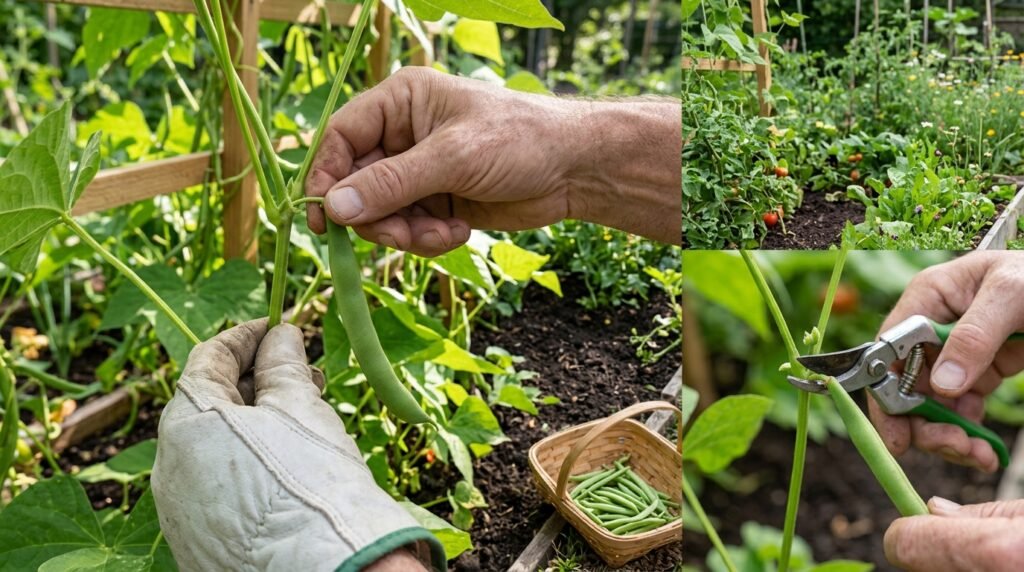
Pick the pods when they reach about the thickness of a standard pencil. The skin should look smooth and the inner seeds should barely show through the outside. Frequent picking forces the plant to push out brand new flowers continuously.
Check your plants every two days during the peak month of August. The pods hide cleverly underneath the large green leaves.
Harvesting techniques that protect the stems
Never yank a pod directly off the plant using brute force. The main stems snap incredibly easily under sudden downward pressure. Ripping the plant damages the cellular structure and stops future growth dead in its tracks.
Hold the main green vine securely with one hand. Pinch the top of the pod with your other hand and snap it off cleanly. This two handed method keeps the fragile plant perfectly intact.
You can also use sharp bypass pruners to snip the tough stems safely. Clean cuts heal much faster than jagged, ripped wounds.
Storing your fresh summer harvest
A highly productive plant will eventually give you more food than you can eat in a single night. You must store the excess pods correctly to maintain their crisp snap. Never wash the vegetables before you put them into the refrigerator.
Moisture trapped against the skin causes rapid rotting in the cold crisper drawer. Place the unwashed dry pods inside a perforated plastic bag. They will stay fresh and crunchy for about a full week.
If you pull a massive harvest all at once, you can quickly blanch and freeze the excess. Dropping them in boiling water for two minutes locks in the bright green color perfectly.
Turning a few dry seeds into a massive pile of fresh food feels incredibly rewarding. You do not need massive farm equipment or expensive chemical sprays to succeed. Focus entirely on providing loose dirt, proper spacing, and consistent sunlight. You will quickly realize how easy it is to grow green beans in a raised bed this season. Grab a cheap bag of seeds and start planting your summer harvest today.
Felipe Macedo is a home gardener and food grower based in Portland, Oregon. After killing his first three tomato plants, he became obsessed with figuring out how to grow real food in small spaces — on balconies, in containers, and in raised beds he built himself. At Chatinovax, he shares everything he learned the hard way so you don’t have to.