
Building a wooden box on your patio feels like a massive accomplishment. You step back, admire your handiwork, and suddenly realize you need to fill it with dirt. Buying random bags of cheap earth from the hardware store usually ends in a frustrating disaster. Finding the best soil mix for raised bed gardening determines exactly how much food you will actually harvest.
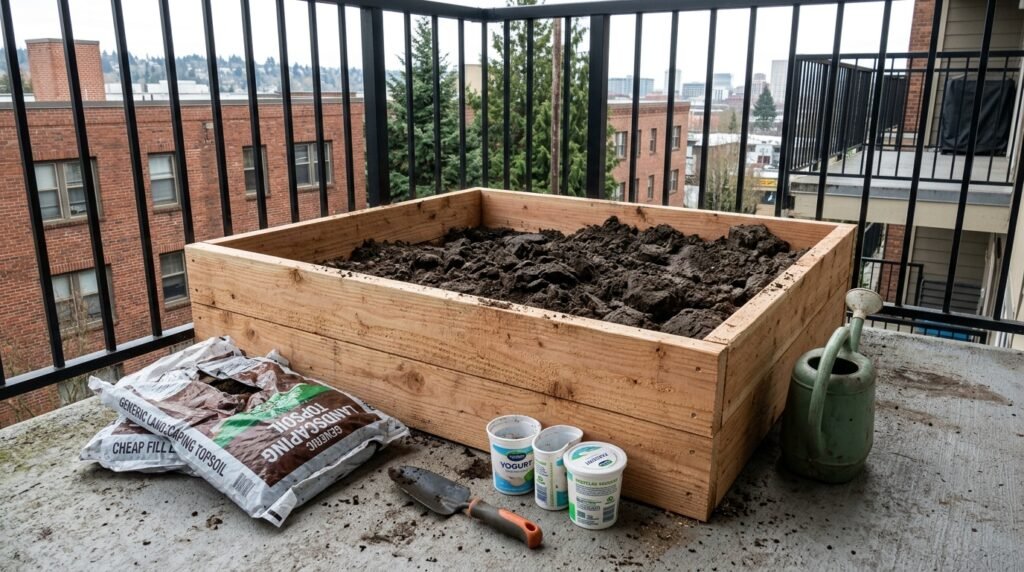
When I built my first wooden boxes on my Portland balcony, I had a tiny budget. I started my gardening journey with recycled yogurt containers and an eight-dollar trowel. I wrongly assumed that dirt was just dirt. I hauled fifty pounds of cheap landscaping topsoil up three flights of stairs and watched my plants suffocate in hard clay.
That massive failure taught me a painful lesson about root systems. Plants confined to wooden boxes require specific drainage and aeration to survive. You need a growing medium designed specifically for the unique environment of a contained patio bed.
Why finding the best soil mix for raised bed setups matters
Dirt dug straight out of the ground compacts heavily when placed inside a wooden frame. Ground soil relies on earthworms, deep root systems, and complex ecosystems to stay loose. Your patio box completely lacks that natural underground infrastructure.
A proper raised bed mix stays light and fluffy all season long. Plant roots need oxygen just as much as they need water and nutrients. Heavy, dense dirt crushes tender roots and stunts the growth of your vegetables.
Water also behaves very differently inside a wooden container than it does in the backyard. A good mix holds onto just enough moisture to keep the plants hydrated during a hot afternoon. It lets the excess water drain away rapidly so roots never sit in stagnant mud.
Learning how to build a raised garden bed for under $50 means nothing if you fill it with concrete-like mud. You must treat the dirt as the most important component of your entire garden setup.
The vital components of a healthy root environment
Every successful bagged soil contains three main elements working together. You need a growing medium, aeration materials, and organic matter for food. These ingredients mimic the perfect natural forest floor.
Peat moss or coconut coir usually serves as the base medium. These fluffy materials hold moisture incredibly well without becoming dense. They provide the physical structure that anchors your heavy tomato plants against strong summer winds.
Perlite or pumice provides the necessary aeration for root expansion. Those little white rocks stop the peat moss from clumping together over time. Compost provides the actual slow-release nutrients that feed your growing vegetables throughout the summer.
Top commercial choices for the best soil mix for raised bed gardens
New gardeners often feel completely overwhelmed standing in the soil aisle. You stare at dozens of brightly colored bags making wild promises about massive yields. I have tested many of these products on my own balcony over the years.
Buying a pre-mixed bag saves you the massive hassle of measuring and mixing ingredients on a cramped patio. You just slice the bag open and dump it directly into your wooden box. Here are the most reliable commercial options I trust for small space food production.
FoxFarm Ocean Forest Potting Soil
This premium product consistently outperforms almost everything else on the market. It comes packed with earthworm castings, bat guano, and fish emulsion. You do not need to add any extra fertilizer for the first month of growing.
The texture remains incredibly loose and airy even after heavy summer rainstorms. Portland gets massive amounts of rain in the early spring that often drowns young plants. Ocean Forest drains so efficiently that my early seedlings never rot in the cold, wet weather.
It costs slightly more than the basic hardware store brands. The investment pays off immediately through faster plant growth and higher overall yields. It represents the absolute best soil mix for raised bed growers who want foolproof, consistent results.
Kellogg Garden Organics Raised Bed Soil
Budget-conscious gardeners should look for this specific organic mix. Kellogg blends composted wood, poultry manure, and kelp meal into a highly affordable package. It provides excellent bulk if you need to fill multiple deep boxes at once.
The texture runs a bit woody compared to premium potting soils. Those small wood chips actually help maintain moisture during the peak heat of August. They slowly break down and feed the soil web over several seasons.
You might need to add a liquid organic fertilizer a bit sooner with this brand. It still provides an incredibly solid foundation for heavy-feeding crops like zucchini and bush beans.
Miracle-Gro Performance Organics Raised Bed Mix
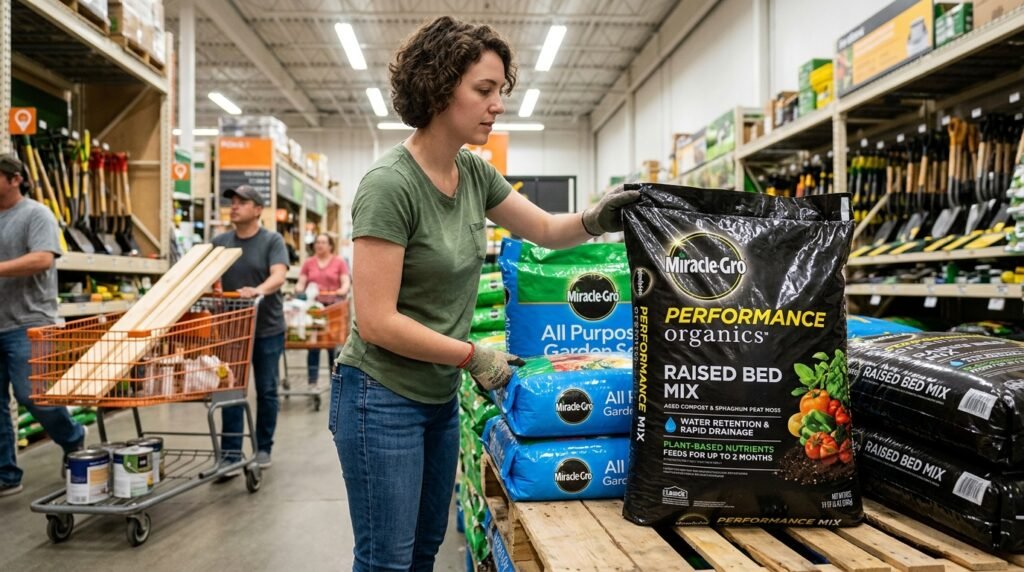
Finding specialty brands at big box stores is sometimes impossible. Miracle-Gro Performance Organics is widely available almost everywhere in the country. Make sure you buy the organic version in the black bag, not the standard blue bag.
This specific formula contains aged compost and sphagnum peat moss. It strikes a nice balance between water retention and rapid drainage. The manufacturer adds plant-based nutrients that feed your vegetables for up to two months.
It serves as an excellent, accessible option for absolute beginners. You can grab a few bags while shopping for basic hardware supplies. It takes the guesswork out of finding the best soil mix for raised bed projects on a busy weekend.
How to make your own dirt from scratch
Buying premium bagged soil gets expensive if you build a massive growing space. Mixing your own dirt saves money and gives you total control over the ingredients. You can blend a custom recipe right on a plastic tarp on your patio.
The most famous recipe in the gardening world uses a simple one-third ratio. You combine equal parts of peat moss, coarse vermiculite or perlite, and blended compost. This exact ratio creates a light, nutrient-dense environment that vegetables absolutely love.
According to the growing experts at Gardening Know How, a minimum of eight to twelve inches of this rich mixture supports almost any vegetable crop. You just use a shovel to turn the three ingredients together until they look completely uniform.
A non-obvious trick for sourcing compost
Do not buy your compost from just one single source or brand. Different composts contain entirely different nutrient profiles and trace minerals. Blending three different types of compost together creates a much stronger biological foundation.
I usually buy one bag of mushroom compost, one bag of worm castings, and one bag of standard cow manure. Mixing them together ensures my plants have access to a wide spectrum of food. This trick alone produces noticeably stronger plants with zero extra effort.
If you have a corner of your balcony available, you can eventually generate your own organic matter. Reading up on how to make compost at home in a small space helps you close the loop and save even more money.
Common mistakes when sourcing the best soil mix for raised bed gardening
Gardeners often try to cut corners to save money on dirt. Filling the bottom half of a box with random yard debris sounds like a smart hack. It usually leads to sinking soil and starved root systems halfway through the summer.
Never use standard topsoil or generic garden soil in a contained wooden box. These cheap products lack the perlite and peat moss necessary for drainage. They will turn into a solid block of mud after the very first watering.
Avoid using dirt dug up from an old landscaping project or a random yard. That dirt often contains dormant weed seeds, fungal diseases, and destructive pests. You want to start your food garden with a completely clean, sterile slate.
The hidden danger of cheap fillers
Some people fill the bottom of their boxes with cardboard boxes and large logs. This method works well for massive, deep farm beds sitting on bare ground. It fails miserably in shallow patio boxes sitting on concrete.
The decaying wood ties up massive amounts of nitrogen from the soil. Your vegetables will turn yellow and stop growing as they compete with the rotting logs for nutrients. Stick to high-quality soil all the way to the bottom of the box.
Understanding how to improve poor garden soil without spending a lot relies on adding good organic matter to the surface. It never involves burying trash under your vegetable roots to save a few dollars.
Maintaining the best soil mix for raised bed health over time
Your wooden boxes will look half-empty at the start of your second growing season. The organic matter breaks down naturally and the soil level drops significantly. You do not need to replace all the dirt every single year.
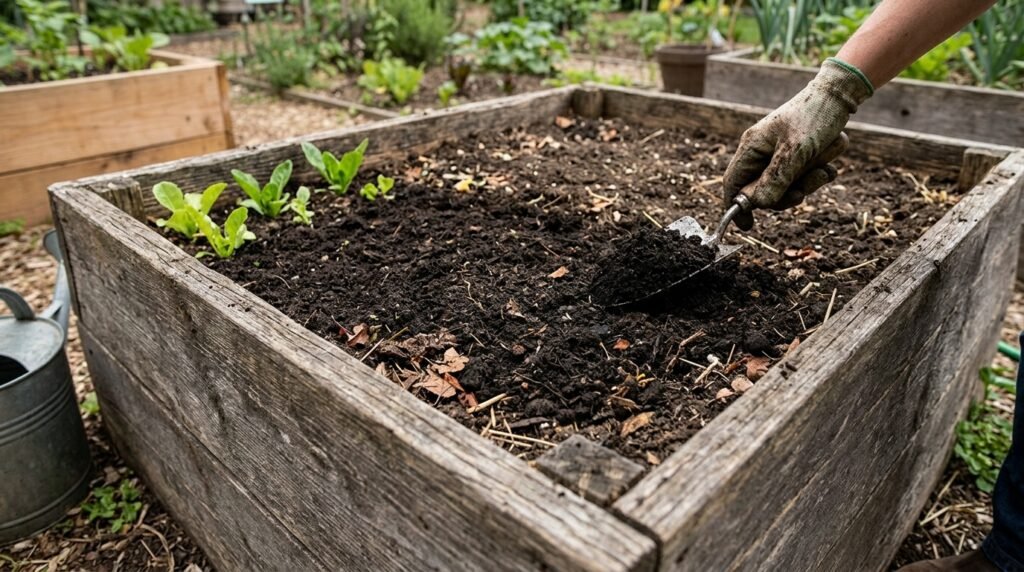
You just need to top off the boxes with fresh compost and nutrients before planting. Adding a two-inch layer of high-quality compost recharges the soil web instantly. The worms and beneficial bacteria will mix it down into the root zone for you.
A healthy box of dirt gets better and more productive with age. The microbial life establishes strong colonies that protect your vegetable roots from disease. You just have to feed those microbes a steady diet of fresh organic matter.
Testing your moisture levels correctly
Even the absolute best soil mix for raised bed systems requires proper watering habits. Heavy peat moss mixtures can actually repel water if you let them dry out completely. The water will just pool on the surface and run down the wooden sides.
Water your boxes slowly and deeply at the base of the plants. Stick your finger deep into the dirt to ensure the moisture reaches the bottom roots. A slow drip system prevents the soil from turning dusty and hydrophobic in August.
Never step inside your boxes or press the dirt down heavily with your hands. You want to preserve all those microscopic air pockets you paid good money to create. Let the natural settling process happen on its own.
Growing food on a small patio requires treating your dirt as your most valuable asset. Do not waste money on beautiful seeds and expensive wooden frames just to fill them with terrible mud. Investing in the best soil mix for raised bed gardening guarantees your roots have everything they need to thrive. Spend your budget on quality dirt today, and you will harvest heavy crops of fresh vegetables all summer long.
Felipe Macedo is a home gardener and food grower based in Portland, Oregon. After killing his first three tomato plants, he became obsessed with figuring out how to grow real food in small spaces — on balconies, in containers, and in raised beds he built himself. At Chatinovax, he shares everything he learned the hard way so you don’t have to.