
I ran out of floor space on my south-facing Portland balcony by my second week of growing food. I had my trusty eight dollar trowel and dozens of recycled yogurt containers completely covering the concrete. I realized that the bare wooden privacy fence held massive potential for growing more food. Learning how to build a vertical vegetable garden completely solved my lack of square footage. You can turn empty walls into highly productive farming zones with just a little planning.
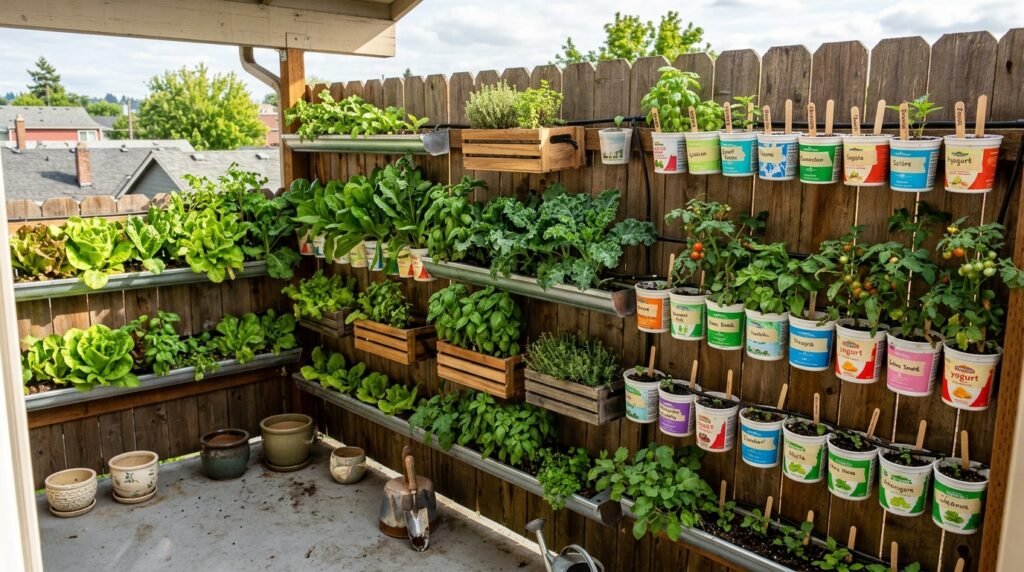
Why you need a vertical vegetable garden this season
Growing plants directly up a wall provides massive benefits beyond just saving patio floor space. Lifting your foliage off the damp concrete keeps the leaves completely dry after a heavy rainstorm. Dry leaves stop aggressive fungal diseases from destroying your hard work before the harvest begins.
A vertical vegetable garden also makes your daily maintenance chores incredibly easy on your body. You no longer have to bend over and hurt your knees to check for pests or pick ripe fruit. The food grows right at eye level where you can actually see every single detail clearly.
You also expose the plant leaves to significantly more direct sunlight when you lift them off the ground. Better sun exposure translates directly to faster growth and much heavier fruit production.
Understanding the weight limits of your balcony walls
Wet dirt weighs an absolute ton when you pack it tightly into plastic wall planters. You must respect the structural limits of your apartment railing or privacy fence before attaching anything heavy. A massive planter box crashing down ruins your patio and breaks your rental agreement instantly.
Always attach heavy wooden boxes directly to the structural studs of the wall using heavy duty screws. If you rent and cannot drill into the walls, use freestanding wooden trellises leaning against the structure. Finding out how to start a vegetable garden at home with no experience reminds you to prioritize safety over aesthetics.
Choosing the right structures for your vertical vegetable garden
You do not need to buy expensive commercial wall systems to grow food upward. You can use cheap cattle panels, heavy wire mesh, or simple wooden lattices to support heavy vines. These basic materials cost very little and last for years out in the tough weather.
Fabric pocket planters offer another fantastic option for covering an ugly apartment wall quickly. These heavy felt bags hang from basic hooks and hold individual pockets of rich potting soil. They work perfectly for shallow rooted greens and herbs that do not require deep buckets to survive.
You can even string heavy nylon netting between two wooden posts to create an invisible climbing wall. The netting supports lightweight vines easily and costs practically nothing to set up.
Repurposing old wooden pallets safely
Shipping pallets provide a completely free structure for building a sturdy growing wall. You just stand the pallet up and staple heavy landscape fabric to the back and bottom of the slats. This creates a series of long wooden troughs perfect for holding premium potting soil.
You must check the side of the pallet for a specific stamp that says HT before you use it. This stamp means the wood was heat treated rather than soaked in toxic chemical preservatives. You absolutely do not want toxic chemicals leaching into the dirt that feeds your family.
Selecting the best crops for a vertical vegetable garden
Certain plants naturally want to climb and will grab onto anything you put in front of them. Pole beans and vining peas possess tiny tendrils that wrap around wire mesh tightly. You just plant the seeds at the base of the wall and let biology do all the hard work.
Reading how to grow cucumbers vertically to save space shows you how heavy fruit survives hanging in the air. The thick vines support massive vegetables easily as long as the main trellis remains firmly anchored.
Avoid planting heavy bush varieties that want to grow wide instead of tall. Bush tomatoes will just fall over and snap their main stems if you try to force them up a tight trellis.
Growing shallow greens in wall pockets
Heavy fruiting plants demand deep buckets sitting on the floor to anchor their massive root systems. You should reserve the actual hanging wall pockets for fast growing leafy greens and common kitchen herbs. Spinach, arugula, and basil thrive in shallow spaces and tolerate tight conditions perfectly.
Planting these delicate greens high on the wall also keeps them safe from hungry ground pests. Slugs and pillbugs rarely climb six feet up a wooden fence just to eat a single leaf of lettuce.
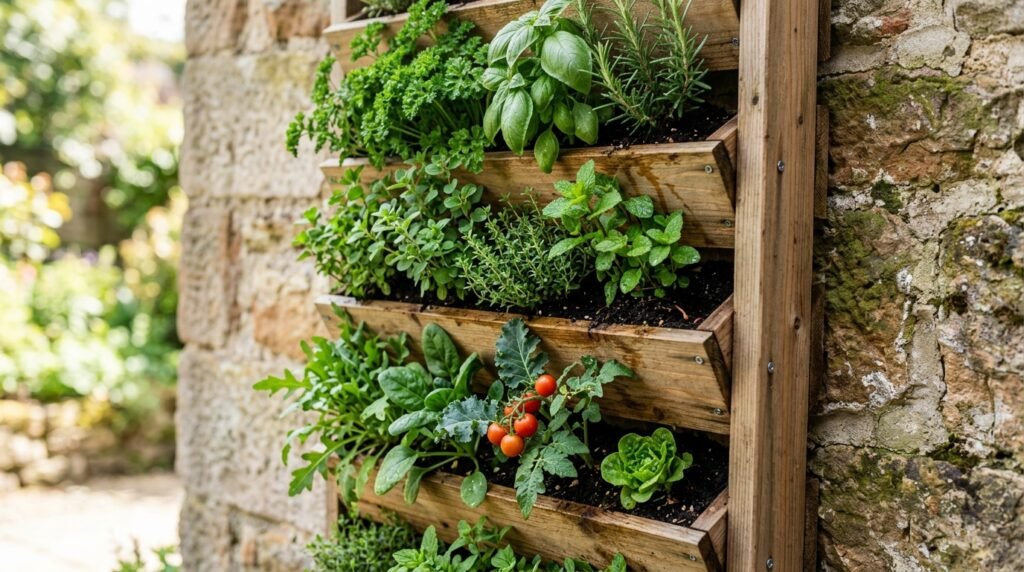
Building the soil foundation for a vertical vegetable garden
Plants suspended in the air experience significantly more wind exposure than plants sitting on the ground. The constant breeze pulls moisture rapidly out of the dirt and dries the roots completely. You must use a premium potting mix that holds moisture well without turning to solid mud.
Mix plenty of rich compost and coconut coir into your dirt before filling your wall planters. The experts at Bonnie Plants suggest avoiding cheap topsoil entirely for these specific projects. Topsoil compacts into a heavy brick and suffocates the roots trapped inside small wall pockets.
Always add a handful of perlite to ensure the water actually drains out of the containers. Proper drainage keeps the root systems healthy and prevents terrible bacterial rot.
A non-obvious trick for training stubborn vines
Some climbing plants refuse to grab the trellis and instead flop over onto the concrete floor. You have to physically tie the main stem to the wire mesh until the plant figures out where to go. Using standard plastic zip ties or tight wire will cut straight through the growing green stem.
Go to your closet and cut an old, soft cotton t-shirt into thin strips. Use these soft cotton strips to tie the vines gently to your wooden or metal supports. The soft fabric stretches as the stem grows thicker and never slices into the fragile plant tissue.
Managing watering routines in a vertical vegetable garden
Gravity acts as your biggest enemy when watering a tall wall of plants. You pour water into the top pockets and it immediately drains straight down into the lower levels. The top plants dry out and die of thirst while the bottom plants drown in heavy mud.
You must adjust your watering habits to treat each level of the wall differently. Check the top pockets daily because the harsh wind and sun hit them first. The bottom containers might only need water once a week due to the constant downward drainage.
Always push your finger into the dirt to check the moisture level before grabbing your watering can. Assuming the entire wall needs water simultaneously leads to massive crop failure.
Setting up a simple gravity drip system
You can build a highly effective watering system using an empty two liter plastic soda bottle. Drill a tiny hole in the bottom of the bottle and bury it halfway into the dirt at the top of your trellis. Fill the plastic bottle with water and let it slowly drip out over several hours.
This slow drip gives the dry dirt plenty of time to absorb the moisture completely. The gardening team at The Old Farmer’s Almanac confirms that slow, deep watering creates the strongest root systems. You skip the violent daily hose blasts and keep your foliage completely dry.
Feeding crops inside a vertical vegetable garden
Every time water drains out of your wall planters, it carries valuable nutrients down onto the patio. The limited dirt volume means the plants exhaust their food supply very quickly. You must replace these minerals consistently to keep the plants pushing out new blossoms.
Learning how to fertilize a vegetable garden organically keeps your wall plants healthy all summer. A gentle liquid fish emulsion poured over the soil every two weeks provides the perfect nitrogen boost.
Stick to organic liquid feeds rather than heavy synthetic granular fertilizers. Synthetic salts build up quickly in small wall pockets and burn the delicate plant roots.
Recognizing signs of nutrient starvation
If the bottom leaves of your climbing plants turn pale yellow, the plant needs immediate food. The vines pull nitrogen out of their older leaves to support the brand new growth at the very top. You cannot ignore this visual warning sign if you want a heavy harvest.
Always apply your liquid fertilizer early in the morning before the hot sun hits the wall. Feeding thirsty plants in the afternoon heat shocks their sensitive roots and stunts their growth entirely.
Harvesting heavily from a vertical vegetable garden
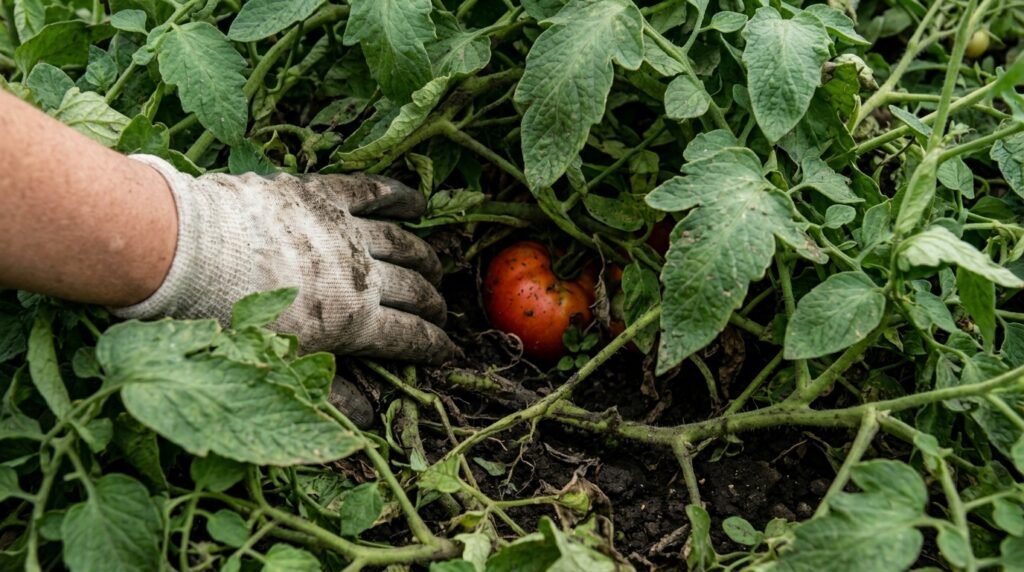
Picking food from a flat garden bed often involves hunting through a jungle of tangled, dirty leaves. A living wall presents your ripe vegetables proudly like items sitting on a grocery store shelf. You can spot a perfectly red tomato instantly against the green background.
Use sharp bypass pruners to snip the tough stems rather than yanking the fruit by bare hand. Pulling hard on a heavy vegetable might rip the entire plant straight off the supporting wire mesh. Clean cuts heal fast and keep the vines securely attached to the wall structure.
Pick your vegetables frequently to force the plant to produce brand new flowers. Leaving mature fruit on the vine signals the plant to stop growing entirely.
Cleaning up the wall for the winter
When the cold autumn weather finally kills your summer vines, do not leave the dead plant matter hanging. Dead vines trap moisture against the wooden privacy fence and cause severe rot over the winter. You must strip the trellis completely bare to protect your structural walls.
Cut the main stem at the dirt line and untangle the dead vines from your wire mesh. Dump the exhausted dirt out of your fabric pockets and wash them thoroughly with warm soapy water.
You never have to accept the physical limits of a tiny apartment patio. Looking upward changes your entire perspective on what you can actually accomplish with a few seeds. You just need to build a sturdy trellis, buy some soft twine, and secure your pots safely. Building a vertical vegetable garden maximizes your harvest and turns an ugly blank wall into a beautiful food factory.
Felipe Macedo is a home gardener and food grower based in Portland, Oregon. After killing his first three tomato plants, he became obsessed with figuring out how to grow real food in small spaces — on balconies, in containers, and in raised beds he built himself. At Chatinovax, he shares everything he learned the hard way so you don’t have to.