
Letting aggressive vines sprawl across the ground wastes valuable real estate. A single healthy plant will quickly choke out every other vegetable in its path. You might assume you lack the square footage for these heavy producers. You just need to look up. Learning to grow cucumbers vertically completely solves the space issue for balcony and small yard gardeners.
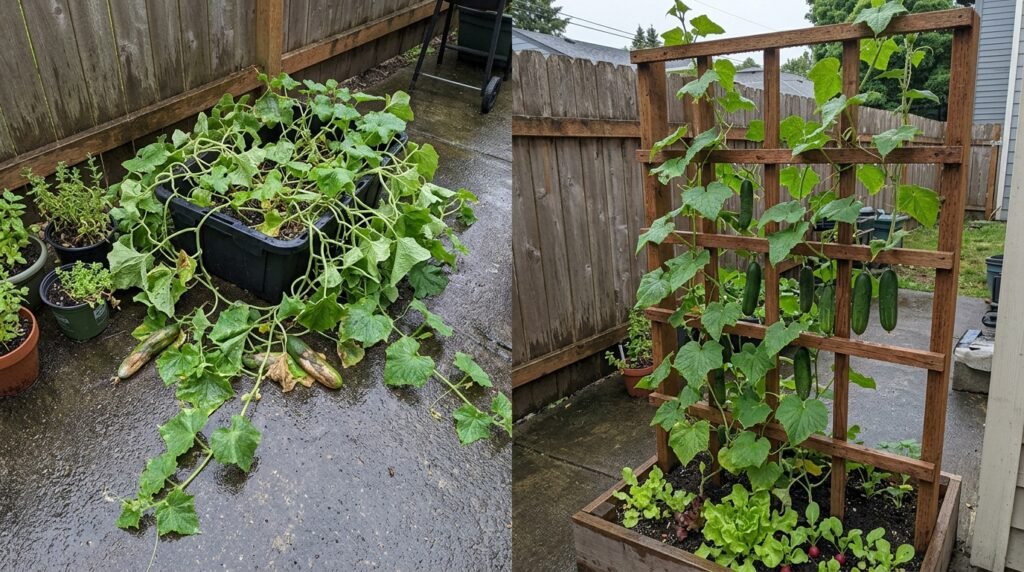
My first summer in Portland taught me this lesson the hard way. I planted a bush variety in a wide tub and let it crawl across my concrete deck. The constant June rain soaked the leaves and the developing fruit rotted on the wet floor before I could eat a single slice. The mess forced me to rethink my entire patio layout. Sending your vines up a strong support structure keeps the foliage dry and maximizes your harvest.
Why getting your vines off the ground matters
Leaving your crops on the dirt invites a host of frustrating problems. Soil harbors fungal spores that splash onto the leaves every time you water. Getting the foliage up into the air improves circulation dramatically. Good airflow dries the leaves out faster after a heavy rain shower.
You save massive amounts of floor space using this method. Instead of dedicating ten square feet to a single sprawling vine, you use about one square foot of actual soil. This upright method lets you plant other small crops right at the base of the trellis.
According to the growing experts at The Old Farmer’s Almanac, trellised plants also produce straighter, cleaner fruit that is much easier to spot. You no longer have to hunt through a dense jungle of prickly leaves to find your dinner.
Choosing the right container size
A climbing plant requires a heavy base to keep it from tipping over in the wind. A five-gallon bucket serves as the absolute minimum size for a single vine. Ten-gallon fabric grow bags work even better because they encourage a massive, healthy root system.
Fill your container with a premium potting mix containing plenty of perlite. Heavy backyard clay will suffocate the roots and stunt the plant completely. The dirt must drain rapidly to prevent the roots from drowning.
Researching the best container vegetables to grow on a patio or balcony often comes down to matching the pot size to the ambition of the plant. A large container holds enough moisture to get a thirsty root system through a hot August afternoon.
Selecting the right trellis to grow cucumbers vertically
The support structure must handle significant weight by the end of the summer. A mature vine loaded with water-heavy fruit will crush a flimsy plastic tomato cage. You need sturdy materials that can handle serious physical tension.
To successfully grow cucumbers vertically, many people use welded wire fencing or heavy-duty cattle panels. You can attach these rigid metal grids directly to your balcony railing or a nearby brick wall. The rigid wire refuses to bend during sudden summer thunderstorms.
If you lack an existing wall, a freestanding A-frame structure works perfectly in a raised bed. Figuring out how to build a simple trellis for climbing vegetables takes less than an hour with basic pine lumber and exterior screws. The vines will naturally grab onto anything thinner than a standard pencil.
Selecting the best seed varieties for climbing
Seed packets explicitly state the growth habit of the plant on the back label. Bush varieties stay compact and refuse to climb no matter how much you train them. You must buy vining varieties for this specific vertical project.
Look for popular vining types like Marketmore or Lemon varieties. These aggressive climbers produce long, flexible stems covered in tiny gripping tendrils. They naturally want to reach for the highest possible point in your garden.
Parthenocarpic varieties produce fruit without needing bees for cross-pollination. These self-pollinating types thrive on high apartment balconies where insect traffic remains relatively low.
Training the vines as they grow upwards
Plants do not automatically know exactly where you want them to go. You must guide the young stems toward the support structure early in the season. Wait until the plant reaches about eight inches tall before making your first physical move.
When you grow cucumbers vertically, you manually weave the main stem through the lowest gaps in your metal grid. The plant will eventually shoot out thin green tendrils that wrap tightly around the supports. You just need to provide the initial direction.
Use soft garden twine or strips of old cotton shirts to secure the heavy main stem loosely. Never tie the string tight around the plant. The stem thickens rapidly and a tight knot will slice directly into the green tissue.
A non-obvious pruning trick for healthier plants
Most beginners refuse to cut healthy green leaves off their vegetable plants. Here is a practical trick that prevents massive disease outbreaks later in the summer. Once the vine reaches three feet tall, cut off every single leaf in the bottom twelve inches of the stem.
Creating this bare gap prevents soil-borne fungal spores from splashing up onto the lowest leaves during watering. It removes the most vulnerable foliage from the immediate danger zone. The airflow at the base of the plant improves instantly.
The plant does not need those bottom leaves anyway. It gathers plenty of solar energy from the massive canopy higher up the trellis. This simple pruning cut saves you from battling rot all season long.

Watering strategies when you grow cucumbers vertically
These specific plants consist mostly of water. They demand a consistent supply of moisture to produce sweet, crunchy food. Letting the soil dry out completely results in horribly bitter, misshapen fruit that you cannot eat.
People who grow cucumbers vertically often forget that tall plants dry out incredibly fast. The wind blows right through the suspended leaves and pulls moisture away constantly. You must check your containers every single day without fail.
Push your index finger deep into the potting mix to check the moisture level. Water the base of the plant heavily whenever the top two inches feel dusty. Keep the hose aimed strictly at the dirt and never spray the leaves directly.
Feeding hungry vines throughout the summer
Container plants rely entirely on you for their basic nutritional needs. Every watering session washes essential food out of the bottom drainage holes. You must replace those lost nutrients regularly to keep the plant flowering.
Apply a liquid organic fertilizer every two weeks once the plant starts producing yellow flowers. Choose a formula high in potassium and phosphorus rather than pure nitrogen. Liquid fertilizers absorb quickly and provide an immediate boost to hungry roots.
Too much nitrogen produces massive green leaves but zero actual food. A balanced feeding routine ensures the plant has the energy to ripen several heavy fruits simultaneously. Set a reminder on your phone so you never miss a feeding day.
Managing pests and diseases when you grow cucumbers vertically
Elevating your plants stops hungry slugs from ruining your harvest, but flying insects will still visit your patio. Aphids love to cluster on the new, tender growth near the top of the trellis. A sharp blast of water from a spray bottle usually knocks them off effectively.
Powdery mildew remains the biggest threat to this specific crop. It looks exactly like someone dusted white flour all over the green leaves. Choosing to grow cucumbers vertically reduces the risk, but humid weather can still trigger a severe outbreak.
Knowing how to prevent and treat powdery mildew on plants keeps the vines producing food well into the fall. Remove infected leaves immediately and throw them in the trash, not your compost bin.
The experts at Gardening Know How also advise watching out for striped cucumber beetles. Pick these yellow and black bugs off by hand early in the morning when they move slowly. Dropping them into a cup of soapy water stops them from destroying your flowers.
Hand pollinating your balcony crops
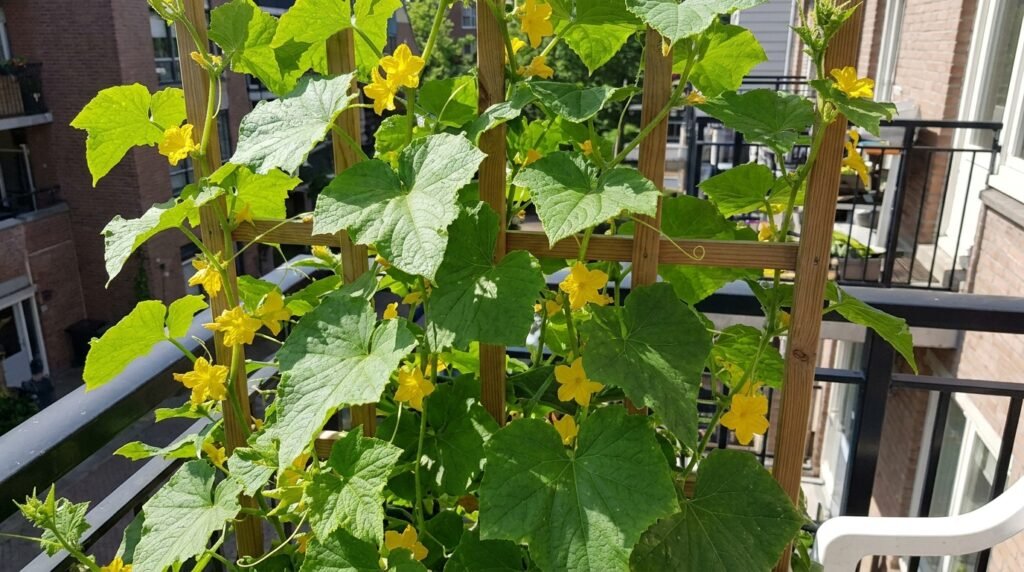
Sometimes the plant produces plenty of flowers but absolutely no fruit. This usually means the local bees have not found your balcony garden yet. You can easily step in and do the job of the bees yourself.
You will see two different types of flowers on the vine. Male flowers sit on a plain, thin stem. Female flowers have a tiny, miniature cucumber directly behind the yellow petals.
Take a small paintbrush and rub it gently inside the male flower to collect the yellow pollen. Transfer that pollen directly onto the center structure of the female flower. This simple manual process guarantees the fruit will swell and mature properly.
Harvesting correctly to multiply your yield
Leaving ripe fruit on the vine signals the plant to stop producing new flowers entirely. The biological goal of the plant is to create mature seeds for next year. Once it achieves that specific goal, it shuts down production and the vine dies.
Pick your food while it remains relatively small and firm. Frequent harvesting forces the vine to push out new blossoms continuously. Your overall yield increases dramatically when you harvest every couple of days.
Use a clean, sharp pair of bypass pruners to cut the thick stem attached to the fruit. Pulling or twisting the vegetable by hand can snap the main vine entirely. Snapping the main stem will instantly kill the upper half of your carefully trained plant.
Farming on a small patio requires a bit of vertical imagination. You do not need a sprawling farm field to produce massive amounts of fresh food. Installing a cheap metal grid and training a single healthy vine changes what your space can actually accomplish. Grab a sturdy container, secure a strong trellis, and get ready for a heavy harvest. The decision to grow cucumbers vertically turns a cramped balcony into a highly productive growing machine.

Felipe Macedo is a home gardener and food grower based in Portland, Oregon. After killing his first three tomato plants, he became obsessed with figuring out how to grow real food in small spaces — on balconies, in containers, and in raised beds he built himself. At Chatinovax, he shares everything he learned the hard way so you don’t have to.