
I spent my first summer on my south-facing balcony fighting a losing war against hungry insects. I started my tiny farm with empty recycled yogurt containers and a rusty eight dollar trowel. I assumed the fourth floor elevation of my apartment would keep the bugs completely away from my food. A massive colony of green aphids proved my theory wrong almost immediately. I watched them multiply rapidly and destroy my entire pepper crop in less than a week. I realized I needed a solid plan to protect vegetable garden from pests before planting another round of seeds.
Why you must protect vegetable garden from pests naturally
Heavy chemical sprays poison the exact food you work so incredibly hard to grow. The wind on a small apartment balcony easily blows those toxic chemicals right back through your open sliding glass door. You also end up killing the helpful bees and native pollinators visiting your patio flowers when you use synthetic insect killers. You can achieve fantastic results using basic biology and cheap physical barriers instead of expensive chemical warfare.
Choosing natural methods forces you to become a much better and more observant patio gardener. You learn to spot the tiny warning signs of an infestation long before the bugs take over the entire plant. This daily observation saves you money and keeps your limited growing space completely safe for your family to enjoy.
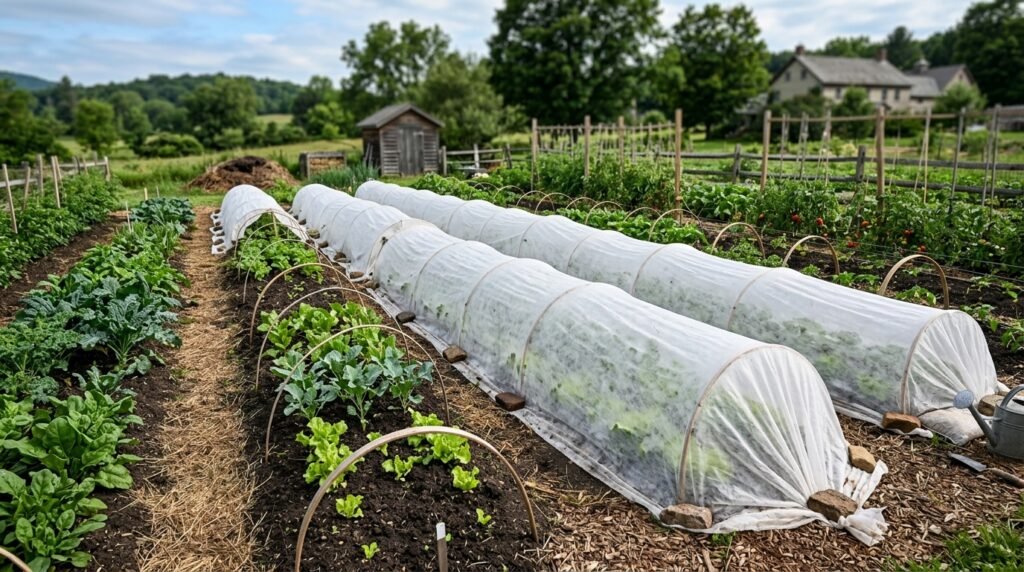
1. Deploy floating row covers as a physical shield
A solid physical barrier stops flying insects from ever touching your vulnerable green leaves. You drape a lightweight white mesh fabric directly over your plastic pots and secure it tight against the bottom rim. The summer sunlight and morning rain pass through the tiny mesh holes perfectly. The hungry moths simply cannot land on the foliage to lay their destructive eggs.
This remains the absolute simplest way to protect vegetable garden from pests during the early spring weeks. The cover also traps a small amount of heat near the soil to help your young seedlings grow faster.
Securing the protective mesh effectively
The wind will rip a loose cover right off your balcony and send it flying down into the street below. You must use heavy binder clips or tight elastic rubber bands to lock the fabric down tightly against the container. The agricultural experts at The Old Farmer’s Almanac recommend leaving these fabric covers on until the plants actually begin to push out flowers.
You must remove the covers once the flowers appear so the local bees can reach the blossoms. If the bees cannot reach the flowers, your plants will never produce any actual vegetables.
2. Invite predatory bugs to eat the bad ones
You actually want certain insects to live permanently on your patio all summer long. Ladybugs and green lacewings act like tiny flying guard dogs for your vulnerable potted crops. They actively hunt down and consume the soft bodied pests destroying your leafy greens. You just need to give these helpful predators a good reason to stick around your apartment balcony.
You can actually buy live ladybugs online and release them directly onto your affected plants. You must release them late in the evening after the sun goes down so they do not immediately fly away.
Planting specific flowers for protection
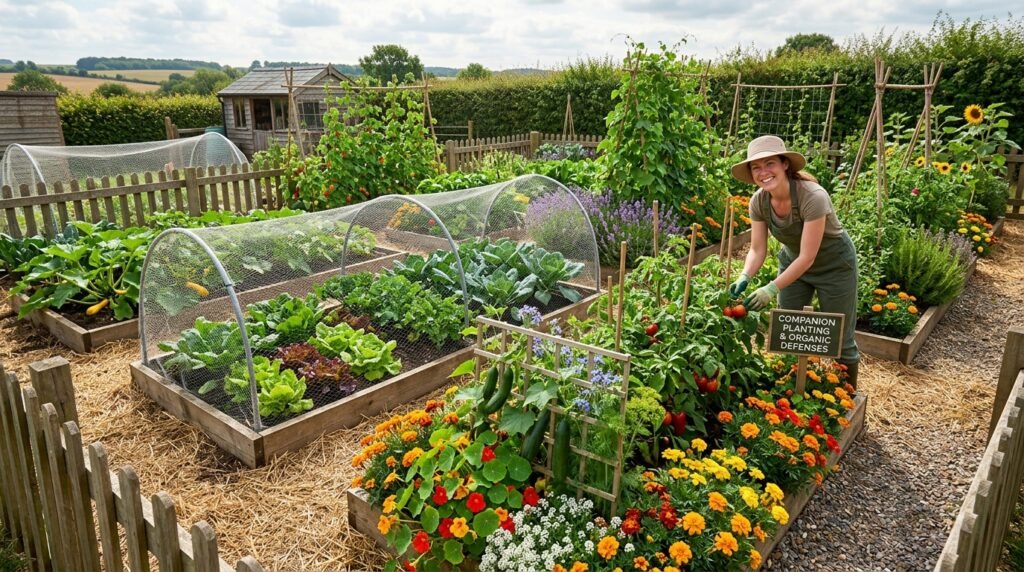
These helpful predators need sweet nectar to survive when they cannot find enough aphids to eat. Adding a few small pots of sweet alyssum or blooming dill provides a highly reliable food source for them. Understanding how to use companion planting to grow more food in less space creates a perfectly balanced patio ecosystem.
The flowers look beautiful against the wooden privacy fence and serve a vital defensive purpose simultaneously. A diverse balcony garden defends itself naturally without requiring your constant daily intervention.
3. Stop the slimy crawlers with a clever trap
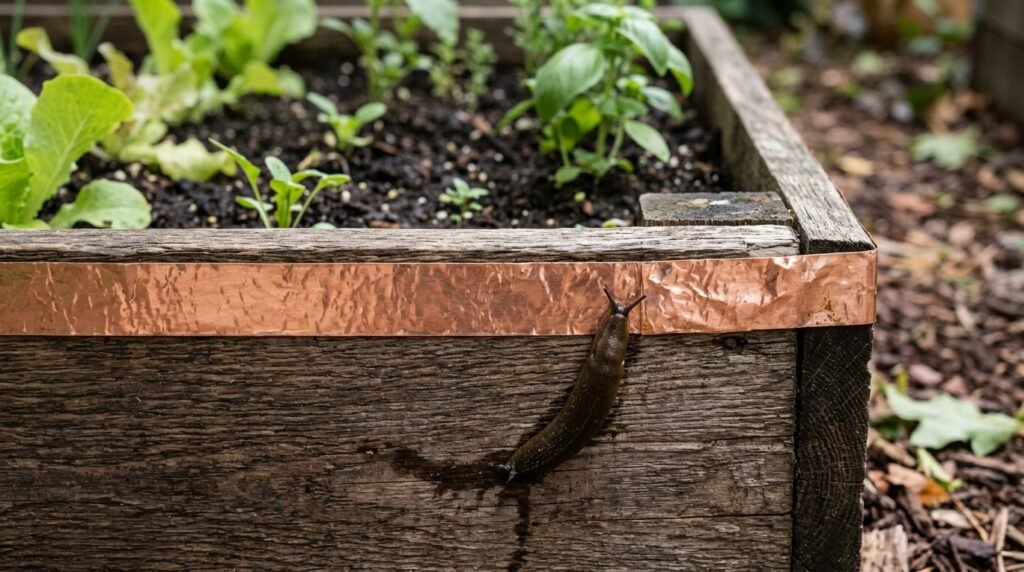
Here in Portland, the constant spring rain brings out massive slugs that eat entire lettuce heads overnight. They climb straight up the side of your wooden boxes and devour your hard work while you sleep. You must stop these slimy crawlers before they reach the dirt line and find your tender greens.
You can sink a shallow plastic dish into the potting soil and fill it with cheap stale beer. The slugs smell the fermenting yeast from across the balcony and crawl directly into the dish. They fall into the liquid and drown before they can take a single bite of your expensive vegetables.
A non-obvious trick using copper tape
You can also build an invisible electric fence for slugs using a cheap roll of self adhesive copper tape. Wrap a solid continuous ring of copper tape around the outside rim of your plastic buckets. When a slug touches the copper metal, their slimy body creates a tiny electrical reaction that shocks them instantly.
They immediately turn around in pain and leave your food alone entirely. Learning how to keep slugs and snails out of your vegetable garden saves your delicate spring harvest completely.
4. Blast soft insects with cold water
Sometimes you just need to use brute physical force to protect vegetable garden from pests on a small patio. Aphids gather by the thousands underneath your leaves and suck the sweet sap directly out of the plant veins. They multiply incredibly fast and turn the green foliage completely yellow and sticky.
You can knock these soft insects completely off the plant with a sharp blast of cold water. Grab a plastic spray bottle or your garden hose and hit the undersides of the leaves aggressively. The bugs fall onto the hard concrete floor and cannot climb back up the tall plant stem.
Using your watering hose as a weapon
You must perform this aggressive water blast early in the morning rather than late at night. The morning sun quickly dries the wet foliage and prevents aggressive fungal diseases from taking hold. Finding out how to get rid of aphids on vegetable plants naturally requires you to check the leaves daily.
Repeat this water blasting process every three days until the aphid population disappears entirely. It costs absolutely nothing and cleans the dust off your plant leaves at the exact same time.
5. Hand pick the large invaders every morning
Certain patio pests grow way too large and heavy for a simple water blast to handle effectively. Massive green hornworms blend perfectly into your tomato leaves and eat giant holes in the foliage. You have to physically remove these large caterpillars with your bare hands before they strip the plant bare.
Look for small black droppings on the lower leaves to locate exactly where the caterpillars are hiding. They usually hang upside down underneath the thickest branches right near the main central stem.
The soapy water bucket method
Grab a small plastic cup and fill it halfway with warm tap water and a heavy squirt of liquid dish soap. Pluck the large caterpillars off your plants and drop them directly into the soapy liquid. The soap breaks the surface tension of the water and sinks the heavy bugs instantly.
This remains the absolute best way to protect vegetable garden from pests when dealing with massive caterpillars. It feels a bit gross at first, but it saves your tomato harvest from total destruction.
6. Apply organic neem oil for serious infestations
Sometimes a bug population explodes completely out of control before you even notice the initial problem. You need a much stronger solution to protect vegetable garden from pests when the basic physical barriers fail. Cold pressed neem oil provides a fantastic organic defense against heavy and stubborn insect attacks.
The thick oil coats the insects and interrupts their biological ability to eat and reproduce. The team at Gardening Know How advises mixing the raw oil with warm water and a tiny drop of dish soap.
Mixing and spraying neem oil safely
You must spray this natural oil mixture early in the morning before the hot sun hits your patio. Spraying heavy oil onto your plants in the hot afternoon sun will literally cook your green leaves. The leaves will turn crispy brown and fall off within just a few hours.
You must also spray the absolute undersides of the leaves where the insects hide from the wind. Repeat the oil application every seven days until the infestation completely stops spreading across your balcony.
7. Keep your patio dirt incredibly clean
Bugs absolutely love to hide in piles of dead leaves and rotting fruit sitting on your concrete balcony floor. If you let dead plant matter pile up, you create a perfect five star hotel for overwintering pests. They will sleep safely under the debris all winter and attack your brand new seedlings the following spring.
You must sweep your balcony floor thoroughly every single weekend during the active growing season. Pick up any dropped tomatoes or fallen yellow leaves and throw them directly into the city trash bin.
Practicing aggressive patio sanitation
A clean growing space naturally removes the favorite hiding spots of your worst patio enemies. You should also take your sharp pruners and cut off any low hanging leaves that physically touch the potting dirt. This creates a clear physical gap between the soil pests and the healthy green foliage above.
Sanitation takes five minutes of your weekend and prevents massive headaches later in the hot summer. A tidy balcony farm always produces significantly more food than a messy and disorganized patio.
8. Grow strong plants to protect vegetable garden from pests
Weak and thirsty plants send out specific biological distress signals that hungry insects can actually smell in the air. A highly stressed plant cannot defend itself and becomes an incredibly easy target for every bug in the neighborhood. You must keep your crops perfectly hydrated and properly fed to maintain their natural biological defenses.
Avoid dumping massive amounts of heavy nitrogen fertilizer into your plastic buckets all at once. Too much rapid green growth attracts massive swarms of aphids looking for soft and tender new tissue.
Checking the soil moisture daily
Push your index finger exactly one inch deep into the potting soil every single morning. If the dirt feels completely dry, you need to grab your watering can and hydrate the roots immediately. Strong and healthy plants resist physical damage much better and recover from insect bites incredibly fast.
Growing food on a small apartment balcony requires your constant observation and quick physical action. You do not need to buy expensive and toxic chemical sprays to keep your summer harvest completely safe. You just need to check the undersides of your leaves daily and set up basic physical barriers early in the season. Implementing these very simple daily habits allows you to protect vegetable garden from pests and enjoy clean food all year long.

Felipe Macedo is a home gardener and food grower based in Portland, Oregon. After killing his first three tomato plants, he became obsessed with figuring out how to grow real food in small spaces — on balconies, in containers, and in raised beds he built himself. At Chatinovax, he shares everything he learned the hard way so you don’t have to.