
People look at a small apartment patio and assume they can only grow a few basic houseplants. That assumption robs you of eating real food straight off the vine. You can absolutely grow tomatoes in containers without owning a single inch of real backyard dirt. You just need a solid plan and the right supplies.
When I started my first balcony garden, I had absolutely no idea what I was doing. I stared at my empty concrete space and felt completely overwhelmed by the expensive setups I saw online. I literally planted seeds in washed-out yogurt containers using an eight-dollar hand trowel.
Those early mistakes taught me exactly how much abuse a tomato plant can actually survive. I learned that expensive gear matters far less than good soil and consistent watering. The process is straightforward once you understand the basic rules of small space gardening.
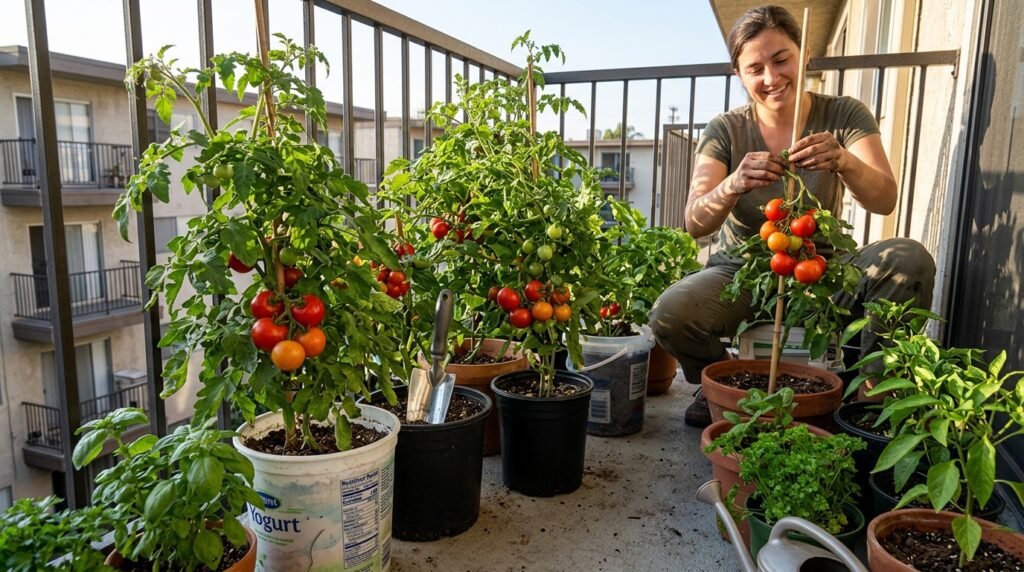
Why you should grow tomatoes in containers this year
Growing food in pots actually gives you a massive advantage over traditional backyard gardeners. You control the exact soil composition from day one. Soil diseases hide in ground dirt for years, but a fresh bag of potting mix provides a totally clean slate.
Container plants also offer incredible mobility. If a sudden summer storm threatens to snap your plants, you just drag the pots against the building. You can physically move your garden to chase the shifting seasonal sunlight across your patio.
Learning to grow tomatoes in containers builds foundational skills that apply to every other crop. You figure out watering schedules, pest management, and proper fertilization in a highly controlled environment. It serves as the perfect training ground for absolute beginners.
Choosing the right pot size for heavy yields
Tomatoes develop massive, aggressive root systems that demand space. Putting a tomato seedling in a tiny decorative pot guarantees a stunted, miserable plant. You need substantial volume to support a heavy harvest of fruit throughout the hot summer.
A five-gallon container serves as the absolute minimum size for a single tomato plant. Ten-gallon pots produce significantly better results and require less frequent watering. Fabric grow bags work perfectly for balcony gardeners because they are cheap, lightweight, and prevent roots from circling the bottom.
Make sure your chosen container has multiple drainage holes at the bottom. Tomatoes hate sitting in stagnant water. If water cannot escape freely, the roots will literally drown and rot within a week. I always place an inexpensive plastic drip tray under my grow bags to protect my downstairs neighbors from muddy runoff.
Picking the best varieties to grow tomatoes in containers
Not all tomato plants belong on a cramped apartment balcony. Some heirloom varieties grow ten feet tall and require heavy steel cages. You want to look for plants specifically bred for small spaces.
Read the plant tags at the nursery and look for the word determinate. Determinate tomatoes grow to a fixed height, usually around three or four feet, and stop. They produce their entire crop over a few weeks, which makes them highly manageable for small spaces.
Indeterminate varieties act like wild vines that keep growing until the winter frost kills them. If you attempt to grow an indeterminate type on a balcony, stick exclusively to cherry tomatoes. Their smaller fruit ripens faster and puts less physical stress on the plant.
The magic of bush and patio varieties
Seed breeders now offer dozens of excellent patio varieties designed specifically for container life. These bush-style plants stay compact and bushy without sacrificing flavor. They fit perfectly into the corners of a sunny deck without completely blocking your view.
According to the experts at The Old Farmer’s Almanac, bush varieties rarely need more than a simple wooden stake for support. This saves you from buying expensive and bulky metal cages. You get maximum food output with minimal structural engineering required.
When you decide to grow tomatoes in containers, matching the plant size to your available space prevents major headaches. A single healthy patio bush produces far more food than a massive vine suffocating in a small pot. You will harvest ripe fruit much earlier in the season as well.
The perfect soil to grow tomatoes in containers
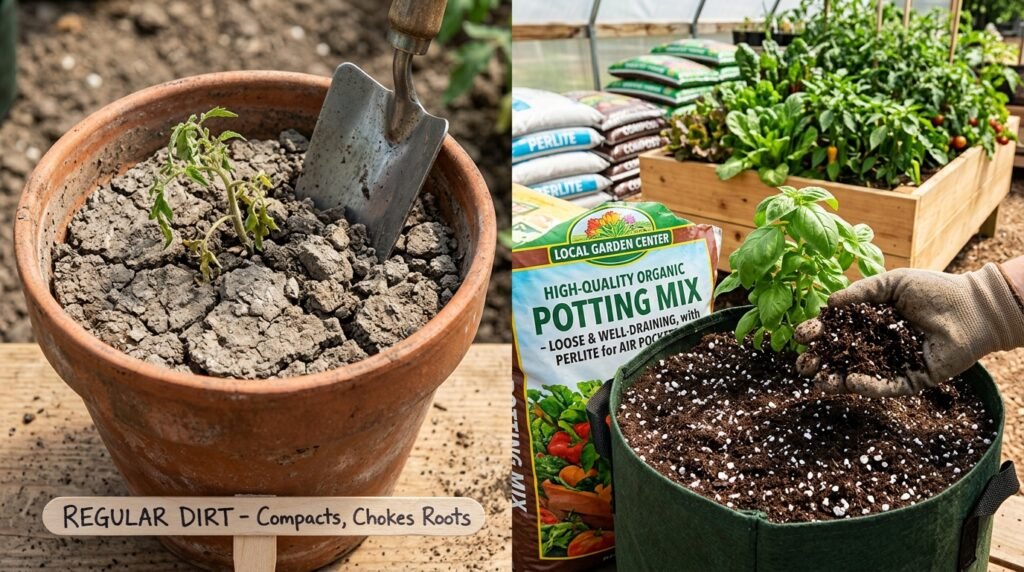
You cannot shovel regular dirt out of the ground and put it into a bucket. Ground soil compacts into a hard brick when confined in a pot. Container gardening requires a specialized mix that stays loose and drains rapidly.
Buy a high-quality organic potting mix from your local garden center. Look for a mix that contains plenty of perlite to keep the soil fluffy. The white flecks of perlite create tiny air pockets that roots desperately need to breathe.
If your local soil options look terrible, you can easily make adjustments. Reading up on the best soil mix for a raised bed vegetable garden helps you understand how compost and aeration materials work together. Good dirt solves ninety percent of your future problems.
A weird trick for stronger roots
Here is a non-obvious tip that completely changes how your tomato plant performs. When you move your nursery seedling into its permanent pot, bury it incredibly deep. You should bury two-thirds of the entire stem underground.
Pinch off the lowest sets of leaves and sink the plant deep into the potting mix. Tomato plants have microscopic hairs all along their main stem. Every single one of those tiny hairs will turn into a thick root when it touches damp soil.
A massive root system anchors the plant against strong winds. It also allows the plant to absorb significantly more water and nutrients during the peak heat of summer. Do not be afraid to bury that stem.
Watering rules when you grow tomatoes in containers
Potted plants dry out significantly faster than plants growing in the ground. The wind hits the sides of the container and pulls moisture away constantly. You must monitor your soil moisture daily during the hot summer months.
Never water your plants on a strict calendar schedule. Check the dirt with your hands before you grab the watering can. Shove your index finger two inches down into the potting mix.
If the soil feels damp, leave it alone. If it feels completely dry, water the pot deeply until liquid pours out of the bottom drainage holes. Shallow, frequent watering creates weak surface roots that cannot survive a heatwave.
Consistent moisture prevents ruined fruit
Inconsistent watering leads directly to a heartbreaking problem called blossom end rot. This condition turns the bottom of your ripening tomatoes into a black, sunken mess. It happens when the plant cannot access enough calcium in the soil.
The soil usually has plenty of calcium, but the plant cannot absorb it without steady moisture. Letting your pots dry out completely and then flooding them triggers this exact problem.
If you struggle to keep your pots consistently damp, consider upgrading your setup. Learning how to set up a self-watering container garden takes the guesswork completely out of the equation. A self-watering system provides a steady, even supply of moisture all day long.
Feeding your plants for massive harvests
A potted tomato plant relies entirely on you for its food supply. Every time you water the container, essential nutrients wash out the bottom. The fertilizer included in standard potting soil usually runs out after the first month.
You must start a regular feeding schedule to keep the plant producing flowers. Buy a balanced organic liquid fertilizer specifically formulated for tomatoes. Liquid fertilizers absorb quickly and provide an immediate boost to hungry roots.
Apply this liquid feed every two weeks throughout the entire growing season. Strong, well-fed plants resist pest infestations and fungal diseases much better than starving plants. The horticulture team at Gardening Know How strongly suggests feeding container tomatoes more frequently but with weaker doses than ground plants.
It takes serious energy to produce heavy fruit. If you want to successfully grow tomatoes in containers, you must treat fertilization as a mandatory chore. Set a recurring reminder on your phone so you never miss a feeding day.
Dealing with balcony wind and weather
Renting a higher-floor apartment introduces serious wind challenges. Ground-level gardens rarely experience the sustained gusts that hit a third-floor balcony. Wind dries out leaves rapidly and can easily snap a heavy tomato stem in half during a summer storm.
Here in Portland, the spring winds sweeping off the river used to batter my early seedlings mercilessly. I lost two entire plants my first year simply because I underestimated the gusts. I quickly learned to push my heavy fabric pots directly against the exterior wall of my building. That solid wall creates a protective microclimate and blocks the worst of the wind damage.
You must tie your plants to their support stakes securely. Use soft garden twine or strips of old cotton t-shirts to tie the main stem to a bamboo pole. Check these ties weekly because the stem thickens rapidly as the plant matures. Tight strings will cut into the flesh of the plant and restrict the flow of water to the top leaves.
Managing pests before they ruin your hard work
Growing food on a balcony does not grant you immunity from bugs. Aphids and spider mites will eventually find your plants. Panicking and spraying harsh chemicals destroys the fragile ecosystem you are trying to build.
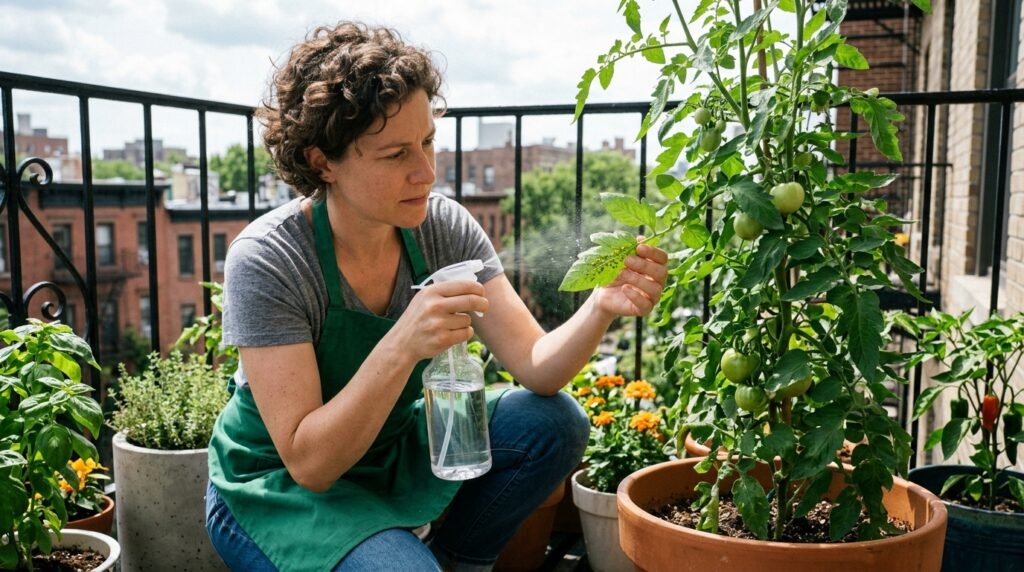
Inspect the undersides of your tomato leaves every time you water. If you spot a small cluster of green aphids, simply wipe them off with your thumb. You can also use a strong blast of water from a spray bottle to knock them off the plant.
Understanding common tomato plant problems and how to fix them helps you identify the difference between a bug issue and a nutrient deficiency. Observation is your absolute best defense mechanism against garden failure.
Keeping realistic expectations for your harvest
You might only get twenty cherry tomatoes off your very first plant. That still counts as a massive victory for a beginner. Gardening is a skill built entirely on trial, error, and quiet observation.
Do not compare your small balcony harvest to heavily edited photos on social media. Focus on the actual taste of a sun-warmed tomato you grew yourself from dirt and water. The flavor of homegrown food ruins grocery store produce forever.
Every single gardener starts with dead plants and frustrating failures. The key is simply refusing to quit after your first difficult season. Start small with just one or two fabric pots and a bag of premium soil.
Choosing to grow tomatoes in containers opens the door to total food independence, no matter where you live. You can absolutely turn a tiny concrete slab into a highly productive growing space. Go buy a strong starter plant this weekend and get your hands dirty.
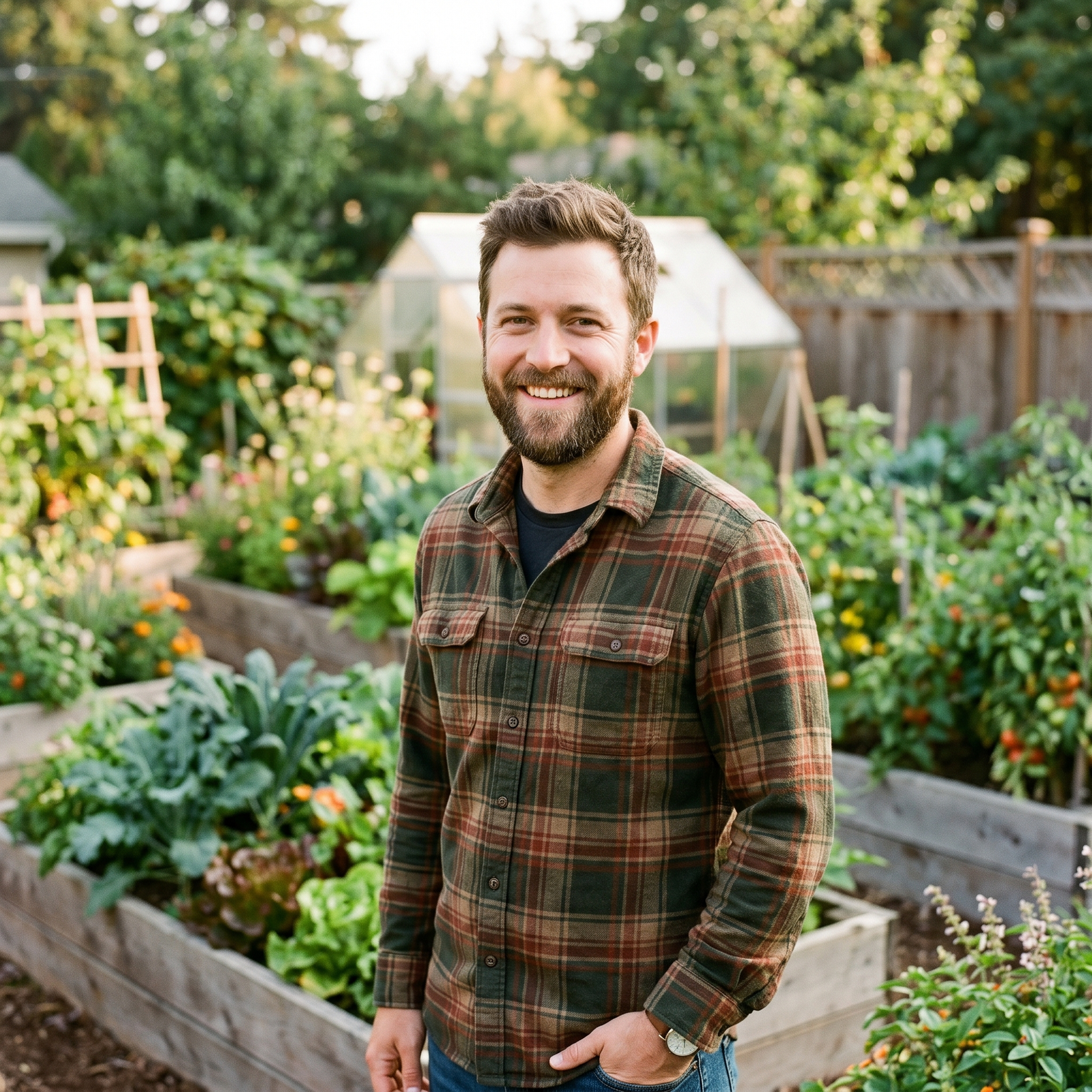
Felipe Macedo is a home gardener and food grower based in Portland, Oregon. After killing his first three tomato plants, he became obsessed with figuring out how to grow real food in small spaces — on balconies, in containers, and in raised beds he built himself. At Chatinovax, he shares everything he learned the hard way so you don’t have to.