
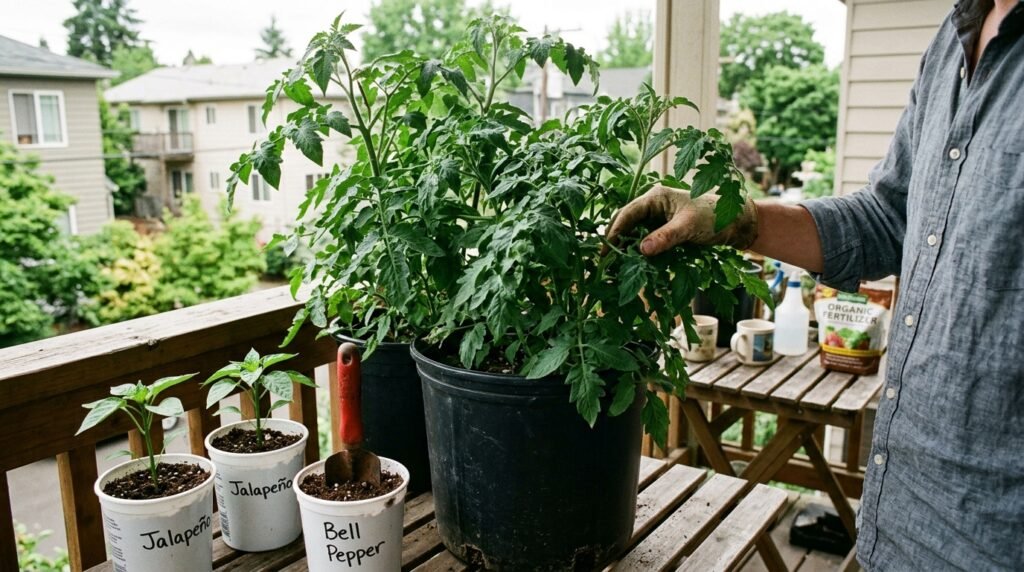
You spend months watering green leaves and expect a massive harvest by July. Instead, you stare at empty branches and try to fix a vegetable garden not producing a single tomato. I experienced this exact failure during my third summer renting here in Portland. I planted six beautiful pepper seedlings in recycled yogurt containers using my trusty eight dollar trowel.
The plants grew tall and leafy, but they completely refused to grow any actual food. I felt incredibly frustrated watching my expensive potting soil go to waste on barren stems. Finding the reason behind a vegetable garden not producing requires a bit of detective work on your balcony. You have to observe your plants closely and make a few specific environmental changes.
Why a lack of sunlight leaves a vegetable garden not producing
Before: You place your expensive fabric grow bags in a corner that looks bright to your human eyes. The patio gets some morning light, but the building next door blocks the afternoon rays entirely.
Your plants look dark green and healthy, but they never develop a single flower bud. Plants need massive amounts of direct solar energy to create heavy fruit.
After: You track the sun across your concrete balcony using a simple piece of chalk. You mark exactly where the light hits the floor at noon and at three in the afternoon. You slide your heavy pots directly into that specific path of sustained light.
Within two weeks, yellow flowers appear everywhere and the fruit finally begins to form. Reviewing the 10 beginner gardening mistakes and how to fix them proves that assuming you have enough light ruins many early harvests.
The hidden danger of too much nitrogen fertilizer
Before: You want your plants to grow faster, so you dump heavy doses of synthetic liquid fertilizer into your pots every weekend. The plants explode with massive lush green leaves that block out the sun completely.
You think you are doing a fantastic job, but you still have a vegetable garden not producing any actual food. High nitrogen fertilizer forces the plant to build foliage instead of flowers.
After: You switch to a balanced organic fertilizer designed specifically for fruiting crops. You look for a product with high phosphorus and potassium numbers rather than just heavy nitrogen.
The experts at Gardening Know How explain that phosphorus triggers heavy blooming in summer crops. Your plants stop focusing entirely on growing taller and start pushing out massive clusters of fruit.
Extreme heat often results in a vegetable garden not producing
Before: A brutal heatwave hits your neighborhood and the patio temperatures climb past ninety degrees for three straight days. Your tomato plants already have dozens of yellow flowers blooming perfectly.
The next morning, every single flower dries up and falls off the stem onto the concrete floor. Extreme heat literally sterilizes the pollen inside the blossoms, making reproduction physically impossible.
After: You check the weather forecast daily and prepare for sudden temperature spikes. You hang a cheap piece of shade cloth over your balcony railing to block the harsh afternoon sun.
The temperature directly under the cloth drops by ten degrees almost instantly. Reading up on common tomato plant problems and how to fix them shows how shade cloth keeps pollen viable during a heatwave.
A non-obvious trick for poor container pollination
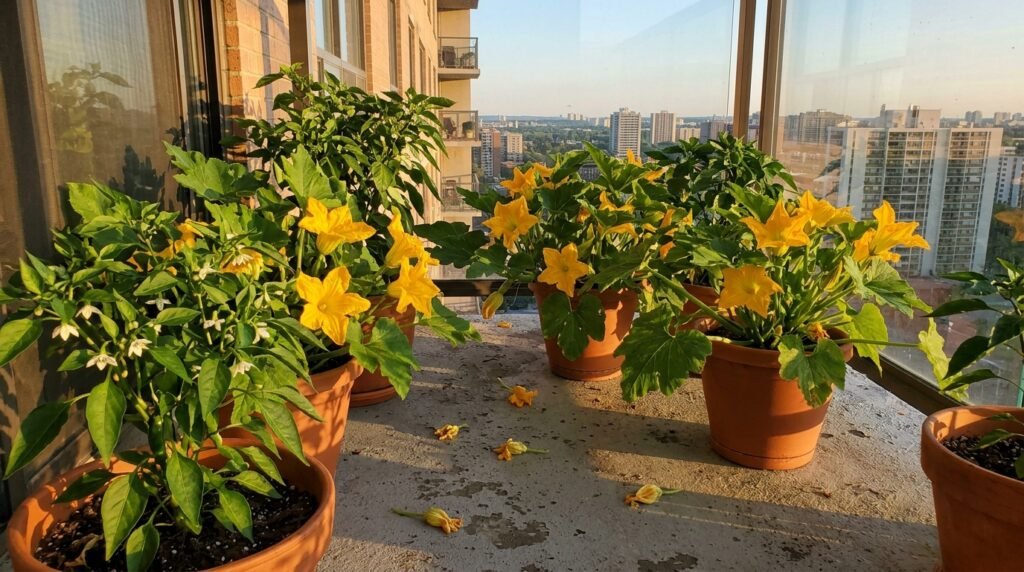
Before: You live on a high floor and local bees simply never visit your balcony. Your squash and pepper plants produce dozens of flowers that open wide and look incredibly healthy.
Because no insects arrive to move the pollen around, the unpollinated flowers simply drop off the plant entirely. You watch a potential harvest disappear because you lack natural ecosystem helpers.
After: You step in and act as the bee yourself using an old electric toothbrush. You turn the toothbrush on and gently touch the vibrating plastic back to the main flower stem.
The rapid vibration shakes the microscopic pollen loose and it falls perfectly into place. This simple bathroom tool guarantees a massive harvest when nature refuses to help your patio farm.
Poor container drainage leaves a vegetable garden not producing
Before: You buy beautiful decorative ceramic pots and fill them with expensive dirt. You water the plants every single day because the summer heat feels intense.
The bottom of the pot has zero holes, so the excess water pools at the bottom and turns the dirt into toxic mud. The roots suffocate, begin to rot, and the stressed plant stops producing fruit immediately.
After: You grab a power drill and punch five large holes directly into the bottom of your plastic and ceramic pots. You also switch to fabric grow bags that allow moisture to seep out the sides naturally.
Learning how to fix overwatered plants before it is too late teaches you to wait until the top soil feels completely dry. The roots finally get the oxygen they desperately need to pull nutrients up to the flowers.
The timing mistake that ruins summer harvests
Before: You buy your seeds in late June and plant them directly into your patio containers. The seeds sprout quickly in the warm weather, but the plants are still tiny when August arrives.
By the time the plants finally grow large enough to produce flowers, the autumn frost kills them instantly. You wasted an entire summer because you started the biological clock far too late.
After: You count backward from your first expected frost date and plant your seeds indoors weeks ahead of time. You move strong, established plants onto your balcony the exact week the spring weather warms up.
You give the plants enough biological time to reach maturity and produce a heavy yield. Finding the root cause of a vegetable garden not producing often comes down to basic calendar management.
Overcrowded pots lead to a vegetable garden not producing
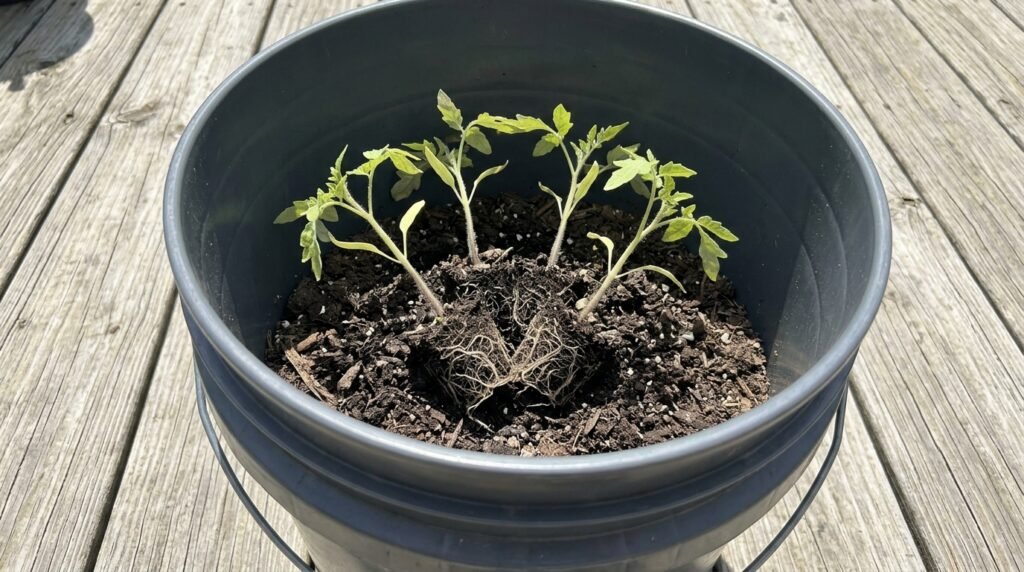
Before: You want to maximize your tiny space, so you shove four tomato seedlings into a single five gallon bucket. The roots immediately tangle together and fight aggressively for the limited water and nutrients.
The overcrowded plants stunt each other completely and refuse to grow past two feet tall. The dense leaves block all airflow, inviting severe fungal diseases to destroy the stressed plants.
After: You respect the physical limits of your plastic containers and plant strictly one heavy feeder per pot. The single plant has plenty of room to stretch its roots deep into the potting soil.
It claims all the available water and fertilizer for itself, growing into a massive and sturdy bush. One healthy plant produces triple the amount of food compared to four starving plants shoved into a tight corner.
Managing your watering routine for better yields
Before: You water your plants randomly whenever you happen to remember them. The soil dries out completely until the leaves wilt heavily, and then you flood the pot with a heavy hose.
This violent swing between bone dry dirt and soaking mud causes massive stress to the root system. A stressed plant drops its blossoms immediately to conserve energy for basic survival.
After: You establish a strict morning watering routine and check the soil moisture levels daily. You provide a slow, deep soak only when the dirt actually needs it.
This consistent hydration keeps the internal cellular pressure stable across the entire plant. The blossoms stay firmly attached to the stems and develop into massive vegetables you can actually eat.
Fixing a barren patio farm requires patience and a willingness to change your daily habits. You have to observe the sunlight, control the moisture, and feed your plants the correct nutrients. Fixing a vegetable garden not producing is the first step toward a massive harvest. Adjust your container setup this week and watch those empty green branches finally fill up with fresh food.
Felipe Macedo is a home gardener and food grower based in Portland, Oregon. After killing his first three tomato plants, he became obsessed with figuring out how to grow real food in small spaces — on balconies, in containers, and in raised beds he built himself. At Chatinovax, he shares everything he learned the hard way so you don’t have to.