
Fresh berries from the grocery store cost an absolute fortune. You pay top dollar for a plastic box only to find mushy, bruised fruit hidden at the bottom. You do not need a massive backyard farm to fix this frustrating household problem. Anyone with a sunny corner can easily grow strawberries in pots and harvest fresh fruit all summer long.
I figured this out during my second year gardening on my south-facing Portland balcony. I originally started with basic vegetables in recycled yogurt containers using a cheap eight-dollar trowel. I wrongly assumed fruit required massive orchards and specialized agricultural skills to survive. I bought a single bare-root plant on a whim and it completely took over a plastic hanging basket. Deciding to grow strawberries in pots changes your entire approach to small space farming.
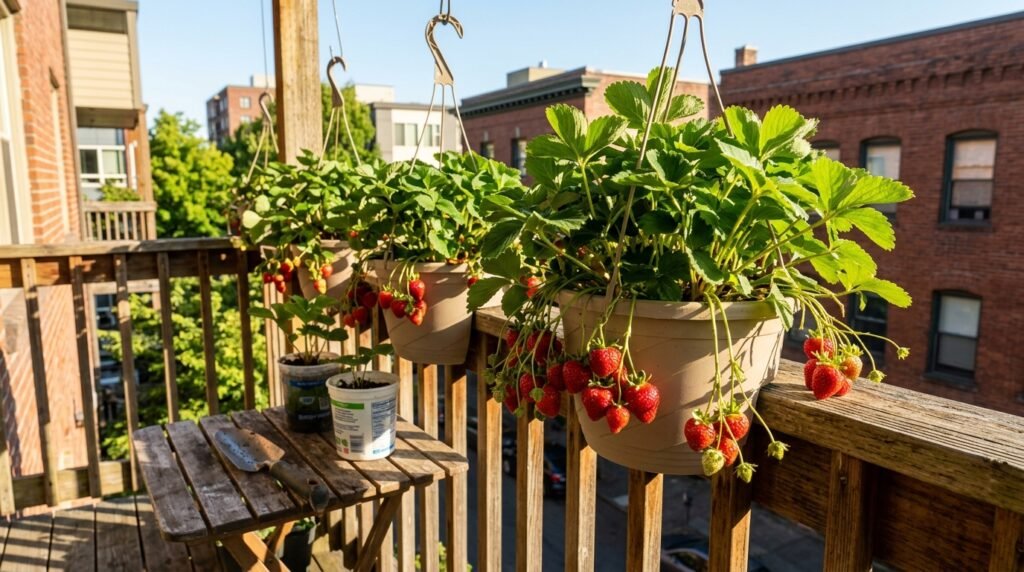
Why you should grow strawberries in pots this year
Ground soil harbors dozens of aggressive pests and nasty fungal diseases. Slugs and pillbugs love to ruin a perfect harvest right before the berries turn red. Keeping your plants elevated in plastic containers removes them from that dangerous ground-level warzone completely. You gain total physical control over the soil quality and ambient moisture levels.
Potted plants also receive significantly better air circulation than plants crowded together in a muddy garden bed. Good airflow dries the green leaves rapidly after a heavy rainstorm hits your neighborhood. This natural drying process stops powdery mildew and gray mold from destroying your hard work. You simply spend less time fighting diseases and more time eating fresh food.
The smartest plant varieties for small spaces
Garden centers sell two main categories of berry plants every spring season. June-bearing plants produce one massive harvest early in the summer and then stop entirely. This specific variety works perfectly for homeowners who want to make giant batches of homemade jam all at once.
Everbearing or day-neutral varieties produce smaller, consistent flushes of fruit from June until the first autumn frost. These continuous producers make far more sense for a cramped apartment balcony. You get a steady supply of fresh snacks over a much longer period of time.
The fruit experts at Burpee strongly recommend day-neutral varieties for container gardening. They fit perfectly into tight spaces and do not waste energy producing massive, sprawling vines.
Building the ideal soil to grow strawberries in pots
Strawberry roots demand loose, fluffy dirt that drains excess water almost instantly. They absolutely hate sitting in heavy, compacted mud that suffocates their shallow root systems. You must use a premium potting mix designed specifically for container plants rather than heavy ground dirt.
These plants also prefer slightly acidic soil conditions to absorb vital nutrients properly. Mixing a generous handful of pure peat moss into your standard potting soil lowers the pH to that perfect sweet spot. Finding the best soil mix for a raised bed vegetable garden provides a fantastic foundation for mixing your own berry dirt.
Add a heavy scoop of organic compost to the container before planting to provide slow-release food. The natural compost feeds the plant gently without burning the fragile new root system.
Selecting containers with proper bottom drainage
You can use almost any type of vessel to support these highly resilient plants. Standard plastic buckets, terracotta pots, and fabric grow bags all work perfectly well on a patio. You just need a container that measures at least eight inches deep to accommodate the downward root growth.
The container absolutely must have several drainage holes punched directly in the bottom plastic. Waterlogged soil causes the main plant crown to rot and die within a matter of days. If you buy a decorative ceramic pot without holes, you must drill them yourself before adding any dirt.
Planting bare crowns to grow strawberries in pots
You will likely buy your new plants as bare-root bundles wrapped in damp sawdust from the nursery. These dormant plants look completely dead and terrifying to a beginner grower. You just need to soak the stringy roots in a bowl of warm water for twenty minutes before planting to wake them up.
The physical planting depth dictates whether your new plant lives or dies. The thick center part of the plant where the leaves meet the roots is called the crown. You must bury the stringy roots completely while keeping the entire crown sitting directly above the dark dirt line.
If you bury the crown under the wet potting mix, it will rot rapidly. If you leave the top of the roots exposed to the air, they will dry out and snap. Take your time and get this specific soil level perfectly right.
Dealing with unpredictable Portland spring weather
Here in Oregon, the late spring weather swings wildly from blazing sun to freezing rain overnight. Mature plants handle cold temperatures quite well, but a late frost will completely destroy the early white flowers. Dead flowers mean zero fruit for the entire first half of the summer season.
Keep a close eye on your local weather forecast during the first few weeks after planting day. If nighttime temperatures threaten to drop below freezing, pull your plastic pots inside your apartment immediately. You can safely slide them back onto the balcony as soon as the morning sun returns.
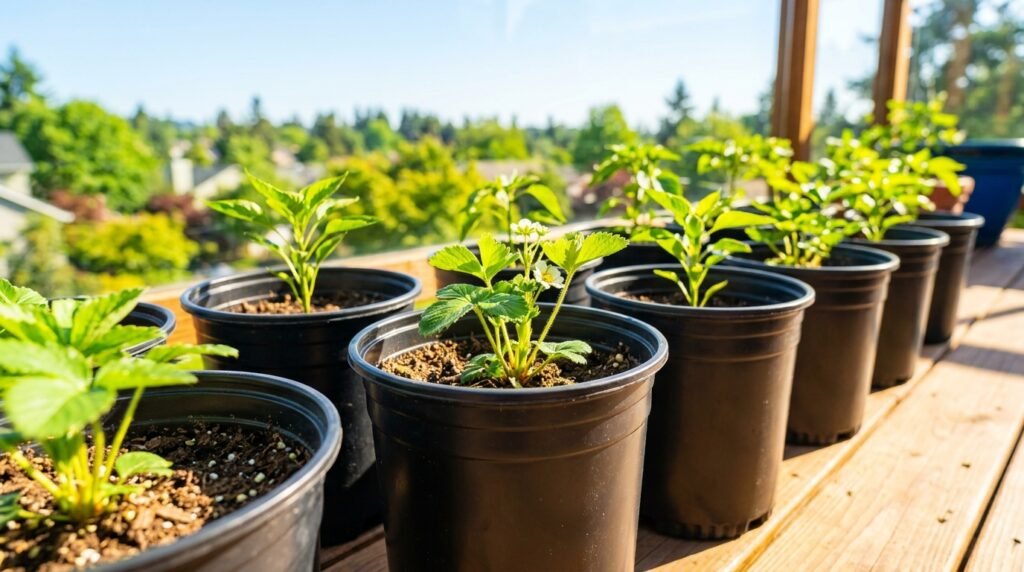
A non-obvious trick to grow strawberries in pots safely
When the heavy green fruit begins to develop, it naturally sags down to rest on the potting soil. Wet dirt causes the bottom of the ripening berry to rot before the top even turns completely red. You need a sturdy physical barrier between your food and the damp earth.
Go find a handful of smooth, flat river pebbles from a nearby park or garden path. Place one flat stone directly under every single developing green berry in your plastic container. The rock acts as a dry, clean stage that keeps the fruit entirely off the wet dirt.
The afternoon sun also heats up the stone and radiates warmth back into the fruit. This localized heat actually helps the berry ripen faster and develop a much sweeter flavor profile. It costs absolutely nothing and saves dozens of berries from turning into gross mush.
Watering without rotting the shallow roots
Shallow root systems dry out incredibly fast on a windy apartment balcony. You must check the soil moisture levels every single morning before the brutal afternoon heat arrives. Push your index finger one inch deep into the potting mix to test the actual hydration level.
If the dirt feels dusty and dry, apply water directly to the base of the main stem. Figuring out how to water a vegetable garden without overwatering keeps the roots hydrated without inviting dangerous fungal rots. Always keep the green leaves and delicate white flowers completely dry during your morning chores.
Managing wild runners when you grow strawberries in pots
These aggressive plants reproduce naturally by shooting out long green vines called runners. These thick runners search for open dirt to pin themselves down and create an entirely new clone plant. A single healthy container plant will try to shoot out dozens of these vines by mid-July.
You must ruthlessly cut these runners off with sharp pruners the exact second you spot them. Allowing the mother plant to produce clones drains massive amounts of internal biological energy. The plant stops producing actual food and focuses entirely on rapid reproduction.
Snip the vines clean off at the main stem to force the energy back into flowering. You want large, sweet berries rather than a tangled mess of unproductive green vines hanging off your balcony railing.
Feeding hungry plants for maximum yield
Container plants rely entirely on you for their daily nutritional needs. Every time you water the pot, essential minerals wash straight out the bottom drainage holes onto the concrete. You must replace these lost nutrients to keep the plant producing incredibly sweet fruit.
Apply a liquid organic fertilizer specifically blended for fruiting crops every two weeks. Avoid high-nitrogen chemical fertilizers that push massive leaf growth at the expense of actual fruit production. A balanced liquid meal keeps the plant sturdy and the berries forming properly all summer.
Defending your crop to grow strawberries in pots
Birds possess incredible vision and will spot a ripe red berry from miles away. They will swoop down onto your balcony and take exactly one bite out of your absolute best fruit. You must defend your harvest with physical barriers before the berries change color completely.
Draping a lightweight plastic bird netting over your pots solves this annoying problem instantly. You can secure the netting tightly around the rim of the container using a simple rubber bungee cord. The birds will eventually give up and look for a much easier meal elsewhere in the neighborhood.
According to the garden pest experts at The Old Farmer’s Almanac, hanging shiny reflective tape near your pots also scares away hungry birds effectively. The flashing light confuses their eyes and keeps them away from your small space farm.
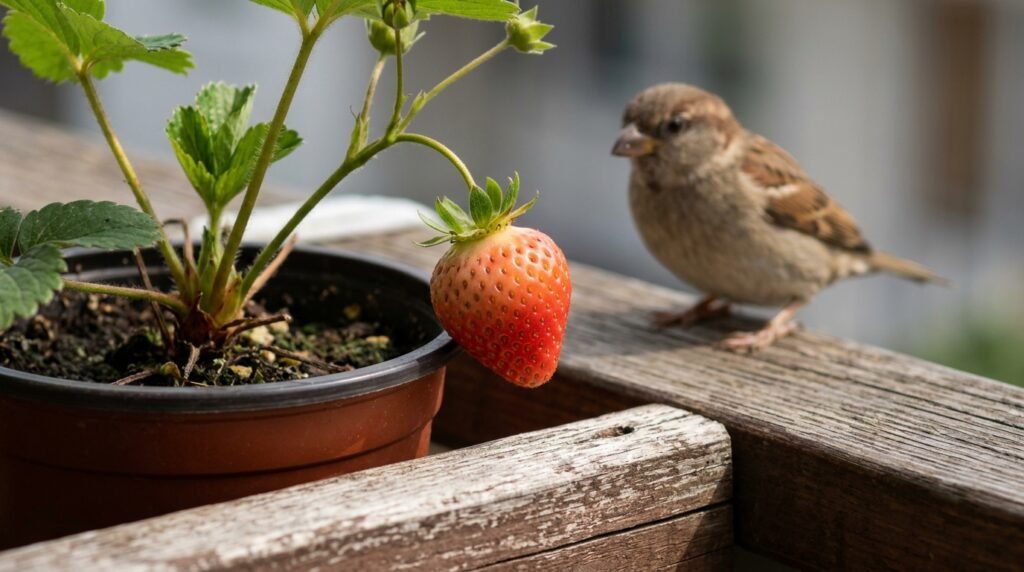
Winterizing your balcony berry farm
These tough plants are actually cold-hardy perennials that will return to your patio for several consecutive years. You do not need to throw them in the trash bag when bitter autumn weather arrives. You just need to protect their roots from freezing solid inside the thin plastic containers.
When the green leaves turn brown in November, cut them completely off to clean up the pot. Learning how to extend your growing season with a cold frame or row cover provides good baseline knowledge for winter protection. Push your heavy pots against the warmest exterior wall of your apartment building to block the wind.
Wrap the outside of the plastic container tightly in bubble wrap or thick old moving blankets. This cheap insulation stops the extreme winter wind from freezing the dirt block completely solid. Remove the wrap in early spring and watch the new green leaves push right back through the cold dirt.
You do not have to accept the overpriced, watery fruit sold at the local supermarket. Taking control of your own food supply brings immense daily satisfaction and saves your grocery budget immediately. A single sunny corner of your patio provides more than enough real estate to cultivate an amazing organic harvest. You will quickly realize how incredibly simple it is to grow strawberries in pots this season. Grab a bag of good fluffy dirt, rescue a few bare root plants, and start enjoying the absolute best fruit you have ever tasted.
Felipe Macedo is a home gardener and food grower based in Portland, Oregon. After killing his first three tomato plants, he became obsessed with figuring out how to grow real food in small spaces — on balconies, in containers, and in raised beds he built himself. At Chatinovax, he shares everything he learned the hard way so you don’t have to.