
Most beginners kill their first tomato plant with pure kindness. You buy a healthy seedling, put it in a decorative pot, and dump a heavy bucket of liquid on it every single morning. The leaves turn pale yellow, the stem rots, and the plant dies before summer even starts. Learning how to water a vegetable garden without overwatering saves you from this exact heartbreak.
I did this exact thing during my first spring in Portland. I had my recycled yogurt containers and my eight-dollar trowel ready for action on the balcony. I wrongly thought more moisture meant faster growth and a bigger harvest. I turned my potting soil into a permanent mud puddle and drowned every single radish I planted.
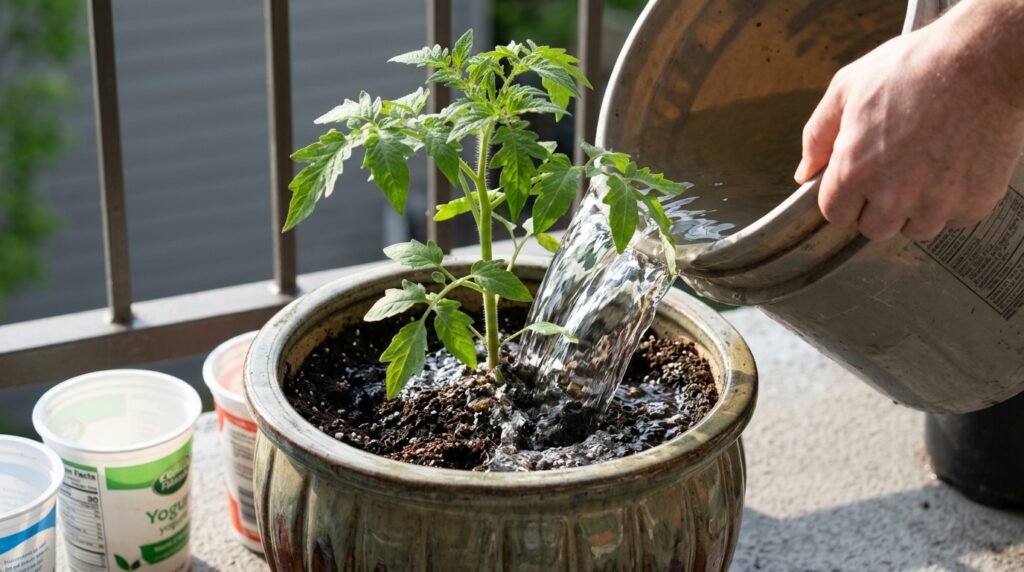
Why you must learn to water a vegetable garden without overwatering
Plant roots need oxygen just as much as they need moisture to survive. When you flood a container daily, liquid fills every microscopic air pocket in the dirt. The roots suffocate, begin to rot, and completely stop taking in basic nutrients.
A drowning plant actually looks exactly like a thirsty plant at first glance. The leaves droop heavily and the stems sag toward the dirt. You panic, assume the plant needs a drink, and add more liquid to an already fatal situation.
Breaking this cycle requires a total shift in how you approach your daily chores. You have to stop treating your patio like a rigid factory assembly line.
The simple finger test prevents disaster
You already own the absolute best moisture meter available on the market today. Push your index finger two inches deep into your potting soil before you grab the hose.
If the dirt feels damp and sticks to your skin, leave the plant entirely alone. If it feels dusty and dry, water the container deeply until liquid runs out the bottom drainage holes.
According to the growing experts at The Old Farmer’s Almanac, watering deeply but less frequently encourages roots to grow downward. Deep roots create much stronger plants that handle hot afternoons with zero stress.
Tools that help you water a vegetable garden without overwatering
Throw away any rigid watering schedule you printed out from the internet. Plants do not care what day of the week it is. A strict calendar routine ignores what the plant actually needs right now.
A basic plastic watering can with a removable sprinkler head gives you total control. Pouring a heavy, solid stream blasts the dirt away from delicate roots and exposes them to the air. A gentle shower setting protects the topsoil and allows the moisture to absorb slowly.
I strongly recommend upgrading to a simple drip system once you have a few seasons of experience. Figuring out how to build a cheap drip irrigation system for raised beds removes human error entirely. It delivers moisture slowly and exactly where it belongs.
The non-obvious trick of lifting your pots
Here is a highly practical tip that completely changed my balcony success rate. Stop looking exclusively at the top layer of dirt to judge the moisture level underground.
Pick up the entire plastic pot or fabric bag with both hands. A container full of wet dirt weighs significantly more than a dry container.
You will quickly learn exactly what a thirsty plant feels like just by lifting the pot an inch off the ground. This physical weight check never lies to you.
Drainage is the secret to water a vegetable garden without overwatering
You cannot fix a moisture problem if your container has no escape route for excess liquid. A beautiful decorative pot without holes at the bottom acts exactly like a bathtub.
Always drill at least four half-inch holes in the bottom of any plastic container you plan to use. If liquid cannot escape freely, your roots will sit in stagnant, foul-smelling mud.
Using the right dirt also plays a massive role in proper drainage. Finding the best soil mix for a raised bed vegetable garden ensures you have plenty of perlite to keep the dirt fluffy.
Fabric grow bags eliminate standing water
If you struggle constantly with soggy soil, switch your entire setup to fabric grow bags immediately. These cheap felt bags allow excess moisture to seep directly out the sides and the bottom.
It is physically impossible to drown a plant in a good fabric bag. They forgive heavy-handed beginners who get a little too eager with the watering can.
The breathable fabric also lets fresh air hit the root system directly. This natural air-pruning creates a dense, healthy root ball instead of a tangled mess circling the plastic.
Weather dictates how you water a vegetable garden without overwatering
A cloudy, cool Tuesday requires a completely different approach than a scorching Friday afternoon. You must adjust your routine based strictly on the actual climate outside your door.
During the early Oregon spring, the constant drizzle often means I do not touch my watering can for ten straight days. The ambient humidity keeps the potting mix perfectly damp without any help from me.
When the brutal August heat arrives, the rules change entirely. You might need to check your containers twice a day when the temperatures climb above ninety degrees.
Managing wind exposure on high balconies
Apartment renters deal with aggressive wind tunnels that backyard growers never experience. High winds suck moisture out of plant leaves much faster than intense sunlight does.
A breezy afternoon dries out a five-gallon container incredibly fast. You must factor local wind speeds into your daily moisture checks.
Pushing your heavy pots directly against the exterior wall of your building creates a helpful microclimate. The solid wall blocks the wind and slows down the evaporation process significantly.
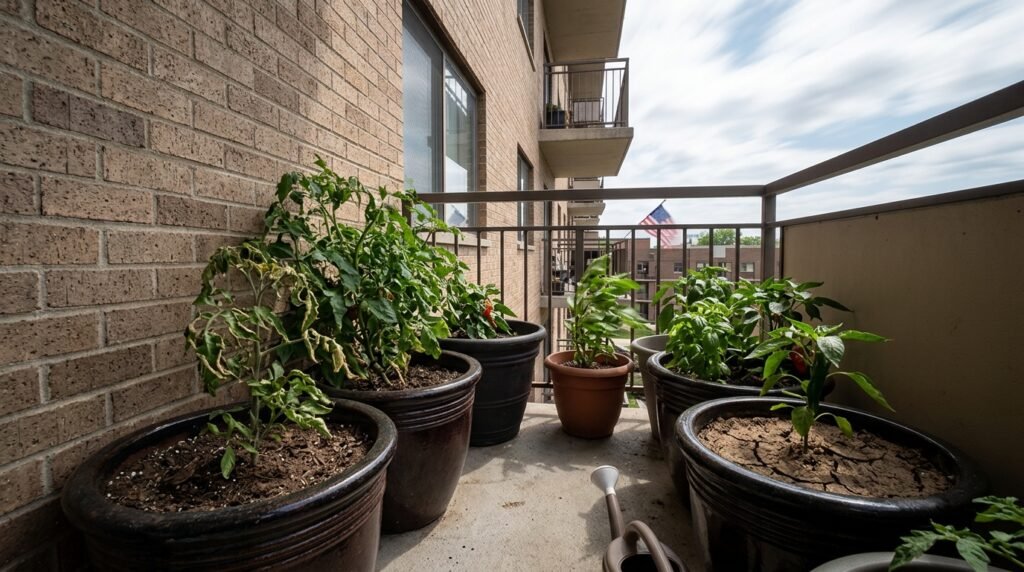
Using mulch to water a vegetable garden without overwatering
Leaving your potting soil completely bare exposes it to the harsh sun. The top inch turns into a hard, dry crust that actually repels moisture. You need a protective layer to lock the hydration inside the pot.
Adding a two-inch layer of organic mulch across the top of your containers solves this issue. Mulch acts like a physical blanket that shades the dirt and drastically reduces surface evaporation.
You spend far less time holding a hose when your soil retains its moisture naturally. Shredded leaves, clean straw, or untreated wood chips work perfectly for patio pots.
Different crops have different thirst levels
You cannot treat a rosemary bush the same way you treat a cucumber vine. Cucumbers consist mostly of water and demand a constant, steady supply of moisture to produce sweet fruit.
Rosemary, thyme, and oregano originate from dry, rocky climates. They actually prefer their soil to dry out significantly between watering sessions.
Group your thirsty plants together on one side of the balcony. Keep your dry-loving herbs together on the opposite side. This simple physical separation stops you from accidentally drowning your herbs out of habit.
Fixing mistakes when you water a vegetable garden without overwatering
Even experienced growers mess up occasionally during a busy summer week. You accidentally leave the hose running or a massive summer storm floods your open patio boxes.
The first step is moving the affected pots out of the direct rain if possible. Elevate the containers on a few small blocks of wood to maximize the airflow under the drainage holes.
Do not add any liquid fertilizer to a flooded plant. The roots are already highly stressed and synthetic chemicals will only cause severe chemical burns.
Spotting the danger signs early
Yellowing lower leaves often serve as the very first warning sign of rotting roots. The plant drops its oldest leaves to conserve energy when the underground system begins to fail.
Understanding how to fix overwatered plants before it is too late requires acting the exact moment you see that sickly yellow color.
Stop adding liquid completely until the top three inches of soil feel like dry dust. The plant will usually recover on its own if you give it enough time to dry out properly.
Proper techniques to water a vegetable garden without overwatering
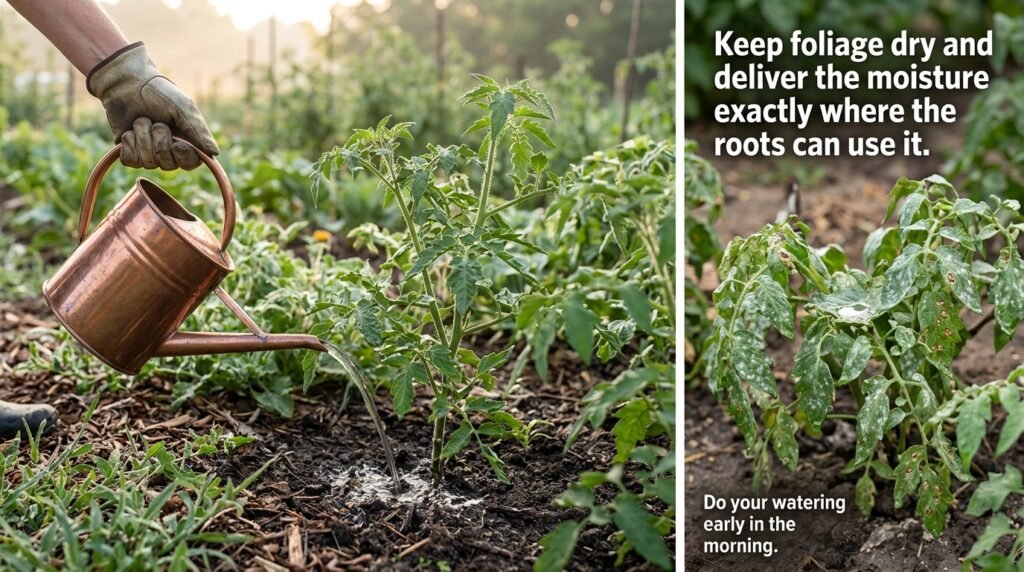
Aim your watering can directly at the soil line, never at the top of the plant. Pouring liquid over the green leaves encourages aggressive fungal diseases to take hold.
Wet foliage provides an absolute perfect breeding ground for powdery mildew and early blight. Keep the leaves dry and deliver the moisture exactly where the roots can actually use it.
Do your watering early in the morning before the sun gets too hot. Morning hydration gives the plants plenty of internal pressure to survive the stressful afternoon heat.
The bottom watering method for small pots
If you grow small herbs or lettuce on a kitchen windowsill, try watering from the bottom up. Place your small plastic pots inside a larger tray filled with an inch of fresh tap water.
The dry potting mix acts exactly like a wick and pulls the liquid up through the bottom holes. This method ensures the roots get deep moisture while the top layer of dirt stays dry.
Remove the pots from the tray after twenty minutes so they do not sit in standing liquid permanently. This simple habit prevents annoying fungus gnats from laying eggs in the damp surface soil.
Growing food takes practice, quiet observation, and a willingness to step back. You do not need to hover over your patio plants with a hose every five minutes. Trust the finger test, lift your pots regularly, and let the soil dry out slightly between drinks. Once you master how to water a vegetable garden without overwatering, your small apartment balcony will produce a massive, healthy harvest.
Felipe Macedo is a home gardener and food grower based in Portland, Oregon. After killing his first three tomato plants, he became obsessed with figuring out how to grow real food in small spaces — on balconies, in containers, and in raised beds he built himself. At Chatinovax, he shares everything he learned the hard way so you don’t have to.