
You want a crop that delivers fresh food before you even get bored of waiting. Radishes are the absolute fastest vegetable you can possibly cultivate on a patio. I figured out how to grow radishes in a small space during my very first season living here in Portland. I used a few leftover plastic yogurt containers and my basic eight dollar trowel to start the seeds. Less than thirty days later, I pulled perfect crisp roots out of the dirt for my dinner salad.
Why you need to grow radishes in a small space
Radishes require almost zero real estate to mature successfully. You can plant them in the tiny gaps between your larger pepper or tomato pots. They finish their entire life cycle so quickly that they never compete for long term nutrients. You can rotate through three or four separate harvests in the exact same container over a single summer.
Many beginners give up on gardening because they start with slow crops that take months to mature. Radishes provide those vital early wins that keep you motivated during the middle of the season. Learning how to grow radishes in a small space gives you the confidence to tackle larger balcony projects later. You gain practical experience with soil moisture and light levels without risking a massive financial investment.
Understanding the cool weather preference
Radishes absolutely hate the intense and dry heat of midsummer. When the air temperature climbs past seventy five degrees, the plant senses trouble and decides to bolt. It stops putting energy into the root and pushes a long stalk toward the sky to produce seeds. A bolted radish tastes incredibly woody and bitter, making it completely inedible.
You must schedule your planting for the cool shoulder months of spring and autumn. The mild Portland weather allows me to start my first round of seeds in late March. The cool soil keeps the roots crisp and juicy while the plant focuses entirely on underground development.
Selecting the right containers to grow radishes in a small space
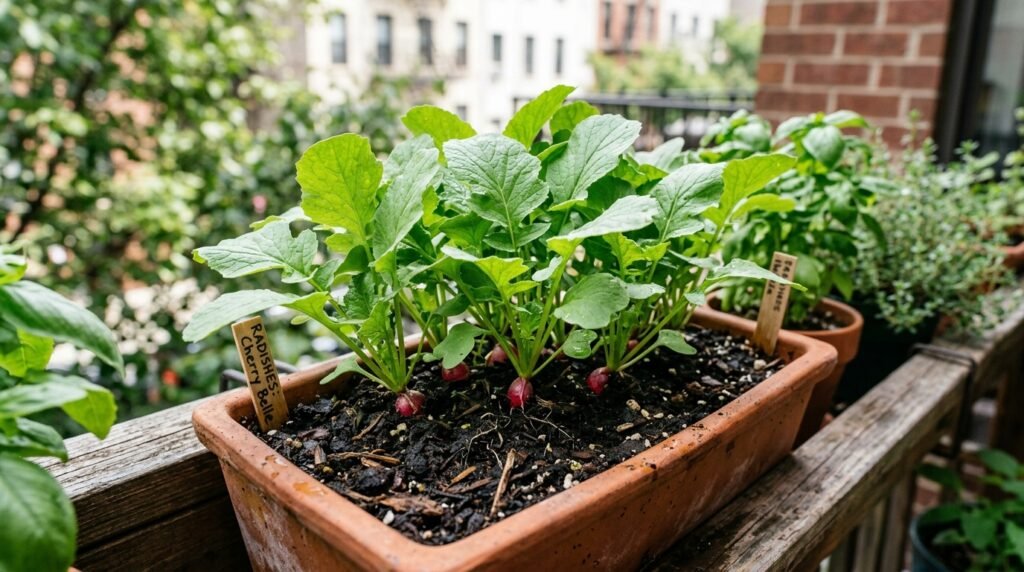
You do not need deep buckets because radishes stay relatively shallow while they develop. Any container with at least four inches of depth works perfectly for these fast moving crops. You can repurpose old plastic storage bins, shallow wooden crates, or even sturdy fabric bags.
Wide and shallow containers provide the absolute best results because they give you maximum surface area. You want to scatter the seeds across the entire top of the dirt. If you use a deep bucket, you waste all that vertical space that the roots will never actually touch.
Drill several large holes in the bottom of your container to ensure proper drainage. Standing water causes the roots to rot into a black mud before they reach maturity. When you decide to grow radishes in a small space, controlling moisture remains your biggest physical priority.
Prepping the perfect dirt texture
Radishes demand loose and fluffy soil to push their roots deep without any physical resistance. If you use heavy ground dirt or compacted mud, the roots will come out gnarled and severely stunted. You must use a premium potting mix designed specifically for containers to ensure success.
Mixing in a handful of organic compost provides all the nutrition these fast plants need. Checking the best soil mix for a raised bed vegetable garden shows you the proper dirt texture. You want dirt that crumbles instantly when you squeeze a handful of it in your bare hands.
Sowing seeds for a continuous patio harvest
You should never buy established seedlings from a garden center for this specific crop. The fragile roots will snap during the transplant process and the plant will never recover. Push the raw seeds directly into your chosen patio containers for the absolute best results.
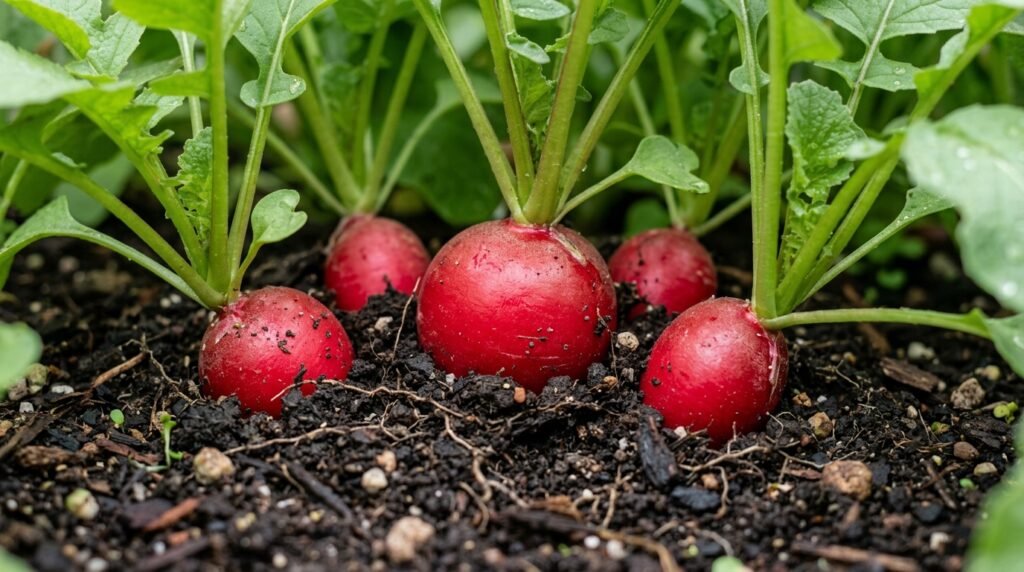
Spread your seeds across the damp surface and leave about two inches between every single one. Giving them a little breathing room prevents the roots from bumping into each other underground. Cover the seeds with a very thin layer of fine potting dirt and press down lightly.
The seeds need good physical contact with the damp soil to trigger the sprouting process. If you bury them too deep, the fragile energy inside the seed runs out before the sprout reaches the fresh air.
A non-obvious trick for perfect spacing
I used to plant my seeds in disorganized clumps and then struggle to thin them out later. I started using a simple piece of cardboard with holes poked at two inch intervals. I lay the cardboard on the dirt and drop one seed into every single hole.
This simple template ensures perfect spacing and saves me from the painful task of pulling out extra sprouts. You can grow radishes in a small space much more efficiently when you eliminate wasted gaps. This physical guide guarantees that every single seed has the room it needs to swell into a perfect red root.
Planning a schedule to grow radishes in a small space
If you plant an entire package of seeds on the exact same day, you will end up with a massive problem. Sixty radishes will finish growing at the exact same time, and you will never eat them all before they spoil. You must practice succession planting to keep a steady supply of food coming directly to your kitchen.
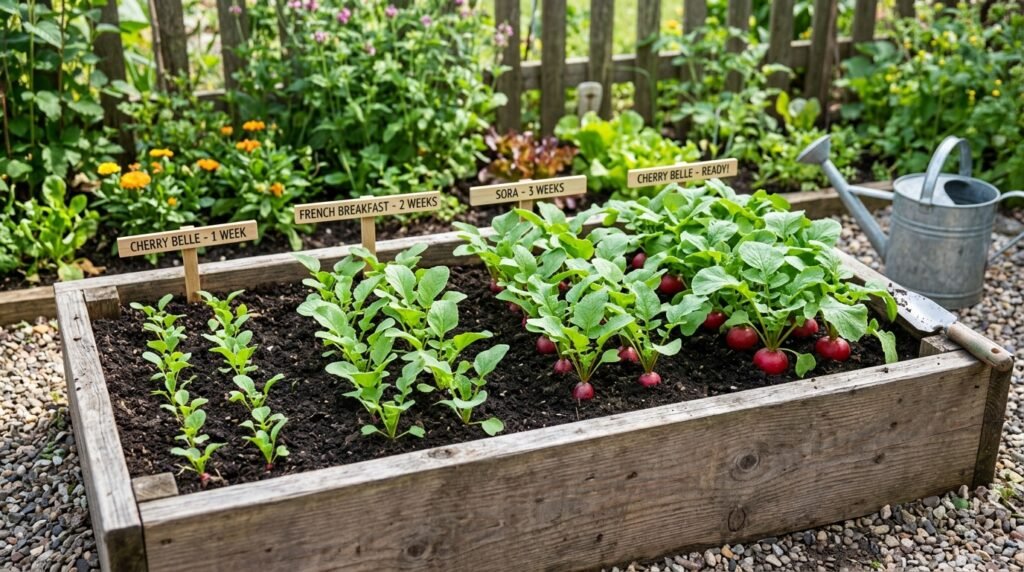
Sow a small pinch of seeds in one corner of your container on a Saturday morning. Wait exactly seven days, and then sow another small pinch of seeds right next to the first batch. This staggered timeline guarantees that you harvest a fresh handful of roots every single week instead of all at once.
When you learn to grow radishes in a small space using succession planting, your patio farm acts like a continuous conveyor belt. The moment you pull a mature root out of the dirt, you drop a brand new seed right into the empty hole.
Fertilizing your fast growing roots
Because this crop finishes its entire life cycle in under a month, it rarely needs extra fertilizer. A standard potting mix infused with quality compost provides plenty of energy for the quick sprint to the finish line. Adding synthetic liquid nitrogen will actually ruin your harvest completely.
Excess nitrogen forces the plant to build massive green leaves at the top. The plant puts all its energy into the foliage and completely ignores the red root sitting underground. You end up with a gorgeous pot of leaves and absolutely zero actual radishes to eat for dinner.
Managing light and water for rapid plant growth
Radishes grow fast, but they need massive amounts of direct solar energy to fuel that incredible speed. Place your containers in a spot that receives at least six hours of direct sunlight. A shaded balcony will leave you with beautiful green leaves but tiny microscopic roots underground.
These plants require consistent moisture to stay crisp and sweet. If the dirt dries out completely, the roots turn tough and develop an incredibly sharp bite. You must check the top inch of your soil every single morning before the afternoon sun hits.
Apply water gently to the base of the stems using a watering can with a long spout. Splashing water all over the leaves encourages fungal diseases and wastes your valuable time.
Monitoring moisture during the rainy spring
The spring rain can easily turn your containers into mud puddles if you ignore them completely. Make sure your pots sit on a brick or a wooden block to lift them off the concrete. This height allows excess water to drip out the bottom freely and protects the roots from sitting in a pool.
If the surface looks dry but the plant looks healthy, you might not need to add water. Push your index finger into the soil to check the true hydration level below the surface. Understanding how to water a vegetable garden without overwatering is absolutely essential for any patio farmer.
Defending your patio crop from sneaky pests
Fast growth usually helps these plants outrun most common garden insect problems. You might occasionally deal with tiny flea beetles that chew small holes in the green leaves. While these bugs look annoying, they rarely destroy the root unless the plant is already very weak.
You can easily deter most flying insects by covering your containers with a light floating row cover. The experts at Gardening Know How suggest using this physical barrier until the plants grow large enough to handle a few insect bites.
I rarely need to use heavy chemicals on my balcony because I keep my plants moving fast. A healthy and fast growing plant usually outpaces any potential bug damage naturally.
Thinning your sprouts for better results
If you accidentally drop two seeds into the same hole, you must act immediately. Wait until the sprouts are about an inch tall, then snip the smaller one off at the dirt line. You absolutely do not want to pull the weak sprout out because the roots will drag against the healthy one.
Snip the extra sprout to ensure the stronger one claims all the available soil nutrients. Thinning might feel cruel, but it ensures your harvest stays large and highly consistent. Knowing how to start a vegetable garden at home with no experience involves making these tough pruning decisions early.
Harvesting your radishes at the absolute peak of flavor
Most varieties reach maturity in just twenty five to thirty days. You can start checking the shoulders of your roots as soon as they reach the size of a glass marble. Brush away the topsoil with your finger to inspect the actual root size.
You want to harvest them while they are still firm and brightly colored. If you leave them in the ground too long, they lose their crispness and become completely pithy. Pull the entire plant out of the dirt by gripping the stem right at the base.
Consulting a reliable guide like the one at The Old Farmer’s Almanac helps you understand the specific timing for different seed varieties. Some long white radishes take significantly longer than the round red types.
Preserving your fresh balcony harvest
Radishes lose their crisp texture within hours of sitting out in the warm apartment air. Pull them out of the dirt, trim off the green leafy tops, and wash them in cold water. You can store the clean and trimmed roots in a sealed container in your refrigerator crisper.
They stay perfectly crunchy for about a week when you keep them cold and hydrated. Keep the leafy tops attached to your salad or stir fry because they are actually completely edible. The greens provide a peppery bite that works perfectly in a quick morning sauté.
Growing your own food changes how you view your grocery budget and your daily meals. You can easily produce fresh roots in less than a month using almost no space at all. It takes very little physical effort to learn how to grow radishes in a small space successfully. Grab some seeds, find a wide plastic tub, and start your very first harvest today. You will appreciate the snappy and spicy taste of homegrown roots more than anything else on your patio.
Felipe Macedo is a home gardener and food grower based in Portland, Oregon. After killing his first three tomato plants, he became obsessed with figuring out how to grow real food in small spaces — on balconies, in containers, and in raised beds he built himself. At Chatinovax, he shares everything he learned the hard way so you don’t have to.