
Walking onto your patio and finding your beautiful summer squash covered in white dust completely ruins a good morning. This frustrating white dust looks exactly like spilled baking flour scattered across your green leaves. It usually shows up late in the summer just when you think your harvest is completely safe. Learning how to prevent and treat powdery mildew on plants saves your late summer crops from total destruction.
During my second year gardening here in Portland, the late August humidity skyrocketed. I packed too many cucumber vines onto a single wooden trellis to save space on my tiny balcony. I woke up one morning and saw the dreaded white spots covering every single leaf. I panicked and grabbed my eight dollar trowel, ready to rip the entire plant out of the dirt. I quickly learned that this common fungal disease is highly manageable if you catch it early.
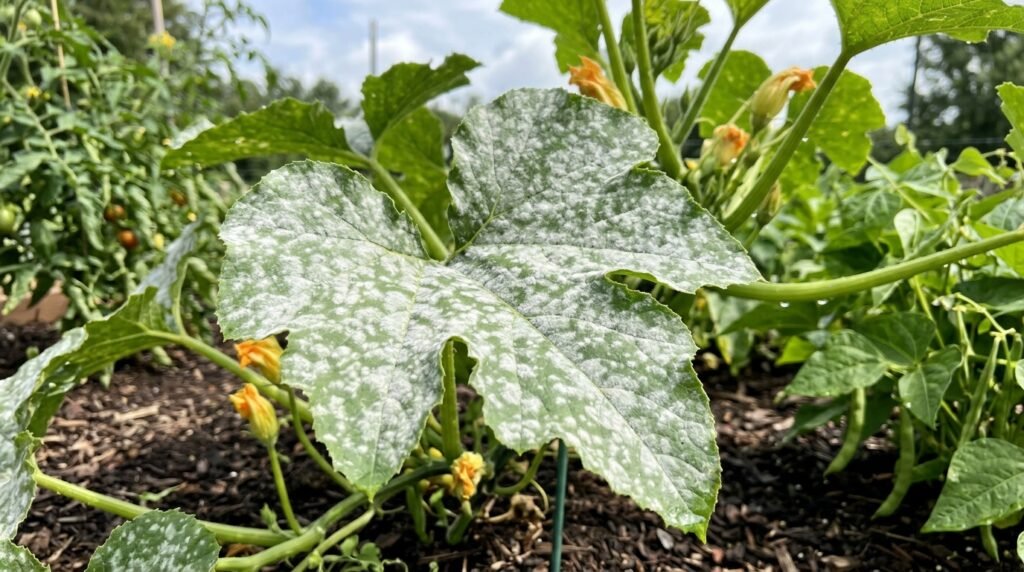
Understanding the cause of powdery mildew on plants
This specific fungus actually thrives in completely dry dirt combined with high atmospheric humidity. It does not require standing water on the leaves to reproduce and spread like other common garden diseases. The microscopic spores float on the afternoon breeze and land directly on stressed patio crops. If your potting soil dries out completely while the air feels thick and humid, you create the perfect breeding ground.
The fungus drives microscopic roots straight into the green leaf tissue and sucks the nutrients out. It blocks the sun from hitting the leaf surface, which stops photosynthesis completely. The infected leaves eventually turn yellow, dry up like crispy potato chips, and fall onto the concrete floor. If you ignore powdery mildew on plants, it will stunt the growth of your vegetables and ruin the final harvest.
Identifying the most vulnerable patio crops
Certain plant families act like massive magnets for this specific white fungus. Members of the cucurbit family, including squash, cucumbers, and small patio melons, almost always catch it by late August. Understanding the easiest vegetables to grow for beginners helps you prepare defenses for these specific vulnerable crops early.
Peas and beans also frequently develop white spots on their lower leaves as the vines mature. You must inspect these specific plants closely every single morning during the late summer months. Catching the very first white spot makes the entire treatment process significantly easier and much more effective.
Using smart spacing to prevent fungal diseases
The absolute best way to fight this frustrating disease is to never let it take hold in the first place. You create a massive problem when you cram four tomato seedlings into a single five-gallon plastic bucket. The dense leaves block all the wind, trapping stagnant, humid air directly against the plant stems.
You must respect the physical spacing requirements printed on the back of your seed packets. Good airflow acts as an invisible shield that dries out the microscopic fungal spores before they can multiply. You want a gentle breeze to pass completely through the center of your potted plants at all times.
Pruning for better air circulation
Even if you space your containers perfectly, some heavy feeding plants grow into massive, tangled bushes. You must use sharp bypass pruners to thin out the dense interior foliage of your tomatoes and peppers. Cut away the non-producing leafy branches in the middle of the plant to open up a clear wind tunnel.
Removing the lowest leaves that physically touch the potting soil also prevents the fungus from climbing up the stem. Reading how to fix overwatered plants before it is too late teaches you the importance of keeping the bottom foliage dry. Clean cuts heal fast and immediately improve the overall structural health of your balcony farm.
Proper watering techniques to stop powdery mildew on plants
You stress your container crops massively when you let the potting soil dry out until the leaves wilt. You then panic and flood the container with a heavy blast from the garden hose. This violent swing between bone dry dirt and soaking mud weakens the plant’s natural immune system completely.
A weak, stressed plant cannot fight off the microscopic spores floating through the Portland air. You must establish a consistent watering routine that keeps the dirt evenly moist but never flooded. Stick your index finger one inch deep into the soil every morning to test the actual moisture level.
Avoiding overhead watering mistakes
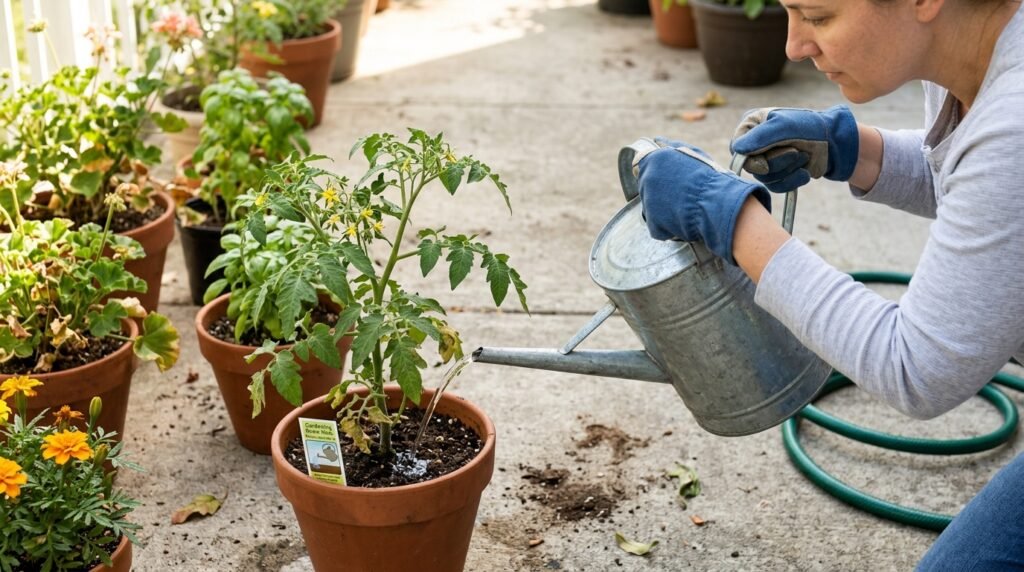
You practically invite fungal diseases onto your patio when you spray water directly over the top of your plants. The water splashes off the dirty concrete floor and carries invisible spores right onto the lower green leaves. You must aim your watering can spout directly at the base of the main stem.
The experts at Gardening Know How strongly advise keeping the actual foliage completely dry during your morning watering chores. Dry leaves simply cannot support the rapid reproduction of most common garden fungi.
A non-obvious trick using plain milk
If you spot the dreaded white dust despite your best prevention efforts, you do not need harsh chemical fungicides. You can create a highly effective organic spray using an ingredient already sitting in your refrigerator. Plain cow’s milk contains specific proteins that break down the fungal cell walls when exposed to direct sunlight.
Mix one part plain milk with two parts tap water in a clean plastic spray bottle. Spray this simple white mixture directly onto the infected leaves early in the morning on a sunny day. The sunlight activates the milk proteins and creates a hostile environment where the fungus cannot survive.
Applying the milk spray correctly
You must coat both the top and the absolute bottom of every single infected leaf to guarantee success. The fungus hides cleverly underneath the foliage where the afternoon sun cannot reach it easily. The milk spray acts as a contact killer, so it must physically touch the white dust to work.
Apply this homemade treatment every five days until the white spots stop spreading entirely. It smells slightly sour for a few hours, but it protects your future food from toxic chemical residues.
Using baking soda to treat powdery mildew on plants
If you do not have milk on hand, you can build a powerful alkaline spray using basic baking soda. Fungal spores absolutely hate alkaline environments and cannot reproduce on a leaf covered in a high pH solution. You can change the surface chemistry of the leaf instantly using items from your kitchen pantry.
Mix exactly one tablespoon of plain baking soda into a full gallon of warm tap water. Add a few drops of liquid dish soap to help the mixture stick firmly to the waxy plant leaves. Reviewing how to get rid of aphids on vegetable plants naturally shows how dish soap helps organic sprays cling to the foliage.
The danger of strong baking soda sprays
You must follow the exact measurements when mixing this specific alkaline spray for your patio crops. If you dump too much baking soda into the water, the extreme alkalinity will burn the fragile green leaves completely. The leaves will turn crispy brown and fall off, which is exactly what you were trying to prevent.
Always test your homemade spray on one single lower leaf before coating the entire plant. Wait twenty-four hours to ensure the leaf does not develop chemical burns from the mixture. Once you confirm it is safe, spray the rest of the infected plant heavily early in the morning.
Removing heavily infected plant material safely
Sometimes the fungus takes over an entire plant before you even notice the problem. If a leaf is completely covered in thick white dust and turning yellow, no organic spray will save it. The leaf is already dead and serving as a massive launching pad for millions of new spores.
You must practice ruthless pruning to save the rest of your balcony farm from total infection. Take your sharp pruners and snip off the worst leaves at the main stem immediately. Do not hesitate to remove twenty percent of the foliage if it means saving the main crop.
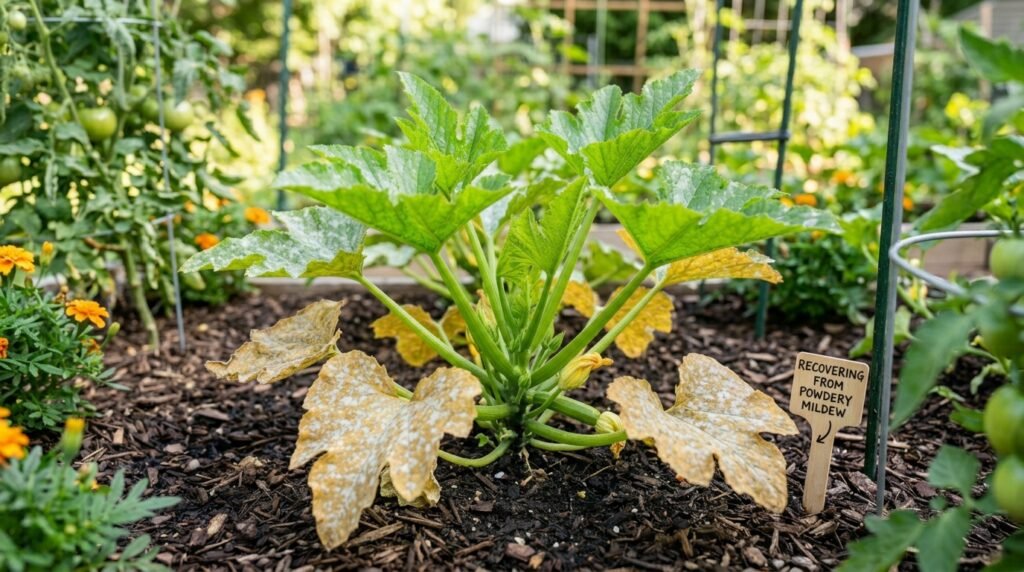
Disposing of the diseased leaves
Never throw infected, powdery leaves into your patio compost bin under any circumstances. The fungal spores survive the mild heat of a small apartment compost bucket easily. They will simply wait in the dirt and infect your brand new crops the following spring.
You must seal the diseased leaves inside a plastic trash bag and throw them directly into the city garbage bin. You should also wipe down your metal pruners with a strong rubbing alcohol solution after cutting the sick plant. This simple sanitation step stops you from accidentally spreading the spores to your healthy tomatoes.
You spend months watering and feeding your patio containers to secure a fresh summer harvest. Do not let a common fungal disease ruin your hard work right at the finish line. Space your pots properly, keep the leaves dry, and inspect the foliage every single morning. If you spot white spots, grab some milk or baking soda and fight back immediately. You can effectively control powdery mildew on plants and keep your small space farm producing heavy food all season long.

Felipe Macedo is a home gardener and food grower based in Portland, Oregon. After killing his first three tomato plants, he became obsessed with figuring out how to grow real food in small spaces — on balconies, in containers, and in raised beds he built himself. At Chatinovax, he shares everything he learned the hard way so you don’t have to.