
Buying fresh basil from the grocery store feels like throwing money into the compost bin. You use three leaves for a pasta dish and watch the rest turn to black sludge in the fridge two days later. The markup on those tiny plastic clamshells is absolutely ridiculous. You can completely bypass this frustration when you grow herbs in a small apartment right on your kitchen counter. Moving your food production indoors requires minimal physical space and a very tight budget. You just need a sunny windowsill and a basic understanding of how container plants actually behave.
How to grow herbs in a small apartment without stress
Outdoor gardens face constant threats from brutal weather and hungry pests. Moving your crops inside gives you total control over the growing environment. Your kitchen stays at a comfortable temperature all year long.
My first winter in Portland felt incredibly long and dark. The constant freezing rain turned my balcony pots into soggy mud puddles. I desperately wanted fresh cilantro for a batch of tacos, so I washed out a few yogurt containers and filled them with dirt. That crude setup sat right next to my sink and produced fresh green leaves for months. You do not need expensive ceramic pots to start this exact project today.
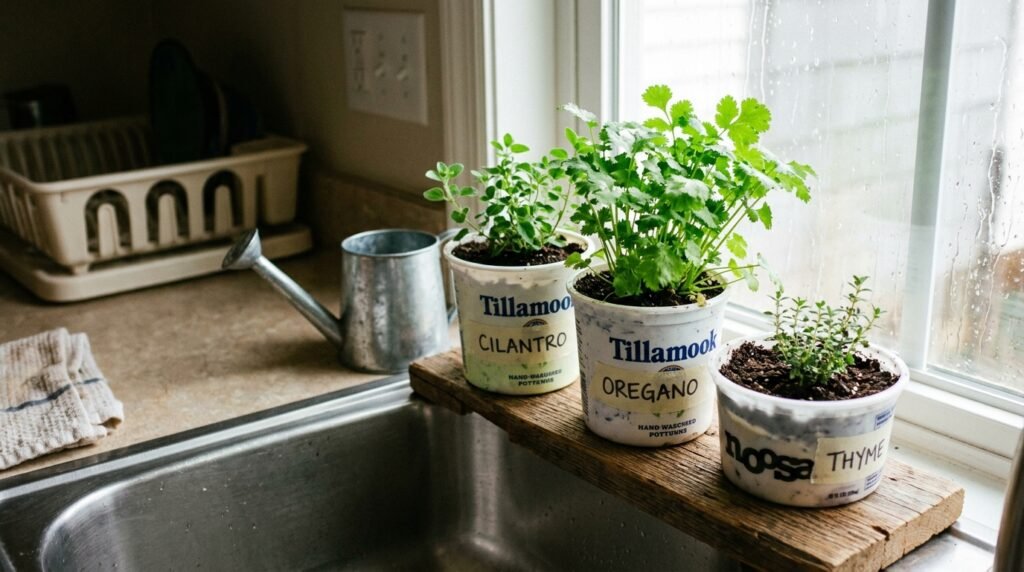
Picking the right containers for indoor success
Herbs have relatively shallow root systems compared to massive tomato or pepper plants. A container only needs to be four to six inches deep to support a healthy parsley plant. Wide and shallow plastic tubs work much better than deep narrow buckets.
You must prioritize proper drainage above aesthetics when picking your pots. A beautiful tin bucket without holes at the bottom will literally drown your plants in a week. Poke several small holes in the bottom of your recycled containers using a hot nail. Always place a cheap plastic drip tray underneath the pots to protect your kitchen counters from water damage.
Selecting the best soil for your indoor garden
You cannot dig up dirt from the yard and bring it inside your house. Outdoor soil compacts heavily inside small pots and suffocates fragile root systems rapidly. It also contains dormant bug eggs and weed seeds that will thrive in your warm kitchen.
Buy a high-quality organic potting mix designed specifically for indoor container plants. Good potting soil contains perlite or pumice to keep the dirt fluffy and perfectly aerated. Understanding the best soil mix for a raised bed vegetable garden translates perfectly to indoor container growing. You want a growing medium that holds moisture but drains excess water rapidly.
The non-obvious trick for starting seeds indoors
Dry potting mix straight out of the bag often repels water initially. The liquid will run down the inside walls of the plastic pot and completely bypass the roots. This leaves the center of your soil block completely bone dry.
Here is a practical tip most people completely ignore. Dump your dry dirt into a large kitchen mixing bowl and slowly stir in warm tap water until it feels like a damp sponge. Fill your containers with this pre-moistened soil before planting anything. This simple step guarantees your seeds have a supportive, moist environment from the very first day.
Managing light to grow herbs in a small apartment
Plants require serious energy to produce those flavorful aromatic oils you want for cooking. A dark corner of your kitchen will not support healthy growth for very long. You must find the brightest spot in your entire home for this project to succeed.
A south-facing window provides the best natural sunlight during the dark winter months. Place your pots directly on the sill so the leaves sit right up against the glass. According to the indoor growing experts at The Old Farmer’s Almanac, most culinary herbs require at least six hours of bright light every single day.
Using artificial lights on a tight budget
Many older buildings lack proper windows for massive sunlight exposure. You can easily fix this problem with a cheap artificial light setup over your counter. You do not need to buy expensive purple grow lights marketed to serious indoor farmers.
A basic LED shop light from the local hardware store works perfectly for leafy greens. Hang the light fixture just two inches above the top leaves of your plants. Keep the light running for twelve to fourteen hours a day using a cheap mechanical wall timer.
Choosing the easiest varieties to start with
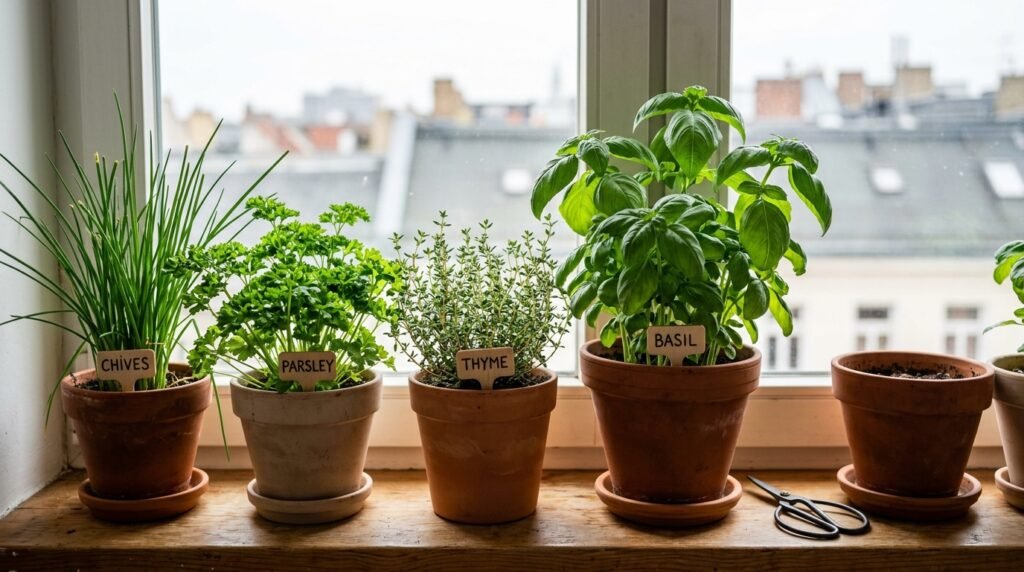
Certain plants adapt to indoor life much better than others. People who grow herbs in a small apartment often start with chives, parsley, and thyme. These tough varieties forgive early watering mistakes and tolerate lower light levels beautifully. They also bounce back quickly after you give them a heavy haircut for dinner.
Basil remains the absolute king of the kitchen windowsill garden. It grows incredibly fast and provides massive flavor for very little physical effort. Reading up on how to grow basil indoors and keep it alive all year ensures you never buy overpriced pesto at the store again.
You should also browse the online catalogs at Burpee to find compact seed varieties bred specifically for containers. Smaller bush varieties perform significantly better in tight spaces than towering field crops.
Keeping aggressive plants properly contained
Mint is incredibly popular for cold drinks and hot teas, but it behaves exactly like an aggressive weed. The roots will physically choke out any other plant sharing the same container. A single mint plant will take over an entire window box in just a few weeks.
You must give mint its own dedicated pot far away from your delicate basil or cilantro. This strict isolation prevents the aggressive runners from stealing all the available nutrients. Figuring out how to grow mint in containers without it taking over saves your other plants from total destruction.
Watering routines when you grow herbs in a small apartment
Overwatering kills more indoor plants than any other beginner mistake. Plants do not care what day of the week it is, so stop watering them on a strict Sunday schedule. The weather outside and the humidity inside your home dictate how much moisture the roots actually need.
The decision to grow herbs in a small apartment means you must monitor the soil moisture manually. Push your index finger two inches into the potting soil. If the dirt feels wet and sticks to your skin, do not add a single drop of water.
If the soil feels dusty and dry, water the pot deeply until liquid runs out the bottom drainage holes. Shallow, frequent watering creates weak surface roots that cannot support a large plant. You want to encourage deep root growth by watering thoroughly and then letting the pot dry out slightly.
Rosemary, thyme, and oregano originate from dry, rocky climates. They actually prefer to dry out significantly between watering sessions. Keeping their soil constantly damp will rot their roots in a matter of days. Group these specific dry-loving plants together so you do not accidentally overwater them out of habit.
The bottom watering method for healthier roots
Pouring a heavy stream of water over the top of delicate sprouts often knocks them flat. It also encourages aggressive mold growth directly on the surface of your potting mix. Bottom watering provides a much safer alternative for fragile young stems.
Place your small starter pots inside a larger plastic tray filled with an inch of fresh tap water. The dry potting soil acts exactly like a wick and pulls the moisture upward through the bottom holes. Remove the pots after twenty minutes so the roots never sit in stagnant water and rot.
How to harvest and grow herbs in a small apartment continually
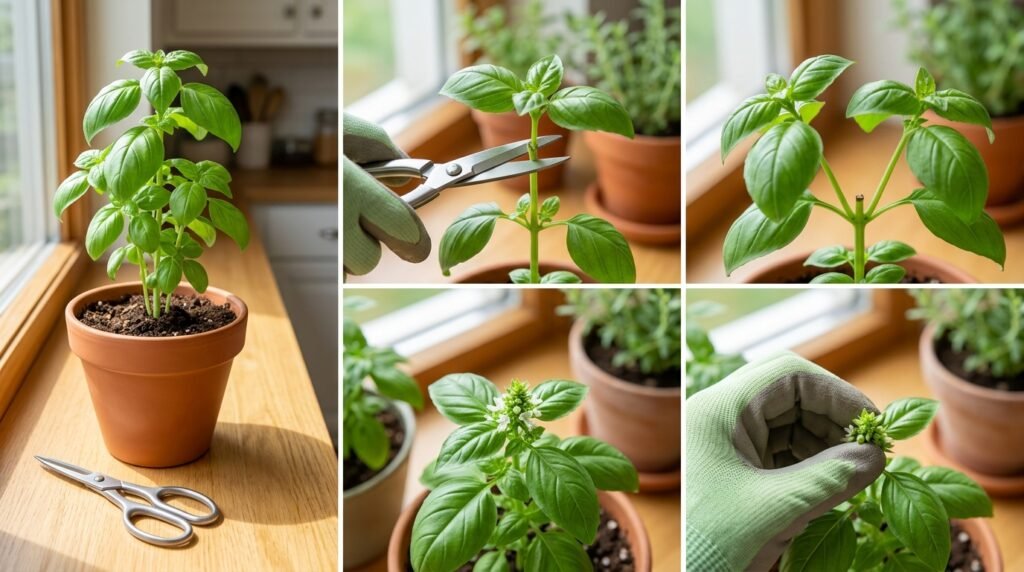
New growers often hesitate to cut their plants because they want them to get bigger for a proud photograph. Refusing to harvest actually hurts the overall yield and shape of the plant. Regular pruning forces the main stem to split and produce entirely new branches.
Use a clean, sharp pair of scissors to snip off the top few inches of a stem. Always make your cut right above a set of healthy leaves. The plant will push out two new stems from that exact junction within a single week.
Pinching off the flower buds is absolutely critical for culinary crops. Once a plant produces flowers, the leaves usually turn tough and incredibly bitter. Snip those flowers off immediately to keep the plant focused on producing edible foliage.
Feeding your kitchen plants for long term success
A closed container relies entirely on you for basic plant nutrition. Every time you water the pots, essential nutrients wash out the bottom holes and down the sink. The fertilizer mixed into bagged potting soil usually washes away completely after thirty days.
You can successfully grow herbs in a small apartment if you treat fertilization as a serious priority. Buy a simple, water-soluble organic liquid fertilizer designed for edible vegetables. Feed your plants every two weeks using a heavily diluted mixture to avoid chemical root burn.
Indoor plants sometimes attract annoying fungus gnats that fly around your kitchen sink. These tiny black bugs lay their eggs in damp potting soil. You can break their life cycle simply by letting the top two inches of dirt dry out completely before watering again. A layer of dry sand on top of the soil also stops them from laying eggs entirely.
Regular meals keep the plants strong enough to resist common indoor pests and diseases. A healthy, well-fed plant simply produces far more food over a much longer period of time.
You do not need a traditional backyard to experience the joy of harvesting your own food. Setting up a few pots by the sink takes less than an hour and costs almost nothing. The perfect time to grow herbs in a small apartment is right now.
Felipe Macedo is a home gardener and food grower based in Portland, Oregon. After killing his first three tomato plants, he became obsessed with figuring out how to grow real food in small spaces — on balconies, in containers, and in raised beds he built himself. At Chatinovax, he shares everything he learned the hard way so you don’t have to.