
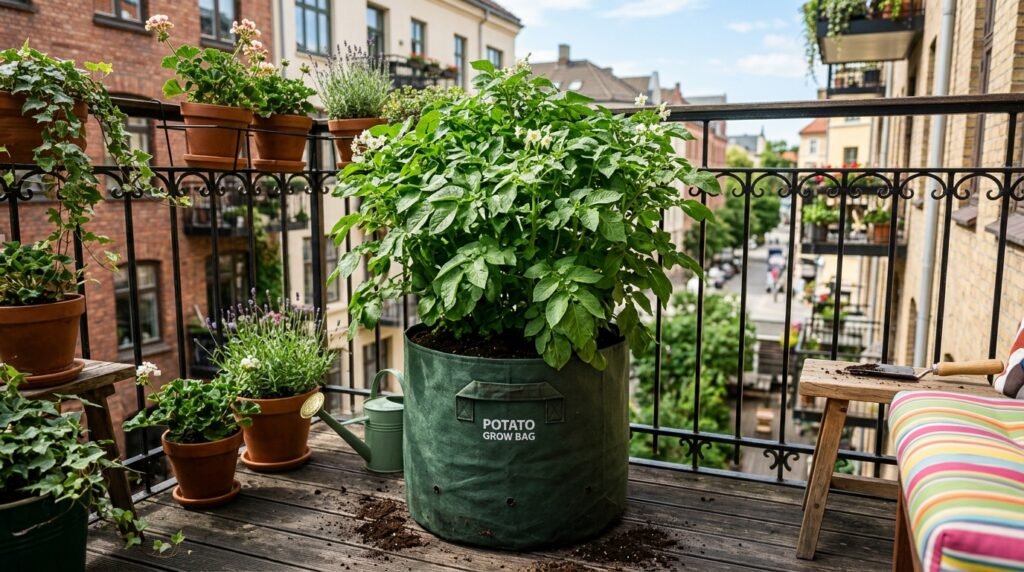
I spent my first gardening season assuming heavy root crops required a massive backyard farm. I stood on my small Portland balcony with my cheap eight dollar trowel and an empty yogurt container, feeling completely restricted. I desperately wanted to harvest fresh starches but I had zero physical ground space to dig trenches. A friendly neighbor finally taught me how to actually grow potatoes in bags using vertical space.
This simple container method completely changes the rules for apartment renters and patio farmers. You literally stack the dirt up high as the plant grows upward toward the sun. It takes up less than two square feet of concrete floor space. You get to dig through soft potting mix at the end of the season and pull out pounds of fresh food.
Why you should grow potatoes in bags this season
Backyard farmers spend hours breaking their backs with heavy steel shovels to dig up their underground crops. They slice right through half their harvest by accident with the sharp shovel blade. You avoid this miserable manual labor entirely when you choose to grow potatoes in bags on your patio. You simply dump the container upside down at the end of the summer.
The soft dirt falls away and leaves your flawless vegetables sitting right on the concrete. Fabric grow containers provide superior drainage and prevent the soil from turning into thick mud. The porous black fabric allows the delicate roots to breathe oxygen directly through the sides. This process air prunes the roots and creates a massive biological system.
Heavy plastic buckets work well too, but you must drill dozens of large holes in the bottom. Proper drainage keeps your underground food from rotting during sudden heavy rainstorms. Standing water ruins a root harvest faster than any insect ever could.
Choosing the right seed varieties
Grocery store produce gets sprayed with chemical sprout inhibitors to keep them looking fresh on the retail shelf. You must buy certified seed potatoes from a local nursery to guarantee successful growth. Look for early season varieties like Yukon Gold or Red Pontiac for small apartment containers.
These fast growing types finish their life cycle before the brutal August heat arrives. Late season varieties often run out of physical space inside a small container and produce tiny yields. Matching your seed variety to your specific physical constraints guarantees a heavy harvest every single time.
Preparing your seeds to grow potatoes in bags
You cannot just throw a whole seed potato into the dirt and hope for the best. You need to force the vegetable to sprout small green shoots before it ever touches the potting soil. This pre-sprouting process takes about three weeks and gives your plants a massive biological head start. Place your seeds in a sunny windowsill until thick green nubs form on the skin.
Large seed potatoes need to be cut into smaller pieces to maximize your overall container yield. Take a sharp kitchen knife and cut the vegetable so every piece has at least two green sprouts attached. If you plant massive whole potatoes, you just waste valuable container space on a single root system. Small pieces allow you to space the plants out properly inside the bag.
A non-obvious trick for preventing rot
Beginners often cut their seeds and immediately bury the wet slices into damp potting dirt. Fungal bacteria love that wet open wound and will rot the seed piece before roots can even form. You must let the freshly cut pieces sit on your dry kitchen counter for three full days.
This crucial waiting period allows a thick and tough scab to form directly over the wet cut. This non-obvious trick creates an impenetrable physical shield against common soil bacteria. Your seeds will stay completely safe and healthy as they push their brand new roots downward.
Building the right dirt layer to grow potatoes in bags
These hungry plants require incredibly loose soil to expand their underground tubers without physical resistance. Dense topsoil acts like wet concrete and restricts the vegetables into tiny deformed pebbles. You want to use a fluffy and lightweight mix packed with plenty of white perlite for maximum aeration. Reading about the best soil mix for a raised bed vegetable garden shows you the exact texture to aim for.
Start by rolling the sides of your fabric bag completely down until it looks like a shallow bowl. Place exactly four inches of your fluffy dirt mix right at the bottom. Lay your calloused seed pieces on top of this dirt with the green sprouts pointing toward the sky. Cover them with just three more inches of fresh potting soil.
Mastering the vertical hilling process
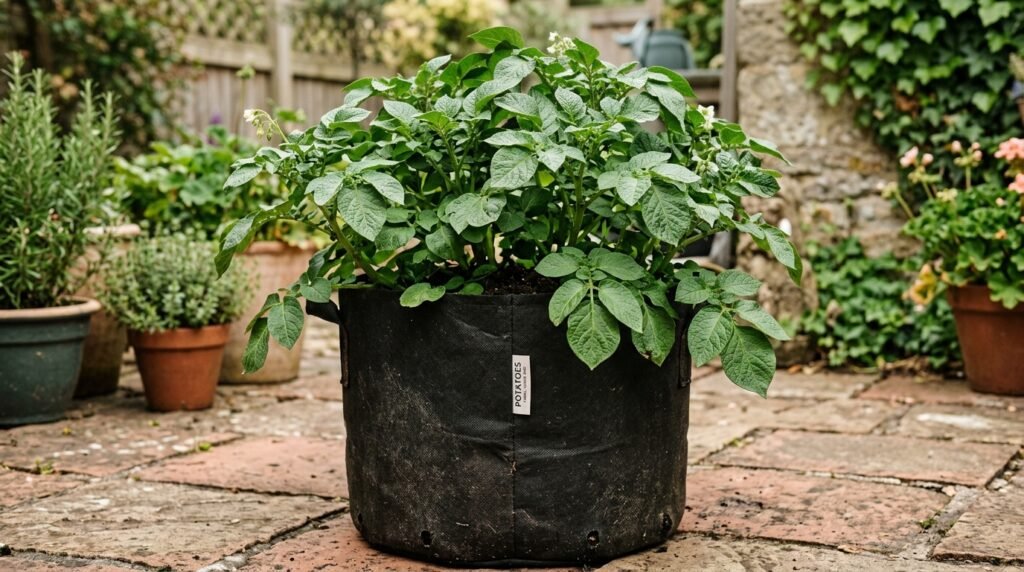
You do not fill the entire container with dirt on the very first day. As the green leafy stems grow about eight inches tall, you must add more soil to the bag. Roll the sides of the fabric up slightly and pour dirt around the stems until only the top leaves show.
The buried sections of the green stem will magically sprout brand new roots and form more food. You repeat this specific hilling process every few weeks until you reach the absolute top of the container. This vertical stacking technique forces the plant to produce food at multiple different underground levels.
Watering rules when you grow potatoes in bags
Fabric containers dry out significantly faster than traditional backyard dirt beds. The summer wind blows straight through the breathable sides and steals your vital soil moisture constantly. You must check the hydration levels of your containers every single morning without fail.
Pour water evenly across the entire top surface until liquid runs completely out the bottom of the bag. Uneven watering creates dry pockets in the dirt where the tubers will completely stop growing. Understanding how to water a vegetable garden without overwatering keeps the deep root system perfectly balanced.
Feeding your hungry patio crop
Producing pounds of heavy underground starches drains the potting soil of its basic nutrients incredibly fast. You need to provide a steady supply of liquid fertilizer to keep the biological engine running strong. Apply an organic liquid feed packed with high phosphorus and potassium every two weeks.
Avoid synthetic fertilizers with massive amounts of nitrogen during the middle of the summer. Too much nitrogen forces the plant to grow a giant green bush while completely ignoring the underground food. The plant experts at Gardening Know How recommend a balanced organic feed to promote heavy tuber development safely.
Managing heat when you grow potatoes in bags
These cool weather crops absolutely hate the intense and dry heat of midsummer. When the soil temperature climbs too high, the plant physically stops forming new tubers completely. The black fabric bags absorb massive amounts of solar radiation sitting on a hot concrete apartment patio.
You must protect the root zone from baking in the direct afternoon sun during July and August. Slide your heavy containers behind a patio chair or place them in the shadow of taller pepper plants. Shading the actual bag while leaving the top green leaves in the sun creates the perfect growing environment.
You can also wrap a light colored towel around the black fabric to reflect the brutal solar rays. Keeping the soil temperature cool directly increases the total weight of your final summer harvest.
Watching for the natural die-back
New gardeners often panic when their massive green bush suddenly turns yellow and collapses in late summer. This physical collapse does not mean you killed the plant or failed your farming mission. The plant is simply finishing its natural biological life cycle and preparing the underground harvest for you.
Stop watering the container entirely the exact moment the green leaves start turning yellow and dying off. The crop needs to sit in dry dirt for two weeks to harden the outer skins completely. Wet dirt at this final stage causes the mature food to rot right before you can harvest it.
Defending against pests when you grow potatoes in bags
You might assume that growing food on a fourth floor balcony protects you from crawling garden insects. Unfortunately, hungry pests possess an incredible ability to find vulnerable green leaves from miles away. You must monitor your tall leafy plants daily to catch small problems before they multiply out of control.
Aphids love to hide underneath the thick green leaves and suck the sweet sap directly out of the stems. You can blast these soft bugs right off the plant using a sharp spray of cold water from your hose. The bugs fall onto the concrete floor and cannot climb back up the sides of the fabric container.
Stopping the dreaded potato beetle
The Colorado potato beetle remains the absolute worst enemy for any patio root farmer. These striped bugs lay clusters of bright orange eggs on the absolute undersides of the lowest green leaves. You must inspect the bottom foliage carefully and crush these orange eggs with your bare thumb immediately.
If the eggs hatch, the fat red larvae will strip your entire plant down to bare stems in two days. Hand picking the adult beetles and dropping them into a bucket of soapy water stops the reproductive cycle completely. You protect your valuable harvest without resorting to dangerous chemical insect sprays.
Harvesting your crop after you grow potatoes in bags
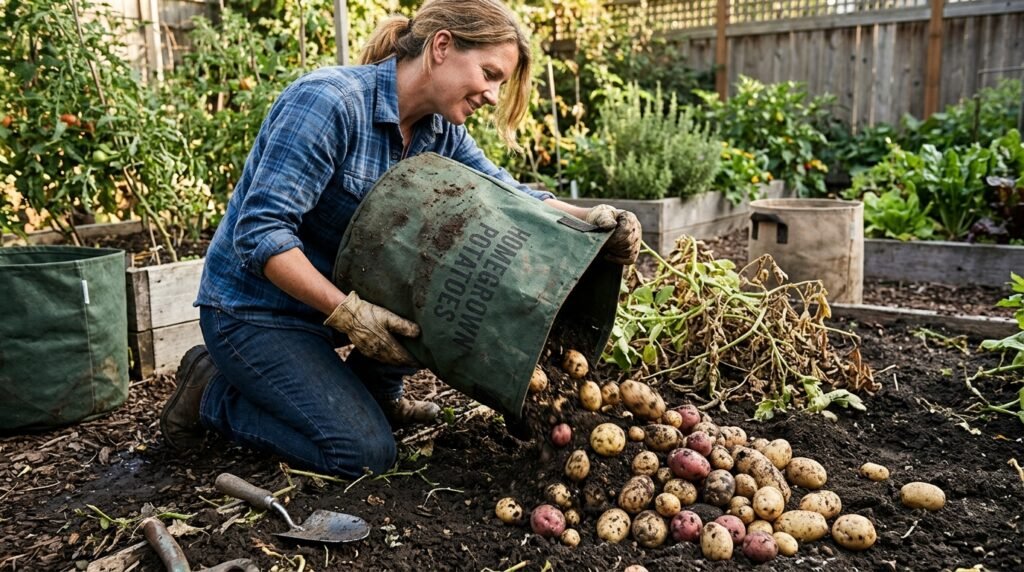
The absolute best part of this container method comes on harvest day. You do not need to carefully dig around with a sharp metal tool and risk ruining your dinner. You just lay a cheap plastic tarp on your patio floor and dump the entire bag upside down.
The soft potting dirt crumbles away immediately to reveal pounds of perfect and unblemished vegetables. Brushing through the dry dirt with your bare hands feels exactly like hunting for buried treasure. Reviewing The complete beginner’s guide to growing food at home reminds you to celebrate these massive patio victories.
Curing the food for winter storage
Do not wash your freshly harvested crop under the kitchen sink faucet immediately. The thin outer skin needs time to cure and thicken up for long term pantry storage. Brush the loose dirt off with your bare hands and lay them out in a dark and highly dry room.
Let them sit completely undisturbed for about ten days to cure properly. The skin will toughen up naturally and protect the starchy interior for several months. Store the cured vegetables in a breathable cardboard box or a wire basket away from any direct sunlight.
Never store your fresh root harvest anywhere near onions or apples in your kitchen pantry. Those fruits release specific natural gases that cause the tubers to sprout prematurely and turn incredibly soft. A cool and completely dark closet provides the absolute best environment for long term winter storage.
Farming heavy root crops in a small apartment space sounds completely impossible until you try this vertical method. You bypass all the hard manual labor and space requirements of a traditional backyard plot. Just buy some cheap fabric containers, cut up a few seed pieces, and keep piling the dirt high. Managing the consistent soil moisture and protecting the black fabric from the brutal sun guarantees your success. Take control of your food supply and learn to grow potatoes in bags on your balcony this season. The incredible taste of a fresh homegrown spud makes every bit of physical effort completely worthwhile.
Felipe Macedo is a home gardener and food grower based in Portland, Oregon. After killing his first three tomato plants, he became obsessed with figuring out how to grow real food in small spaces — on balconies, in containers, and in raised beds he built himself. At Chatinovax, he shares everything he learned the hard way so you don’t have to.