
I spent my first spring in Portland completely overwhelmed by seed packets and heavy bags of dirt. I stood on my south-facing balcony holding a rusty eight dollar trowel and staring at a pile of empty yogurt containers. I just started shoving seeds into dirt without any actual plan.
By July, my massive tomato plants completely shadowed my tiny peppers. Half my balcony sat totally barren while the other half turned into an overgrown jungle. I could not even reach the back corner to water my dying basil.
You avoid this frustrating mess when you create a proper small vegetable garden layout before planting a single seed. Taking an hour to map your space saves you months of bitter disappointment. A good plan maximizes your harvest and makes daily maintenance incredibly easy.
The core rules of a small vegetable garden layout
Every single inch of real estate counts when you grow food on an apartment patio. You cannot afford to waste space on empty dirt or unproductive dead zones. A smart small vegetable garden layout forces you to look at your space objectively.
You must figure out exactly where the sun hits and where the wind blows hardest. You also need to measure the actual square footage available for your wooden boxes. Guessing these measurements always leads to buying pots that simply do not fit.
This basic planning stops you from buying too many seeds at the hardware store. You only purchase the exact plants that fit your specific physical dimensions. You save cash and avoid the guilt of throwing away perfectly good leftover seedlings.
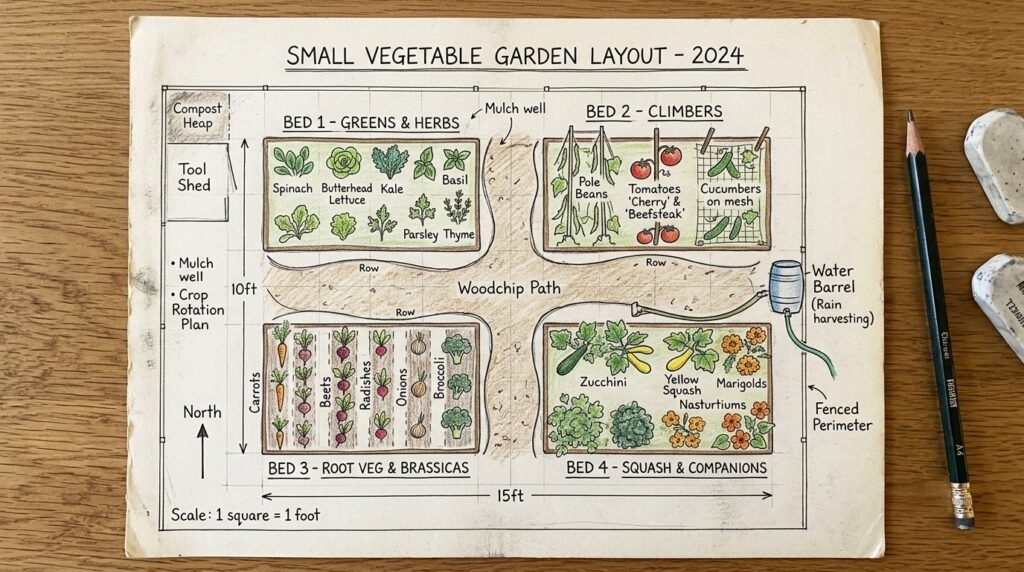
Tracking the sun across your patio
You cannot negotiate with the sun when growing heavy summer crops. Most fruiting plants demand at least six hours of direct light to produce sweet food. You must watch how the shadows move across your concrete floor from morning until evening.
The sun changes its physical path in the sky as the spring turns into summer. A spot that gets full sun in May might sit in total darkness by late August. Draw a basic square on a piece of paper and mark the absolute brightest spots accurately.
Put your tomatoes and peppers directly in the heavy sun zones. Save the shady corners for cool leafy greens that hate the intense afternoon heat. Reading about what to plant in a raised bed as a beginner helps you match the right crop to the right light zone.
Structuring your small vegetable garden layout
Your containers define the physical boundaries of your balcony farm. You need to arrange them so you can easily water the back row without knocking over the front row. Place your tallest wooden boxes against the back wall or the safety railing.
Put your shallow pots and small buckets right at the front edge of the layout. This tiered arrangement ensures every single plant gets adequate sunlight without fighting its neighbors. It stops tall plants from creating a massive wall of shade.
This specific setup also makes your daily harvesting chores incredibly fast and simple. You can spot the ripe red fruit instantly instead of hunting through a tangled mess of green vines.
A non-obvious trick for grouping containers
Beginners often mix dry Mediterranean herbs right next to thirsty patio cucumbers. You end up overwatering the herbs or completely starving the cucumbers. You must group your pots based on their actual daily water requirements.
Keep all your heavy drinking plants clustered closely together near your water source. Put your drought tolerant crops in a totally separate corner of the balcony. This physical grouping protects your sensitive roots and stops fungal diseases.
This layout strategy saves you time and prevents accidental root rot entirely. You simply soak the thirsty zone and lightly mist the dry zone without second guessing yourself every morning.
Maximizing vertical space in a small vegetable garden layout
You run out of floor space extremely fast on a standard apartment balcony. You must look upward to find more room for your sprawling summer crops. Incorporating a sturdy trellis into your small vegetable garden layout solves your space issues immediately.
You can train heavy vines to climb straight up the side of your building or privacy fence. This lifts the foliage off the damp concrete and prevents terrible soil diseases from splashing up. Lifting the leaves also improves the airflow running across your dense potting soil.
Understanding how to build a simple trellis for climbing vegetables expands your farming footprint drastically. You turn an ugly blank wall into a highly productive green factory.
Using the square foot strategy
Measuring your dirt into visual grids helps you maximize every single inch of available soil. You literally divide your wooden boxes into twelve inch squares using basic string or thin wood. You then plant a specific number of seeds inside each individual square.
The agricultural experts at The Old Farmer’s Almanac highly recommend this exact method for cramped urban spaces. It stops you from planting in long lines, which wastes a massive amount of valuable dirt.
You can fit exactly one tomato plant or sixteen small radishes into a single square. This mathematical approach removes all the wild guesswork from your spring planting schedule.
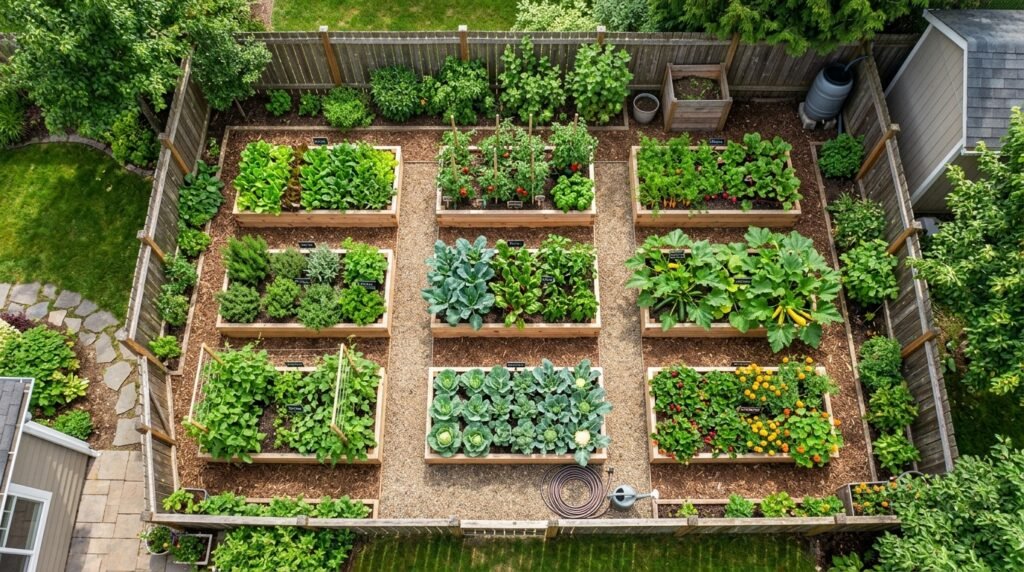
Companion planting in your small vegetable garden layout
Plants actually communicate and share resources beneath the dark soil surface. Some plants repel nasty insects while others attract helpful pollinating bees. You should mix different plant families together in the same large container to create a balanced ecosystem.
Planting strong basil right next to your tomatoes improves the flavor of the fruit naturally. The strong scent of the basil also confuses hungry pests looking for a free meal. Putting sweet alyssum near your peppers brings hungry ladybugs directly to your balcony.
This strategic placement keeps your space totally healthy without requiring toxic chemical sprays. A diverse planting strategy builds a resilient garden that fights off diseases incredibly easily.
Keeping pathways clear for maintenance
You must leave yourself enough physical room to actually work comfortably in your garden. I once packed so many buckets onto my patio that I could not reach my watering can. I had to step on my own fragile plants just to harvest a single cucumber.
Leave a clear walking path right down the middle of your container setup. You need space to kneel down, inspect leaves for bugs, and pull tiny weeds comfortably. Your body needs room to move freely without knocking heavy pots over.
A garden that feels impossible to navigate quickly becomes a frustrating daily chore. You will simply stop checking your plants if you have to fight an obstacle course every single morning.
Adjusting your small vegetable garden layout seasonally
Your spatial needs change dramatically as the growing seasons progress. A layout that works perfectly in the cool spring might fail completely in the hot summer. You must remain flexible and move your pots around as the local weather shifts.
During the hottest weeks of August, you might need to slide your fragile lettuce pots around. Pushing them behind your tall tomatoes provides a living shade screen. This green screen protects the delicate greens from cooking directly in the brutal sun.
Reviewing The complete beginner’s guide to growing food at home regularly keeps your seasonal strategy extremely sharp. You learn to adapt to the changing climate rather than fighting it stubbornly.
Dealing with the autumn transition
When the cold autumn rain finally arrives in Portland, the sunlight angle drops significantly. You must push your heaviest pots closer to the glass doors to catch the fading rays. The days get shorter and the plants need every ounce of light they can get.
Always put your largest containers on rolling wooden plant caddies. These wheels allow you to move massive buckets easily without hurting your lower back. You can chase the sun across the concrete floor all afternoon.
Mobility gives you a massive advantage over people stuck with heavy permanent backyard dirt beds. You control the exact microclimate for every single plant on your patio.
Finalizing your small vegetable garden layout on paper
Grab a cheap notebook and sketch your final design before you buy any expensive dirt. Draw your balcony strictly to scale and cut out little paper squares representing your pots. Move the paper squares around the blank page until you find the absolute perfect arrangement.
You want to group the tall trellises in the back and the small herb pots in the front. Make sure you map out exactly where your watering can and hand tools will sit. Storage space matters just as much as actual growing space on a tiny balcony.
This simple planning step prevents massive physical labor later in the week. You never want to fill a heavy wooden box with wet dirt and then realize it sits in the wrong spot entirely.
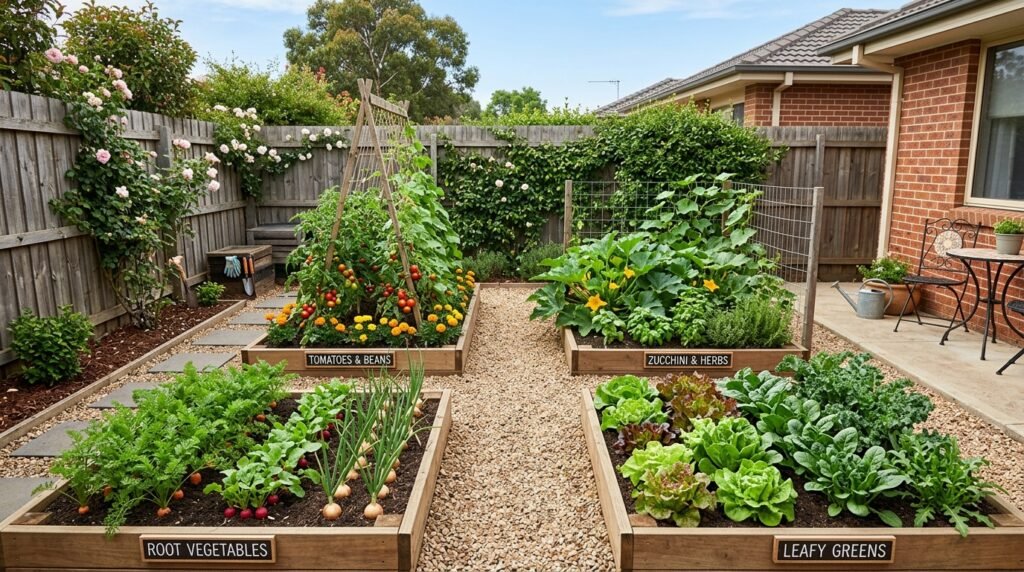
Starting small and expanding later
Do not try to fill your entire patio with complex plants during your very first year. Start with just three or four easy crops in a simple corner of your layout. Learn how the soil dries out and watch how the plants respond to your specific environment.
You can always add more buckets and complex trellises during your second season. Mastering the basics of watering and sunlight guarantees your long term success. Rushing into a massive project usually leads to burnt out plants and a completely empty wallet.
Starting your first patio farm feels incredibly intimidating when you stare at an empty concrete slab. You do not need expensive professional landscaping software to create a highly productive space. Grab your trusty hand trowel, check the sun lines, and group your pots intelligently. Building a solid small vegetable garden layout saves you time and guarantees a massive late summer harvest. You can grow a ridiculous amount of fresh food when you respect your physical boundaries and plan ahead carefully.
Felipe Macedo is a home gardener and food grower based in Portland, Oregon. After killing his first three tomato plants, he became obsessed with figuring out how to grow real food in small spaces — on balconies, in containers, and in raised beds he built himself. At Chatinovax, he shares everything he learned the hard way so you don’t have to.